Caribou Biosciences, Inc., Berkeley, California.
Cancer Immunol Res. 2024 Apr 2;12(4):462-477. doi: 10.1158/2326-6066.CIR-23-0679.
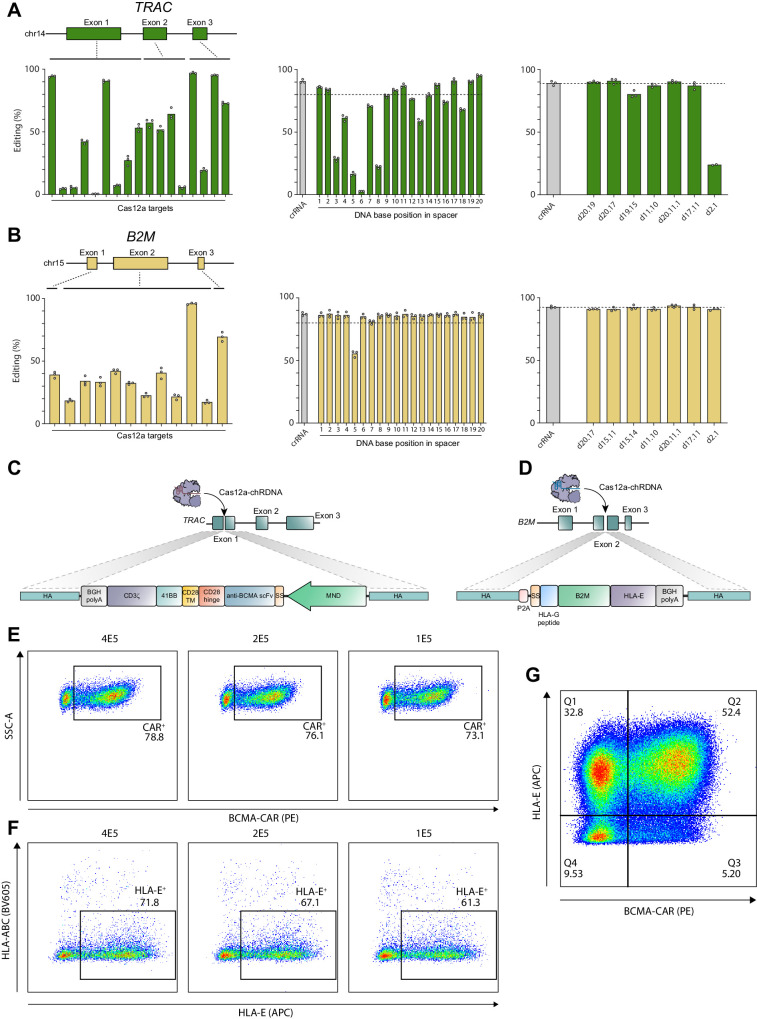
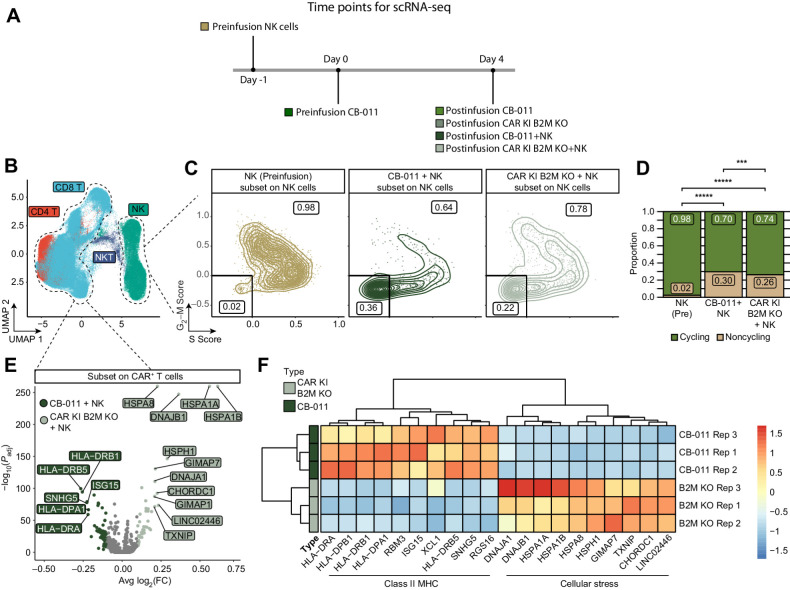
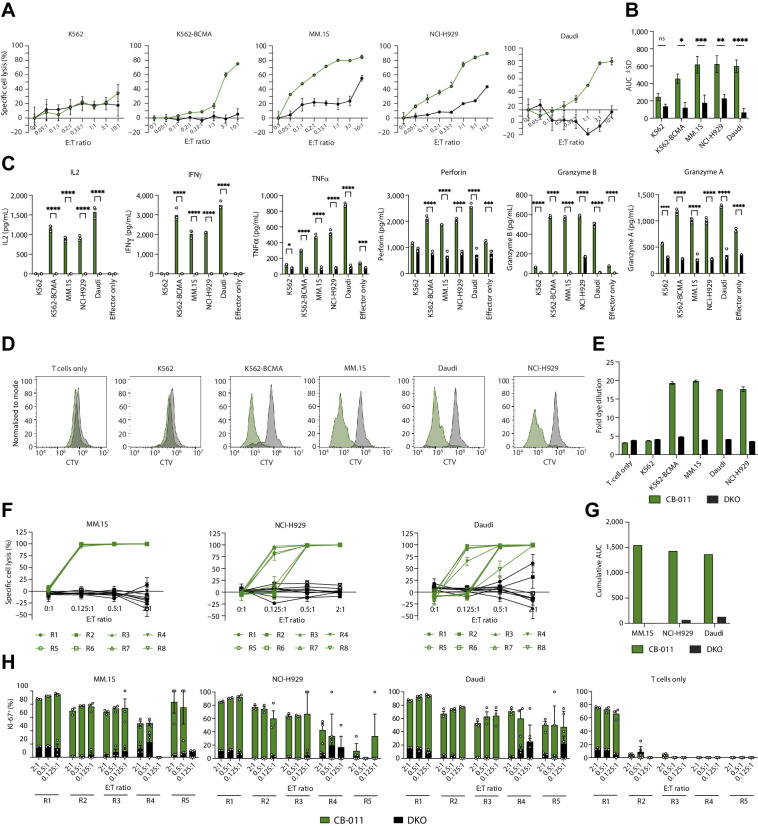
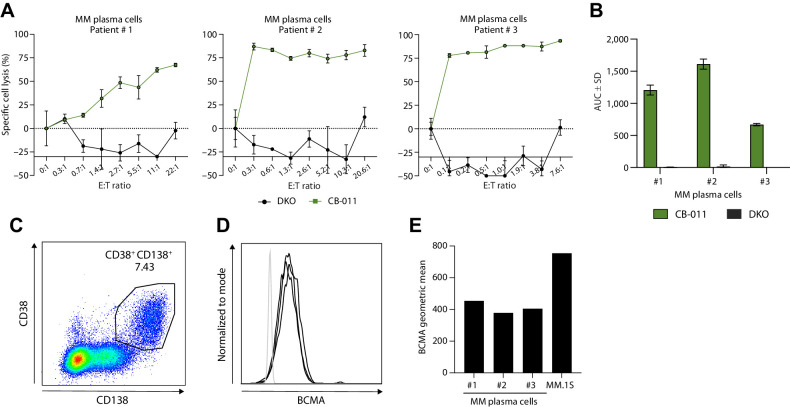
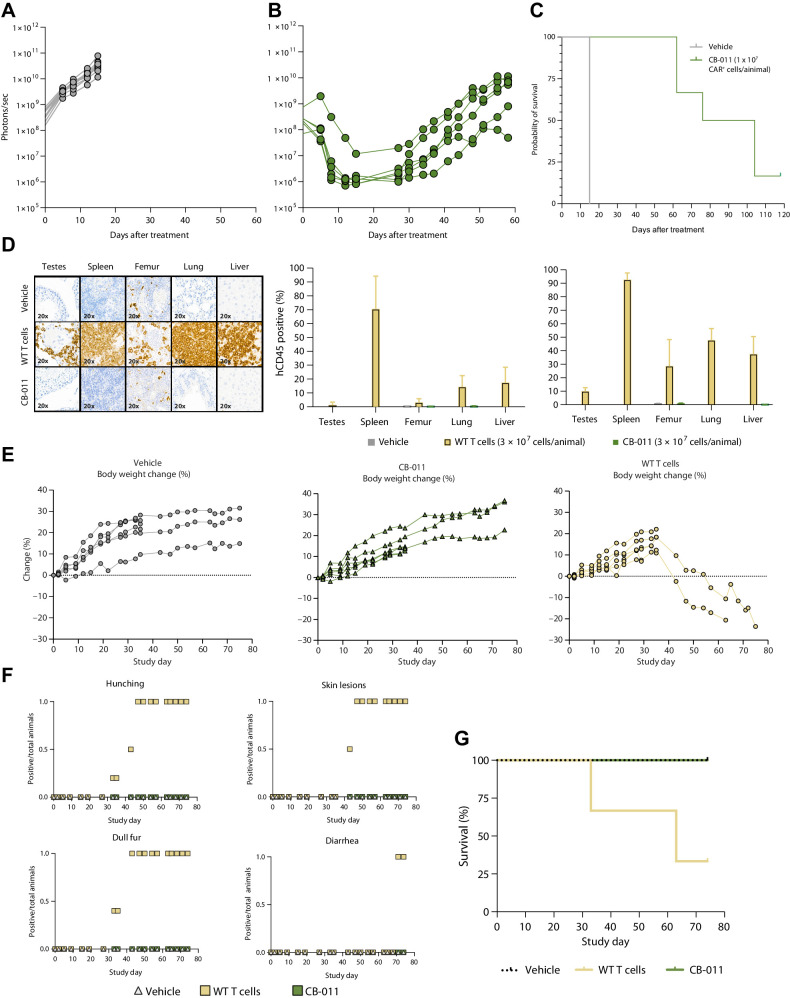
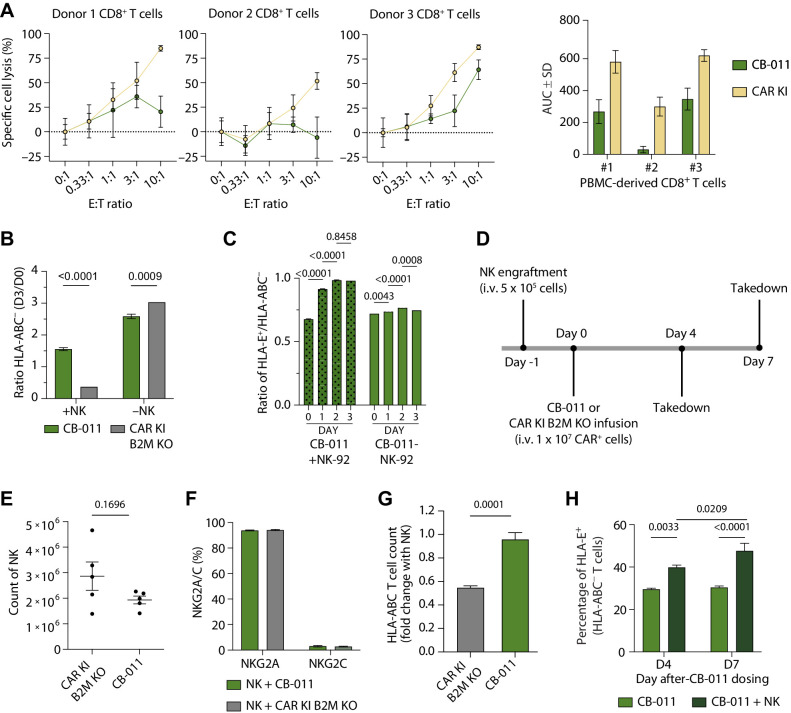
Allogeneic chimeric antigen receptor (CAR) T cell therapies hold the potential to overcome many of the challenges associated with patient-derived (autologous) CAR T cells. Key considerations in the development of allogeneic CAR T cell therapies include prevention of graft-vs-host disease (GvHD) and suppression of allograft rejection. Here, we describe preclinical data supporting the ongoing first-in-human clinical study, the CaMMouflage trial (NCT05722418), evaluating CB-011 in patients with relapsed/refractory multiple myeloma. CB-011 is a hypoimmunogenic, allogeneic anti-B-cell maturation antigen (BCMA) CAR T cell therapy candidate. CB-011 cells feature 4 genomic alterations and were engineered from healthy donor-derived T cells using a Cas12a CRISPR hybrid RNA-DNA (chRDNA) genome-editing technology platform. To address allograft rejection, CAR T cells were engineered to prevent endogenous HLA class I complex expression and overexpress a single-chain polyprotein complex composed of beta-2 microglobulin (B2M) tethered to HLA-E. In addition, T-cell receptor (TCR) expression was disrupted at the TCR alpha constant locus in combination with the site-specific insertion of a humanized BCMA-specific CAR. CB-011 cells exhibited robust plasmablast cytotoxicity in vitro in a mixed lymphocyte reaction in cell cocultures derived from patients with multiple myeloma. In addition, CB-011 cells demonstrated suppressed recognition by and cytotoxicity from HLA-mismatched T cells. CB-011 cells were protected from natural killer cell-mediated cytotoxicity in vitro and in vivo due to endogenous promoter-driven expression of B2M-HLA-E. Potent antitumor efficacy, when combined with an immune-cloaking armoring strategy to dampen allograft rejection, offers optimized therapeutic potential in multiple myeloma. See related Spotlight by Caimi and Melenhorst, p. 385.
同种异体嵌合抗原受体 (CAR) T 细胞疗法有可能克服与患者来源 (自体) CAR T 细胞相关的许多挑战。同种异体 CAR T 细胞疗法开发中的关键考虑因素包括预防移植物抗宿主病 (GvHD) 和抑制同种异体排斥反应。在这里,我们描述了支持正在进行的首例人体临床试验,即 CaMMouflage 试验 (NCT05722418) 的临床前数据,该试验评估了复发/难治性多发性骨髓瘤患者中的 CB-011。CB-011 是一种低免疫原性的同种异体抗 B 细胞成熟抗原 (BCMA) CAR T 细胞治疗候选药物。CB-011 细胞具有 4 种基因组改变,是使用 Cas12a CRISPR 杂交 RNA-DNA (chRDNA) 基因组编辑技术平台从健康供体来源的 T 细胞中工程化的。为了解决同种异体排斥反应,CAR T 细胞被设计为防止内源性 HLA Ⅰ类复合物表达,并过度表达由β-2 微球蛋白 (B2M) 与 HLA-E 连接的单链多蛋白复合物。此外,在 TCR 恒定基因座处破坏 T 细胞受体 (TCR) 表达,同时在特定位点插入人源化 BCMA 特异性 CAR。CB-011 细胞在多发性骨髓瘤患者来源的细胞共培养物的混合淋巴细胞反应中表现出体外强大的浆母细胞细胞毒性。此外,CB-011 细胞对 HLA 错配 T 细胞的识别和细胞毒性受到抑制。由于内源性启动子驱动 B2M-HLA-E 的表达,CB-011 细胞在体外和体内免受自然杀伤细胞介导的细胞毒性。当与免疫伪装装甲策略结合以抑制同种异体排斥反应时,CB-011 细胞提供了优化的多发性骨髓瘤治疗潜力。参见相关的 Spotlight 文章,由 Caimi 和 Melenhorst 撰写,第 385 页。