Department of Gastrointestinal Surgery, The First Affiliated Hospital of Shantou University Medical College, Shantou, China.
Shantou University Medical College, Shantou, China.
Front Immunol. 2024 Jan 29;15:1324959. doi: 10.3389/fimmu.2024.1324959. eCollection 2024.
C-type lectin domain family 11 member A (CLEC11A) was characterized as a growth factor that mainly regulates hematopoietic function and differentiation of bone cells. However, the involvement of CLEC11A in gastric cancer (GC) is not well understood.
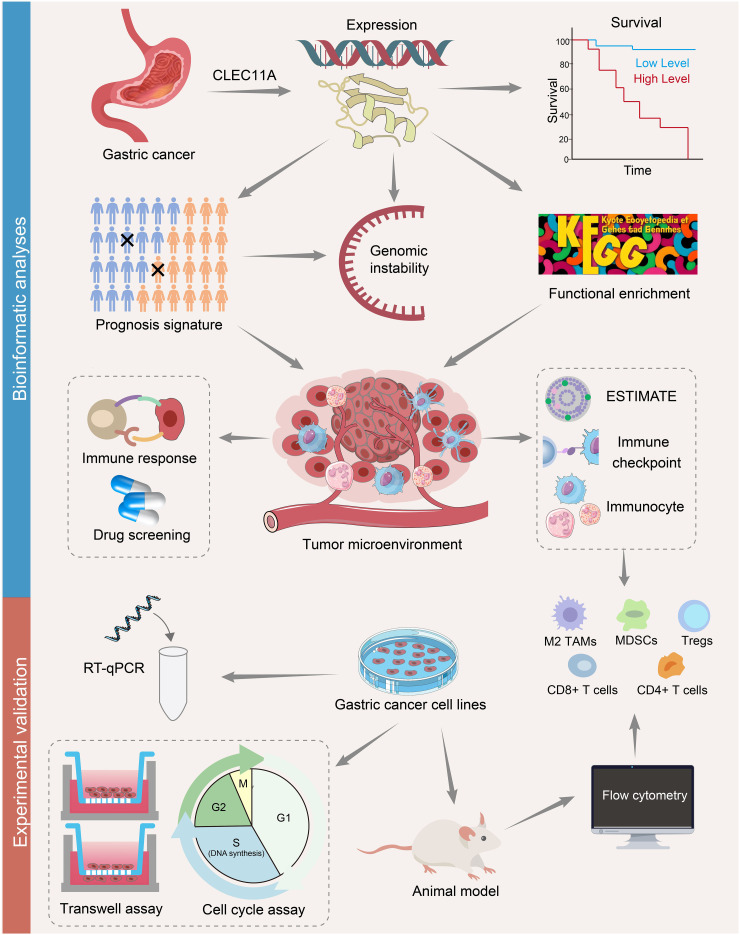
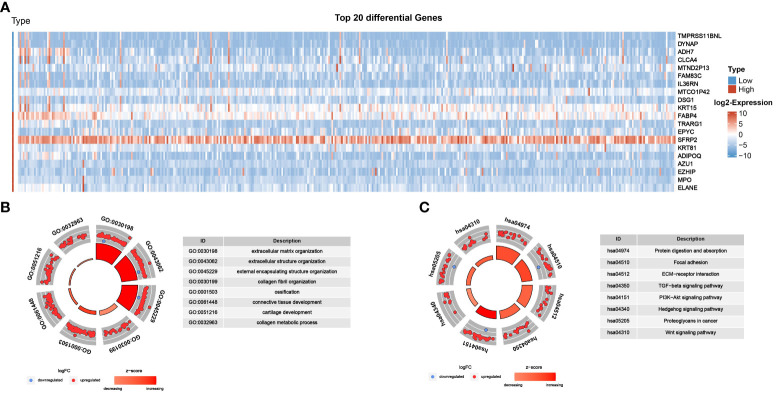
Transcriptomic data and clinical information pertaining to GC were obtained and analyzed from publicly available databases. The relationships between CLEC11A and prognoses, genetic alterations, tumor microenvironment (TME), and therapeutic responses in GC patients were analyzed by bioinformatics methods. A CLEC11A-derived immune signature was developed and validated, and its mutational landscapes, immunological characteristics as well as drug sensitivities were explored. A nomogram was established by combining CLEC11A-derived immune signature and clinical factors. The expression and carcinogenic effects of CLEC11A in GC were verified by qRT-PCR, cell migration, invasion, cell cycle analysis, and in vivo model analysis. Myeloid-derived suppressor cells (MDSCs), regulatory T cells (Tregs), M2 macrophages, and T cells in tumor samples extracted from mice were analyzed utilizing flow cytometry analysis.
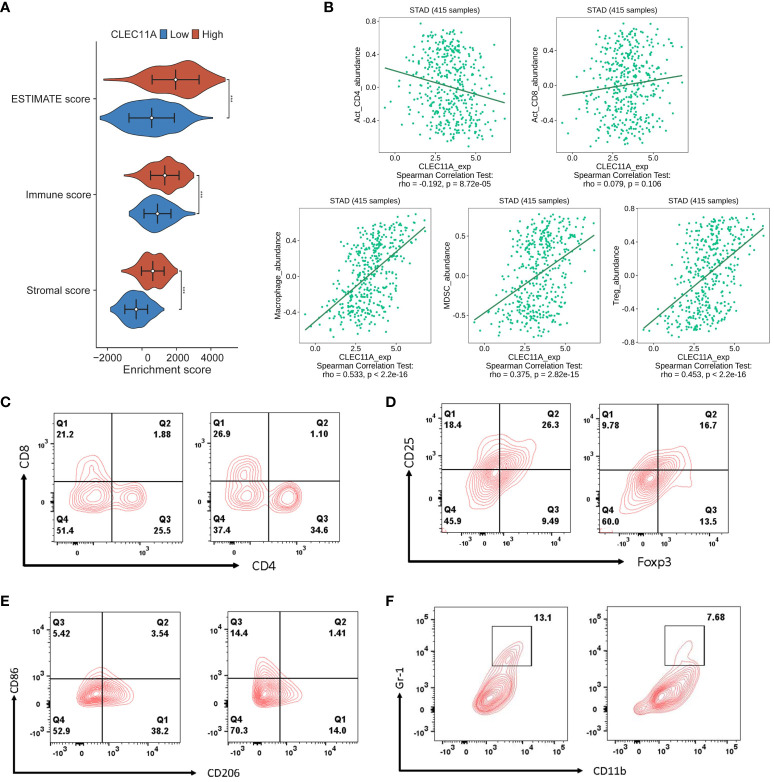
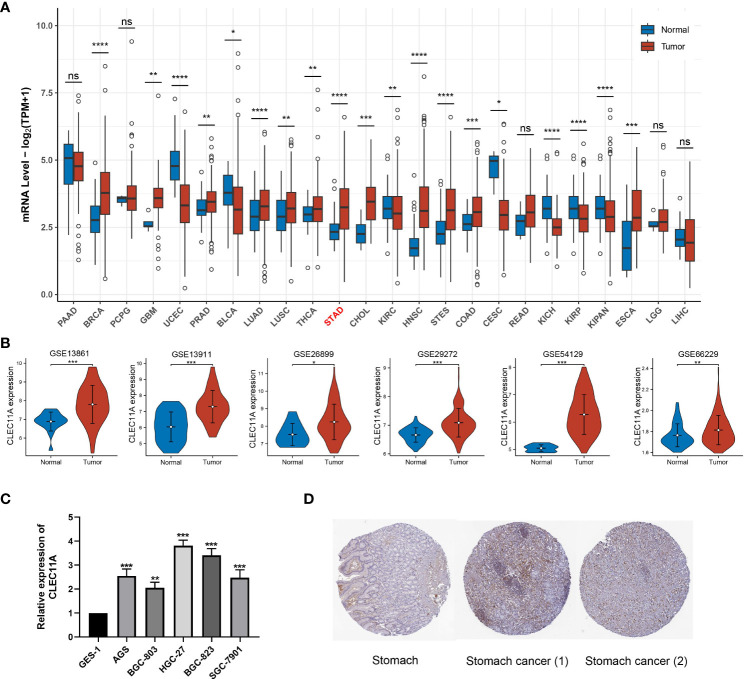
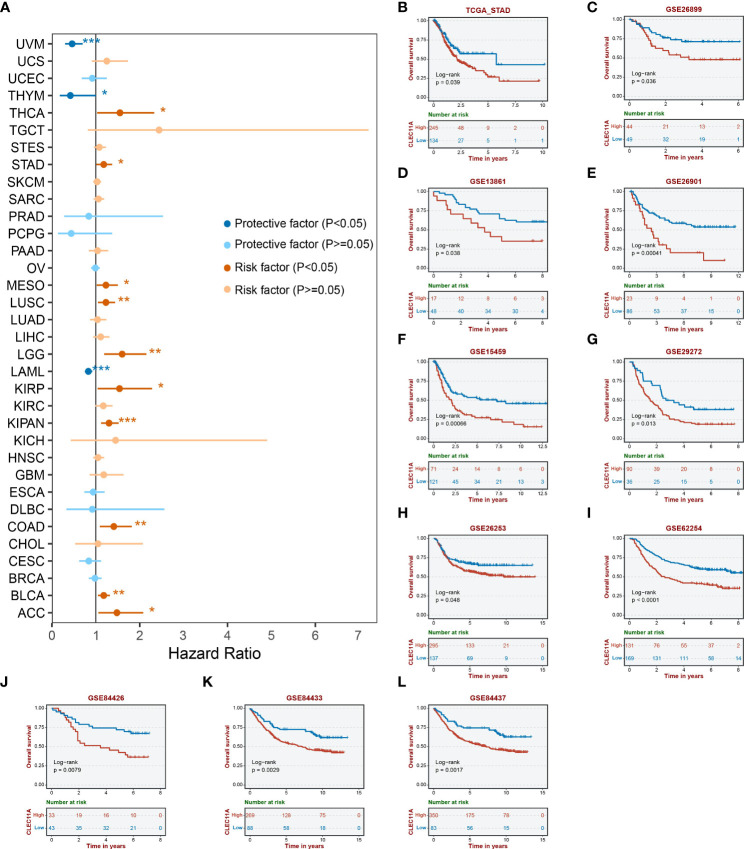
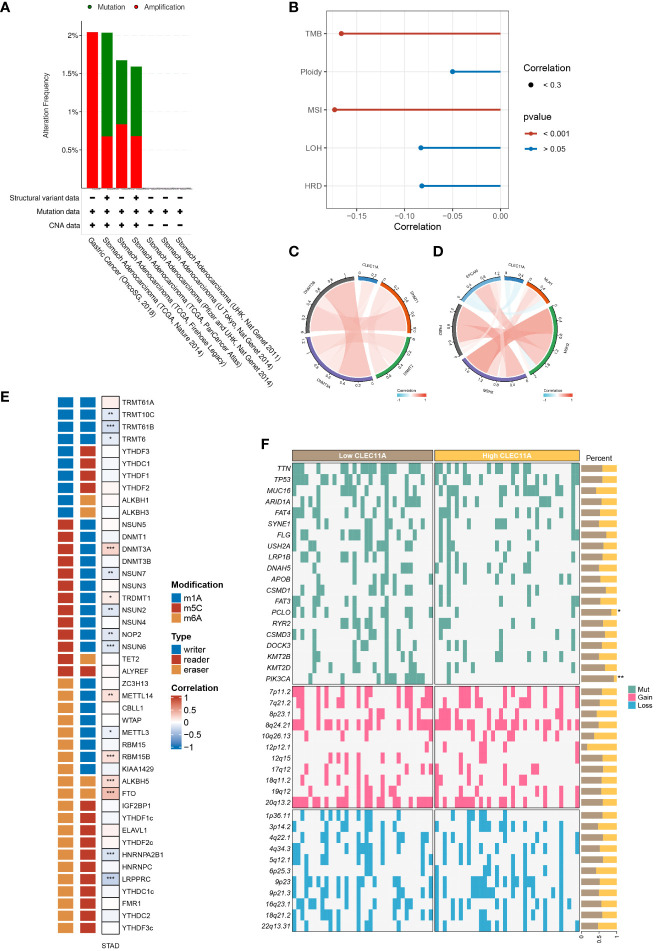
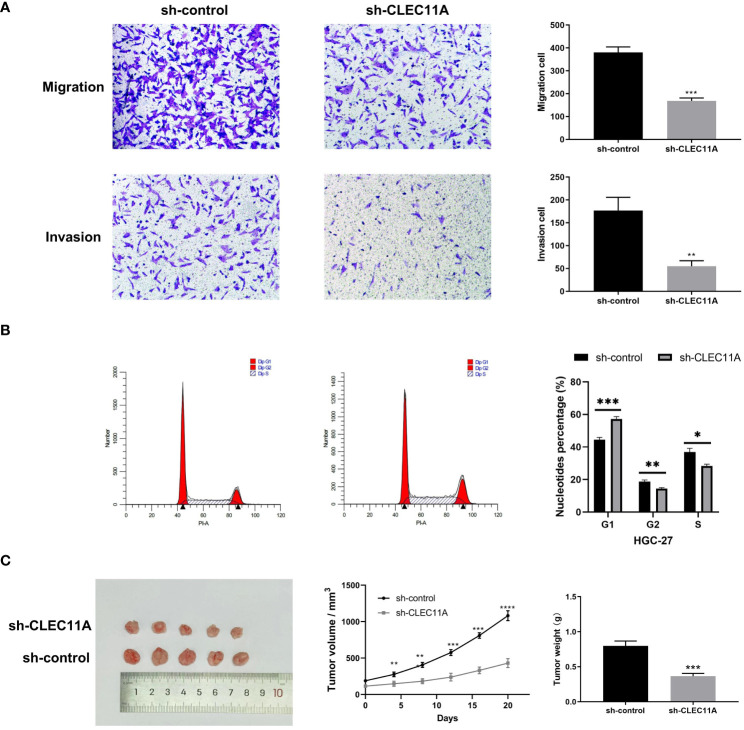
CLEC11A was over-expressed in GC, and the elevated CLEC11A expression indicated an unfavorable prognosis in GC patients. CLEC11A was involved in genomic alterations and associated with the TME in GC. Moreover, elevated CLEC11A was found to reduce the benefit of immunotherapy according to immunophenoscore (IPS) and the tumor immune dysfunction, exclusion (TIDE). After validation, the CLEC11A-derived immune signature demonstrated a consistent ability to predict the survival outcomes in GC patients. A nomogram that quantifies survival probability was constructed to improve the accuracy of prognosis prediction in GC patients. Using shRNA to suppress the expression of CLEC11A led to significant inhibitions of cell cycle progression, migration, and invasion, as well as a marked reduction of tumor growth. Moreover, the flow cytometry assay showed that the knock-down of CLEC11A increased the infiltration of cytotoxic CD8+ T cells and helper CD4+ T into tumors while decreasing the percentage of M2 macrophages, MDSCs, and Tregs.
Collectively, our findings revealed that CLEC11A could be a prognostic and immunological biomarker in GC, and CLEC11A-derived immune signature might serve as a new option for clinicians to predict outcomes and formulate personalized treatment plans for GC patients.
C 型凝集素结构域家族 11 成员 A(CLEC11A)的特征是一种主要调节造血功能和骨细胞分化的生长因子。然而,CLEC11A 在胃癌(GC)中的作用尚不清楚。
从公共数据库中获取并分析了与 GC 相关的转录组数据和临床信息。通过生物信息学方法分析了 CLEC11A 与 GC 患者预后、遗传改变、肿瘤微环境(TME)和治疗反应的关系。开发并验证了基于 CLEC11A 的免疫特征,探讨了其突变景观、免疫特征和药物敏感性。通过结合 CLEC11A 衍生的免疫特征和临床因素建立了列线图。通过 qRT-PCR、细胞迁移、侵袭、细胞周期分析和体内模型分析验证了 CLEC11A 在 GC 中的表达和致癌作用。利用流式细胞术分析分析了从小鼠肿瘤样本中提取的髓源性抑制细胞(MDSCs)、调节性 T 细胞(Tregs)、M2 巨噬细胞和 T 细胞。
CLEC11A 在 GC 中高表达,CLEC11A 表达升高提示 GC 患者预后不良。CLEC11A 参与了 GC 的基因组改变,并与 TME 相关。此外,根据免疫表型评分(IPS)和肿瘤免疫功能障碍、排除(TIDE)发现,升高的 CLEC11A 降低了免疫治疗的获益。经过验证,CLEC11A 衍生的免疫特征能够一致地预测 GC 患者的生存结局。构建了一个量化生存概率的列线图,以提高 GC 患者预后预测的准确性。使用 shRNA 抑制 CLEC11A 的表达可显著抑制细胞周期进程、迁移和侵袭,并显著减少肿瘤生长。此外,流式细胞术检测表明,CLEC11A 的敲低可增加肿瘤内细胞毒性 CD8+T 细胞和辅助性 CD4+T 细胞的浸润,同时降低 M2 巨噬细胞、MDSCs 和 Tregs 的百分比。
总之,我们的研究结果表明,CLEC11A 可能是 GC 的预后和免疫生物标志物,CLEC11A 衍生的免疫特征可能为临床医生提供一种新的选择,以预测 GC 患者的结局并制定个性化的治疗方案。