Department of Neurology, Xuanwu Hospital, Capital Medical University, Beijing, China.
Department of Emergency, Xuanwu Hospital, Capital Medical University, Beijing, China.
CNS Neurosci Ther. 2024 Feb;30(2):e14631. doi: 10.1111/cns.14631.
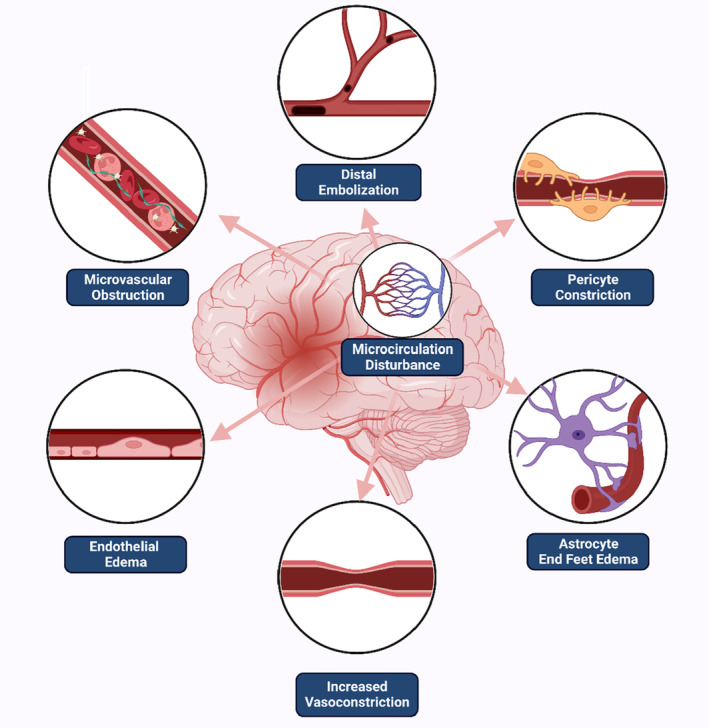
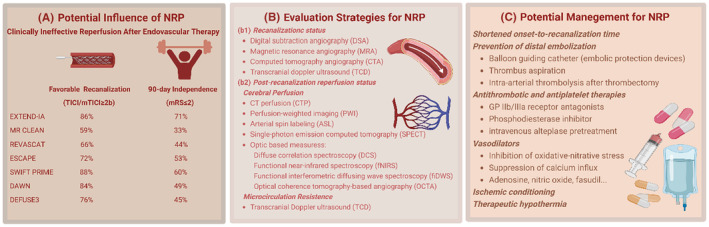
In the field of stroke thrombectomy, ineffective clinical and angiographic reperfusion after successful recanalization has drawn attention. Partial or complete microcirculatory reperfusion failure after the achievement of full patency of a former obstructed large vessel, known as the "no-reflow phenomenon" or "microvascular obstruction," was first reported in the 1960s and was later detected in both experimental models and patients with stroke. The no-reflow phenomenon (NRP) was reported to result from intraluminal occlusions formed by blood components and extraluminal constriction exerted by the surrounding structures of the vessel wall. More recently, an emerging number of clinical studies have estimated the prevalence of the NRP in stroke patients following reperfusion therapy, ranging from 3.3% to 63% depending on its evaluation methods or study population. Studies also demonstrated its detrimental effects on infarction progress and neurological outcomes. In this review, we discuss the research advances, underlying pathogenesis, diagnostic techniques, and management approaches concerning the no-reflow phenomenon in the stroke population to provide a comprehensive understanding of this phenomenon and offer references for future investigations.
在卒中取栓领域,成功再通后临床和血管造影再灌注无效引起了关注。在先前阻塞的大血管完全再通后,部分或完全微循环再灌注失败,即“无再流现象”或“微血管阻塞”,于 20 世纪 60 年代首次报道,后来在实验模型和卒中患者中均有发现。无再流现象(NRP)被认为是由管腔内血液成分形成的阻塞和血管壁周围结构的管腔外收缩共同导致。最近,越来越多的临床研究估计了再灌注治疗后卒中患者 NRP 的发生率,其范围为 3.3%至 63%,具体取决于评估方法或研究人群。研究还表明,它对梗死进展和神经功能结局有不良影响。在本综述中,我们讨论了卒中人群中无再流现象的研究进展、潜在发病机制、诊断技术和治疗方法,以期全面了解这一现象,并为未来的研究提供参考。