Department of Statistics and Operational Research, University of Granada, Granada, Spain.
Institute of Mathematics, University of Granada, Granada, Spain.
BMC Med Res Methodol. 2024 Feb 15;24(1):36. doi: 10.1186/s12874-024-02171-z.
Surveys have been used worldwide to provide information on the COVID-19 pandemic impact so as to prepare and deliver an effective Public Health response. Overlapping panel surveys allow longitudinal estimates and more accurate cross-sectional estimates to be obtained thanks to the larger sample size. However, the problem of non-response is particularly aggravated in the case of panel surveys due to population fatigue with repeated surveys.
To develop a new reweighting method for overlapping panel surveys affected by non-response.
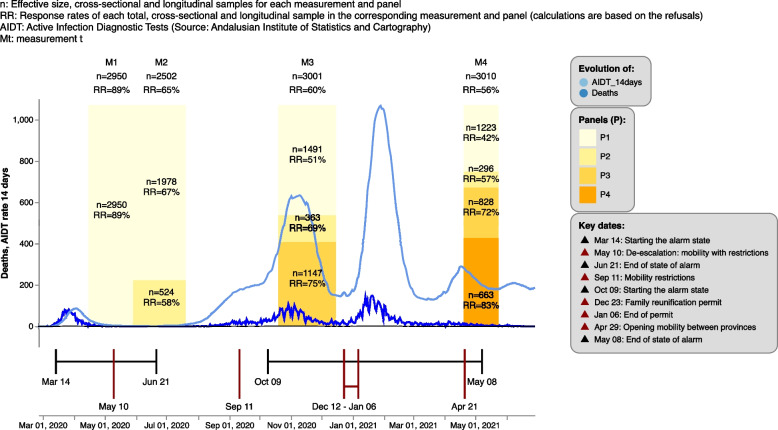
We chose the Healthcare and Social Survey which has an overlapping panel survey design with measurements throughout 2020 and 2021, and random samplings stratified by province and degree of urbanization. Each measurement comprises two samples: a longitudinal sample taken from previous measurements and a new sample taken at each measurement.
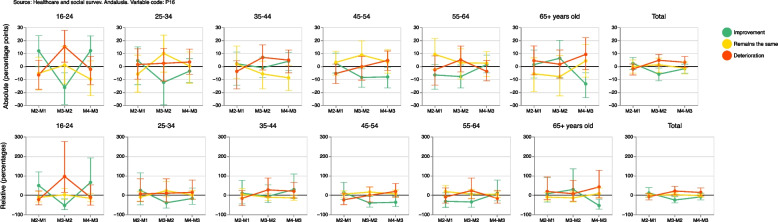
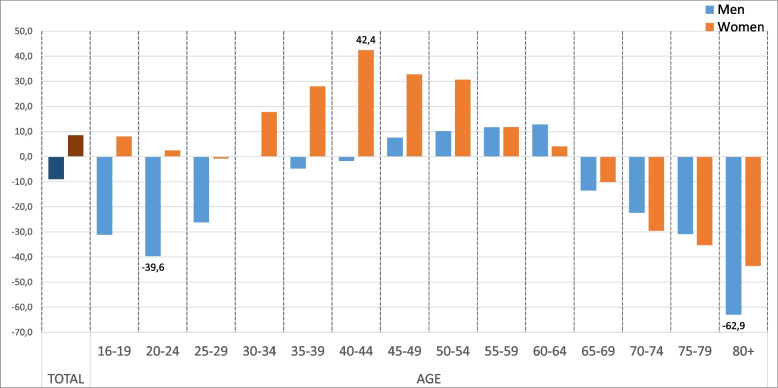
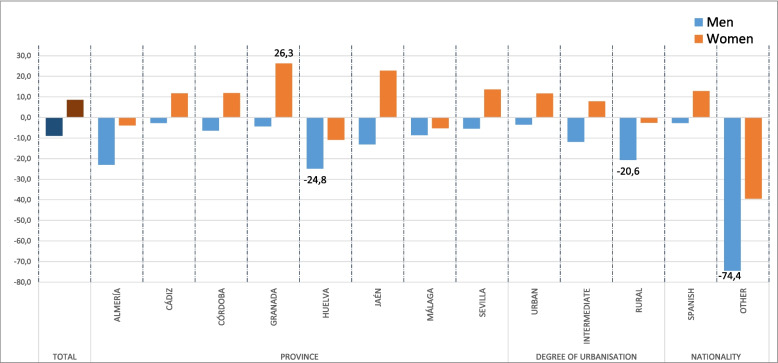
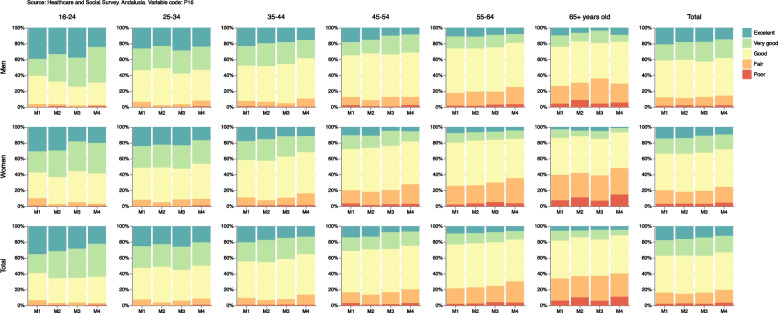
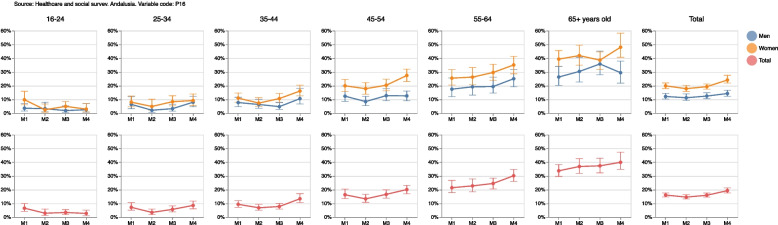
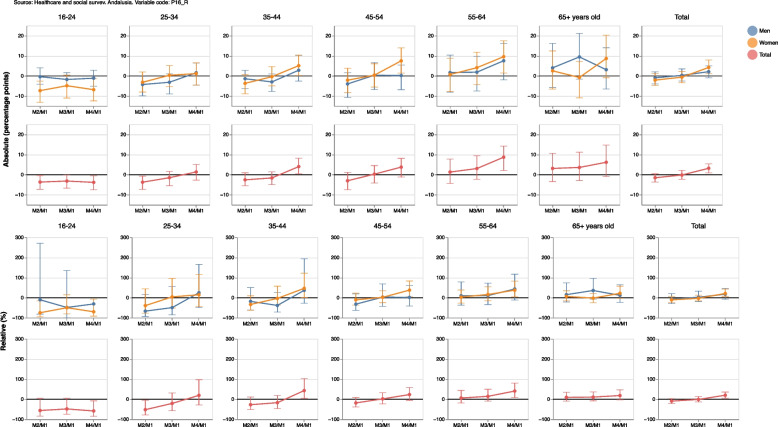
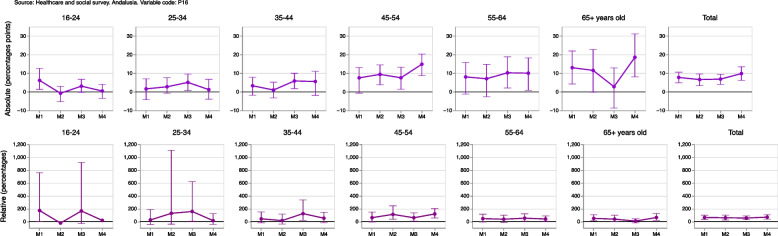
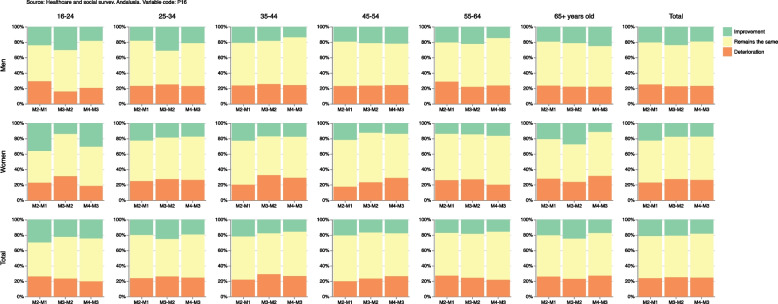
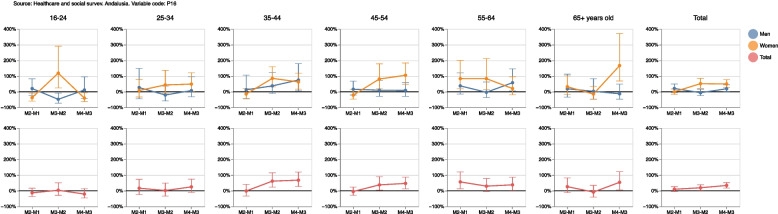
Our reweighting methodological approach is the result of a two-step process: the original sampling design weights are corrected by modelling non-response with respect to the longitudinal sample obtained in a previous measurement using machine learning techniques, followed by calibration using the auxiliary information available at the population level. It is applied to the estimation of totals, proportions, ratios, and differences between measurements, and to gender gaps in the variable of self-perceived general health.
The proposed method produces suitable estimators for both cross-sectional and longitudinal samples. For addressing future health crises such as COVID-19, it is therefore necessary to reduce potential coverage and non-response biases in surveys by means of utilizing reweighting techniques as proposed in this study.
调查已在全球范围内用于提供有关 COVID-19 大流行影响的信息,以便为公共卫生应对措施做准备并提供有效的应对措施。由于样本量较大,重叠面板调查允许进行纵向估计和更准确的横截面估计。但是,由于人口对重复调查感到疲劳,面板调查中的无回应问题尤其严重。
为受无回应影响的重叠面板调查开发一种新的加权方法。
我们选择了医疗保健和社会调查,该调查具有重叠的面板调查设计,在 2020 年和 2021 年期间进行了测量,并按省份和城市化程度进行了随机抽样分层。每次测量包括两个样本:从先前测量中获得的纵向样本和每次测量时获得的新样本。
我们的加权方法是一个两步过程的结果:使用机器学习技术针对先前测量中获得的纵向样本对原始抽样设计权重进行修正,然后使用人群水平上可用的辅助信息进行校准。它适用于测量之间的总量、比例、比率和差异的估计,以及自我感知总体健康状况变量的性别差距。
该方法为横截面和纵向样本产生了合适的估计量。为了解决未来的健康危机,例如 COVID-19,因此有必要通过利用本研究中提出的加权技术来减少调查中的潜在覆盖范围和无回应偏差。