Liu Chen, Wang Licheng, Zhang Chi, Hu Ziyi, Tang Jiayi, Xue Junxian, Lu Wenchun
School of International Education, Xuzhou Medical University, Xuzhou, China.
School of Public Health, Xuzhou Medical University, Xuzhou, China.
Front Psychol. 2024 Feb 1;15:1270246. doi: 10.3389/fpsyg.2024.1270246. eCollection 2024.
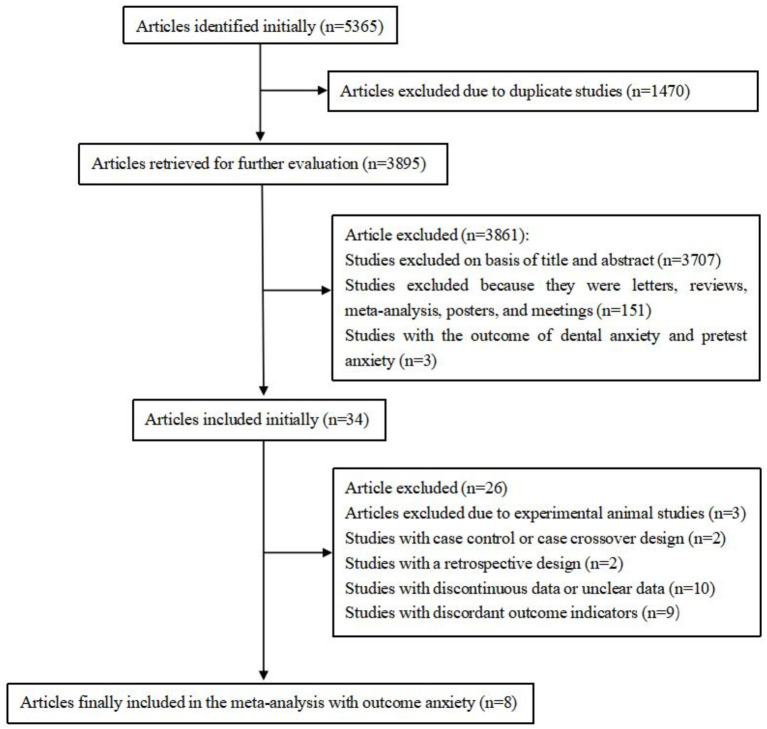
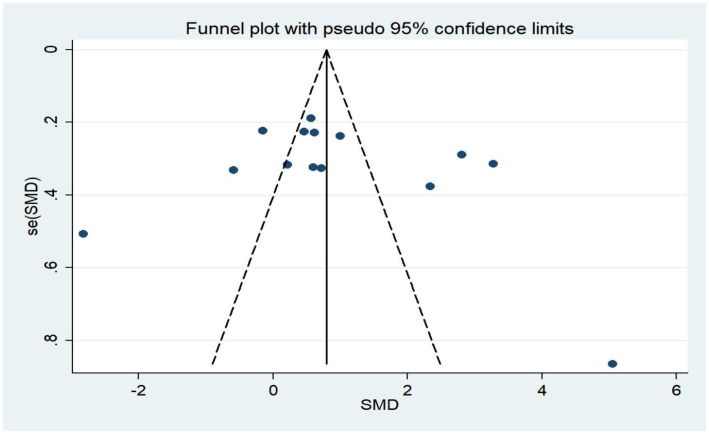
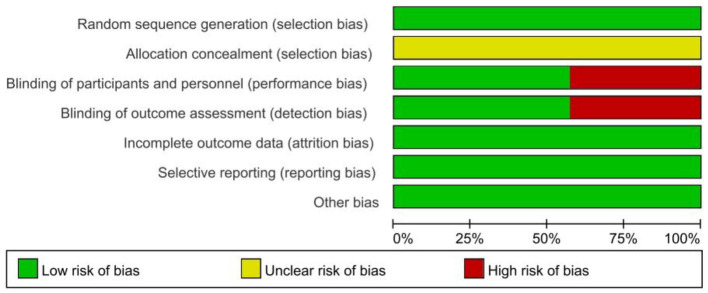
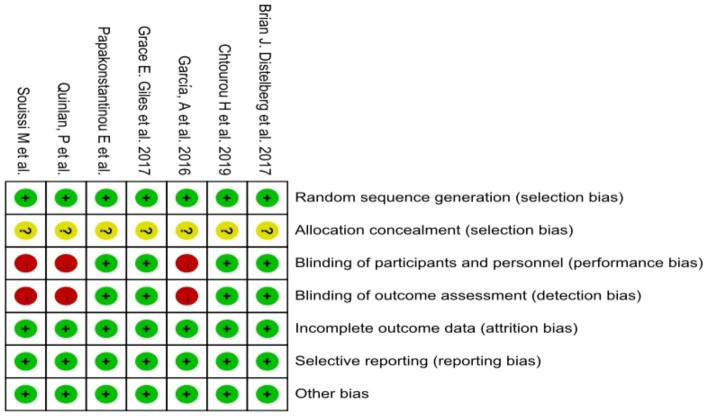
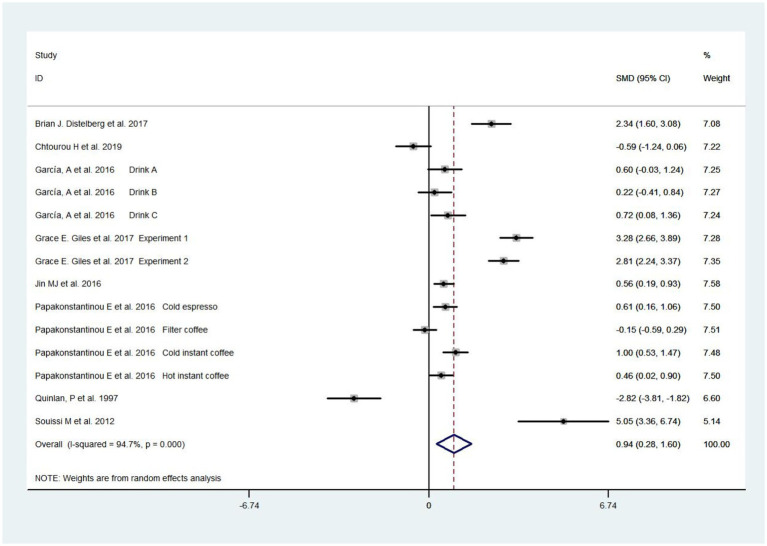
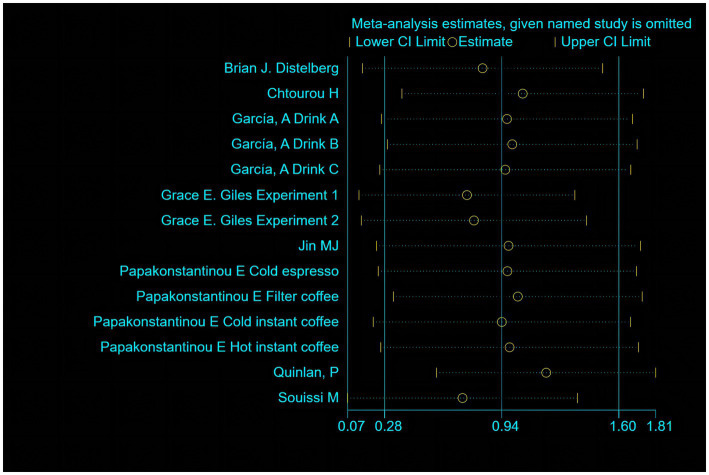
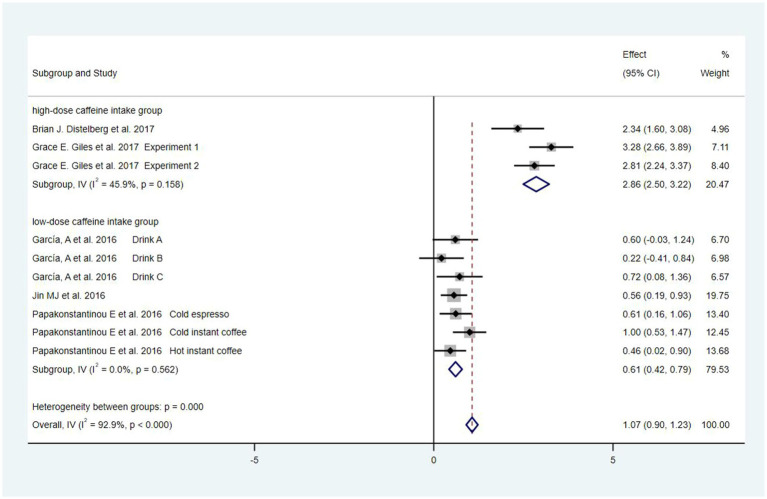
The results from studies on relationship between caffeine intake and risk of anxiety remains controversial, so we conducted a meta-analysis to summarize the evidence about the association between caffeine intake and risk of anxiety. Relevant articles were identified by researching PubMed, Web of Science, Cochrane library, Embase, CNKI, WANFANG DATA, SinoMed and VIP from the inception to December, 2022. Three investigators independently sifted through the literature, extracted the data, and evaluated the quality of the included studies based on predetermined selection criteria and assessed articles with Risk of bias assessment tool for Cochrane systematic reviews and analytical cross-sectional study quality assessment tool from JBI PACES. After assessing the quality of the literature, meta-analysis was performed using Revman 5.4 and Stata 12.0. Data were obtained from eight articles, and 546 participants from 14 studies in eight articles from healthy populations were included in the caffeine-anxiety analyses. As the scales used to assess anxiety vary in the literature, we chose standardized mean difference as the outcome indicator. In terms of overall effect, the results of the meta-analysis showed that caffeine intake increased the risk of anxiety [SMD = 0.94, 95% Cl = (0.28, 1.60), < 0.05]. After suspecting that dose size might be responsible for the heterogeneity by sensitivity analysis, we performed subgroup analysis according to dose size and found that low-dose caffeine intake moderately increased the risk of anxiety [SMD = 0.61, 95%Cl = (0.42, 0.79), < 0.05], whereas high-dose caffeine intake had a highly significant increase in the risk of anxiety [SMD = 2.86, 95%Cl = (2.50, 3.22), < 0.05]. The results confirm that caffeine intake is associated with an elevated risk of anxiety in healthy individuals without psychiatric disorders, especially when the intake dose is greater than 400 mg.
关于咖啡因摄入量与焦虑风险之间关系的研究结果仍存在争议,因此我们进行了一项荟萃分析,以总结有关咖啡因摄入量与焦虑风险之间关联的证据。通过检索PubMed、科学网、考克兰图书馆、Embase、中国知网、万方数据、中国生物医学文献数据库和维普资讯,从建库至2022年12月确定了相关文章。三名研究人员独立筛选文献、提取数据,并根据预先确定的选择标准评估纳入研究的质量,使用考克兰系统评价偏倚风险评估工具和JBI PACES的分析性横断面研究质量评估工具对文章进行评估。在评估文献质量后,使用Revman 5.4和Stata 12.0进行荟萃分析。数据来自八篇文章,八篇文章中14项研究的546名健康人群参与者被纳入咖啡因与焦虑的分析。由于文献中用于评估焦虑的量表各不相同,我们选择标准化均值差作为结局指标。在总体效应方面,荟萃分析结果显示,咖啡因摄入增加了焦虑风险[标准化均值差=0.94,95%置信区间=(0.28, 1.60),P<0.05]。通过敏感性分析怀疑剂量大小可能是异质性的原因后,我们根据剂量大小进行了亚组分析,发现低剂量咖啡因摄入适度增加了焦虑风险[标准化均值差=0.61,95%置信区间=(0.42, 0.79),P<0.05],而高剂量咖啡因摄入使焦虑风险显著增加[标准化均值差=2.86,95%置信区间=(2.50, 3.22),P<0.05]。结果证实,在无精神疾病的健康个体中,咖啡因摄入与焦虑风险升高有关,尤其是当摄入量大于400毫克时。