Key Laboratory of Agricultural Biosafety and Green Production of Upper Yangtze River (Ministry of Education), College of Plant Protection, Southwest University, Chongqing, China.
Institute for Plant Sciences, Cluster of Excellence on Plant Sciences, University of Cologne, Cologne, Germany.
Plant Biotechnol J. 2024 Jul;22(7):1929-1941. doi: 10.1111/pbi.14312. Epub 2024 Feb 16.
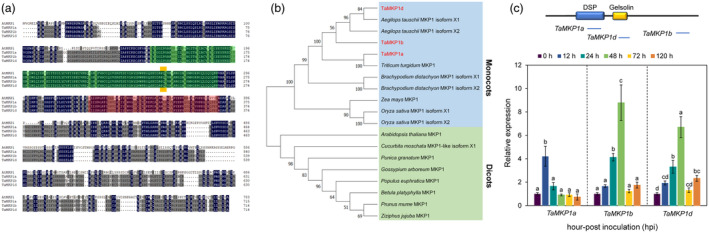
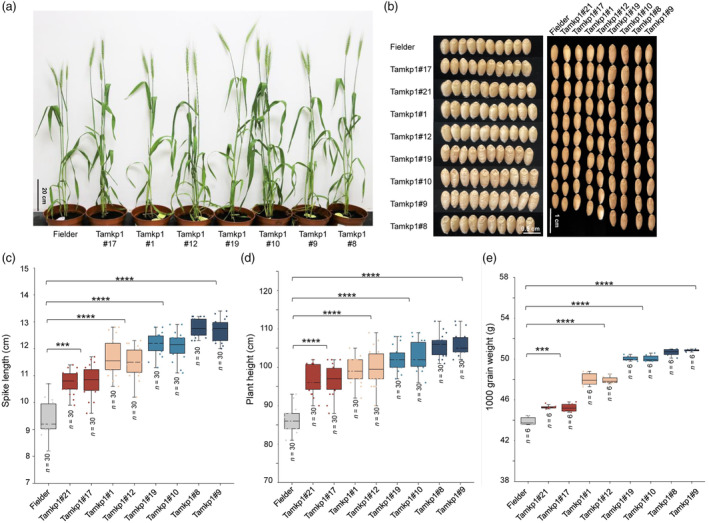
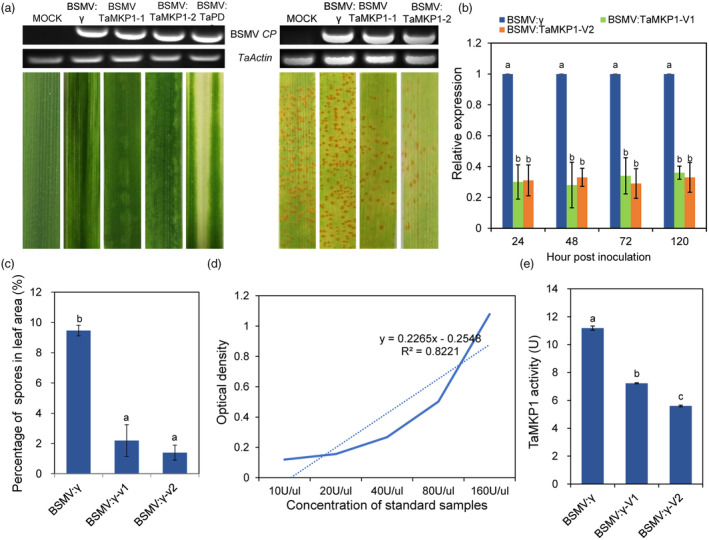
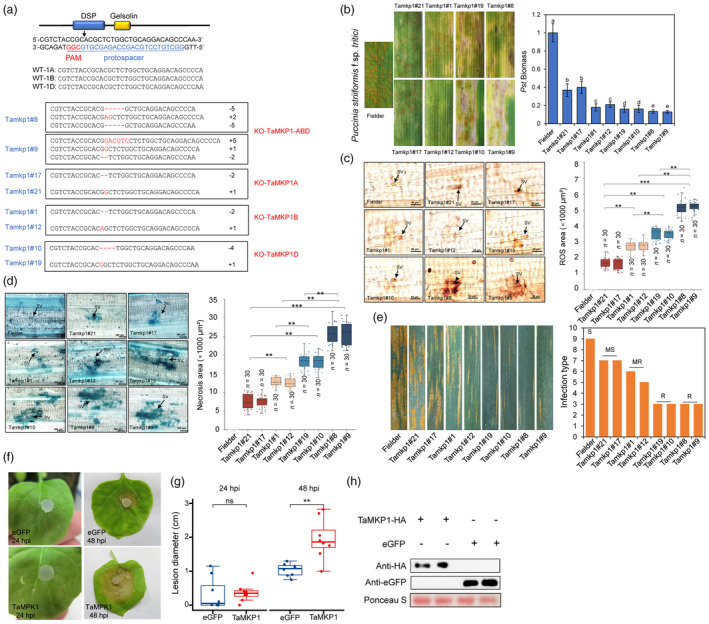
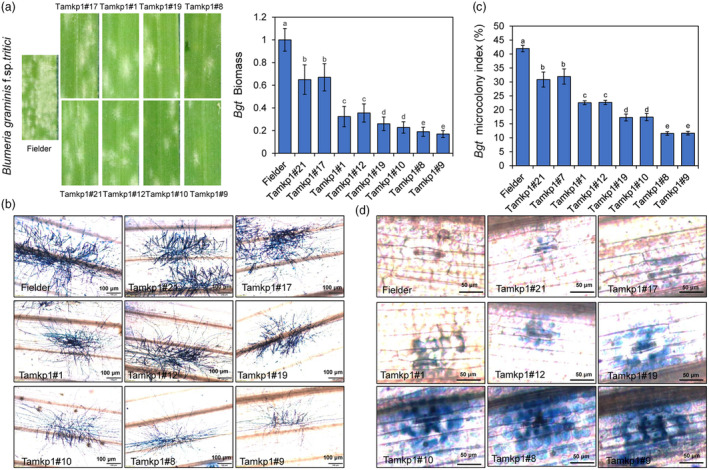
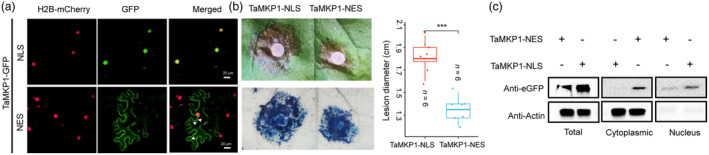
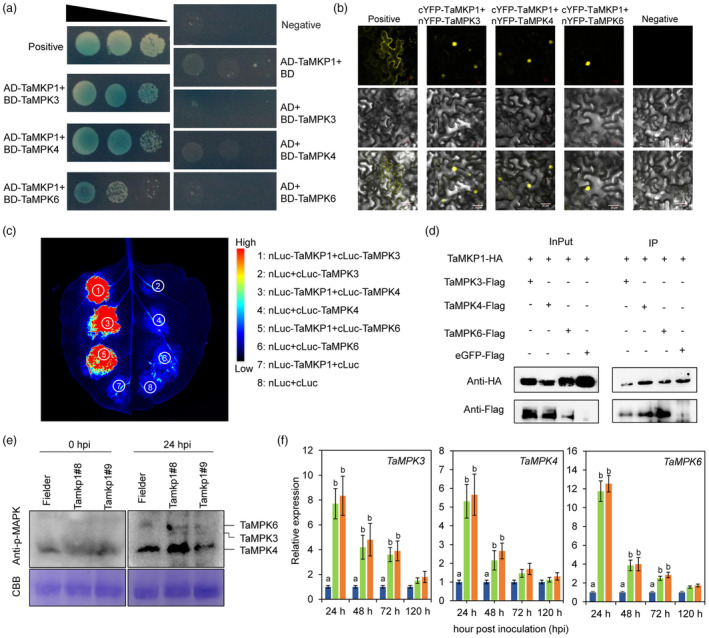
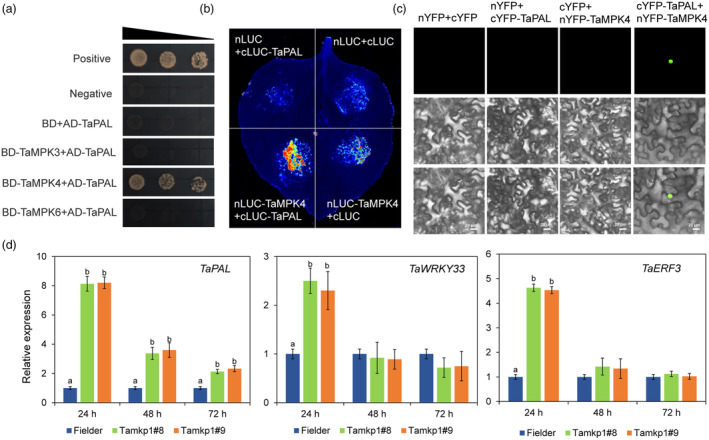
Plants have evolved a sophisticated immunity system for specific detection of pathogens and rapid induction of measured defences. Over- or constitutive activation of defences would negatively affect plant growth and development. Hence, the plant immune system is under tight positive and negative regulation. MAP kinase phosphatase1 (MKP1) has been identified as a negative regulator of plant immunity in model plant Arabidopsis. However, the molecular mechanisms by which MKP1 regulates immune signalling in wheat (Triticum aestivum) are poorly understood. In this study, we investigated the role of TaMKP1 in wheat defence against two devastating fungal pathogens and determined its subcellular localization. We demonstrated that knock-down of TaMKP1 by CRISPR/Cas9 in wheat resulted in enhanced resistance to rust caused by Puccinia striiformis f. sp. tritici (Pst) and powdery mildew caused by Blumeria graminis f. sp. tritici (Bgt), indicating that TaMKP1 negatively regulates disease resistance in wheat. Unexpectedly, while Tamkp1 mutant plants showed increased resistance to the two tested fungal pathogens they also had higher yield compared with wild-type control plants without infection. Our results suggested that TaMKP1 interacts directly with dephosphorylated and activated TaMPK3/4/6, and TaMPK4 interacts directly with TaPAL. Taken together, we demonstrated TaMKP1 exert negative modulating roles in the activation of TaMPK3/4/6, which are required for MAPK-mediated defence signalling. This facilitates our understanding of the important roles of MAP kinase phosphatases and MAPK cascades in plant immunity and production, and provides germplasm resources for breeding for high resistance and high yield.
植物进化出了复杂的免疫机制,用于特异性检测病原体并快速诱导适度的防御反应。防御反应的过度或组成性激活会对植物的生长和发育产生负面影响。因此,植物免疫系统受到严格的正调控和负调控。MAP 激酶磷酸酶 1(MKP1)已被鉴定为拟南芥植物免疫的负调控因子。然而,MKP1 调节小麦(Triticum aestivum)免疫信号的分子机制知之甚少。在这项研究中,我们研究了 TaMKP1 在小麦抵御两种破坏性真菌病原体中的作用,并确定了其亚细胞定位。我们证明了通过 CRISPR/Cas9 在小麦中敲除 TaMKP1 导致对由 Puccinia striiformis f. sp. tritici(Pst)引起的锈病和由 Blumeria graminis f. sp. tritici(Bgt)引起的白粉病的抗性增强,表明 TaMKP1 负调控小麦的抗病性。出乎意料的是,虽然 Tamkp1 突变体植物对两种测试的真菌病原体表现出更高的抗性,但与未感染的野生型对照植物相比,它们的产量也更高。我们的结果表明 TaMKP1 与去磷酸化和激活的 TaMPK3/4/6 直接相互作用,并且 TaMPK4 与 TaPAL 直接相互作用。总之,我们证明 TaMKP1 在 TaMPK3/4/6 的激活中发挥负调节作用,这是 MAPK 介导的防御信号所必需的。这有助于我们理解 MAP 激酶磷酸酶和 MAPK 级联在植物免疫和生产中的重要作用,并为培育高抗性和高产量的品种提供了种质资源。