Department of Cardiology, Institute of Translational Medicine, Medical College, Yangzhou University, Yangzhou, Jiangsu, China.
Department of Cardiology, Northern Jiangsu People's Hospital, 98 Nantong West Road, Yangzhou, Jiangsu, China.
J Transl Med. 2024 Feb 17;22(1):168. doi: 10.1186/s12967-024-04981-7.
MicroRNA (miRNA)-based therapies have shown great potential in myocardial repair following myocardial infarction (MI). MicroRNA-302 (miR302) has been reported to exert a protective effect on MI. However, miRNAs are easily degraded and ineffective in penetrating cells, which limit their clinical applications. Exosomes, which are small bioactive molecules, have been considered as an ideal vehicle for miRNAs delivery due to their cell penetration, low immunogenicity and excellent stability potential. Herein, we explored cardiomyocyte-targeting exosomes as vehicles for delivery of miR302 into cardiomyocyte to potentially treat MI.
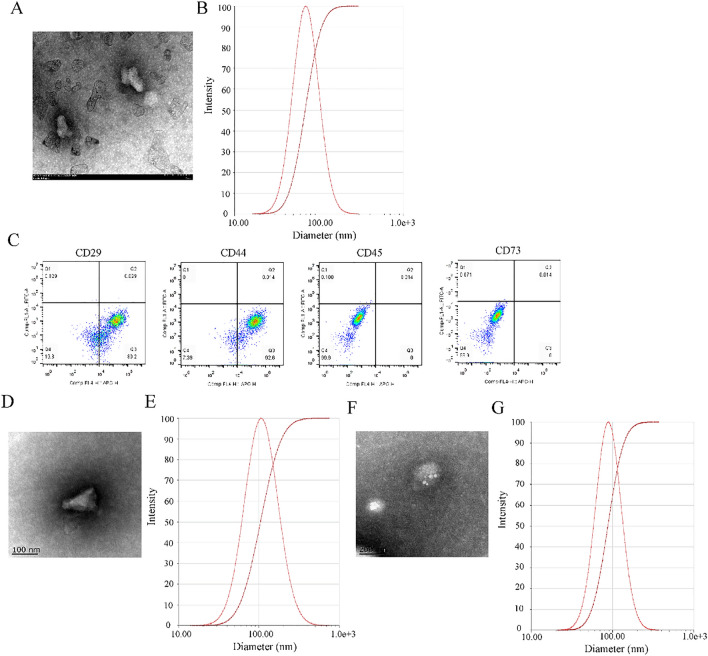
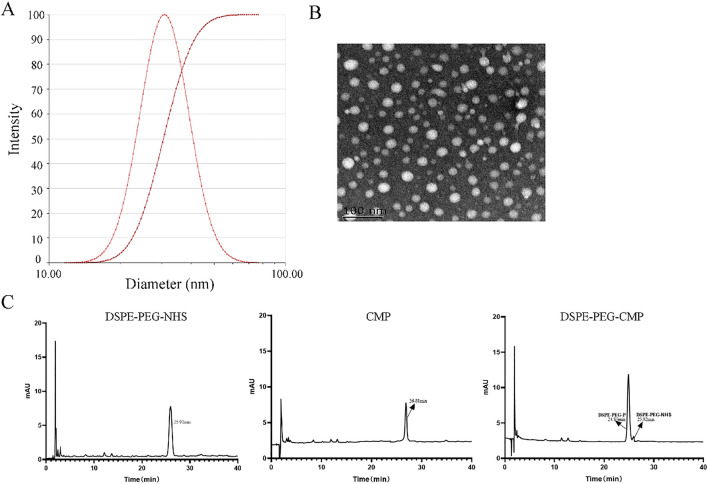
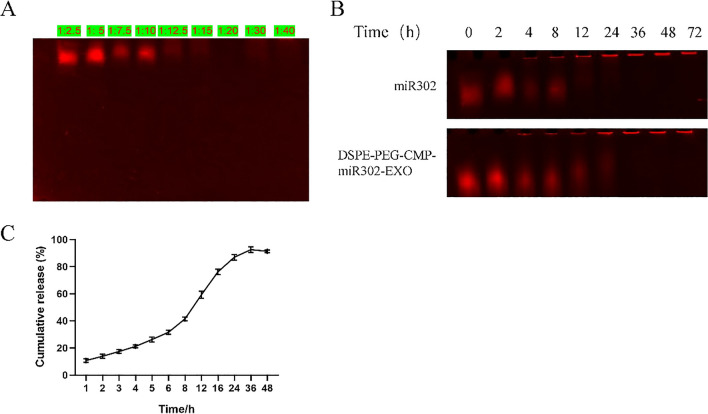
To generate an efficient exosomal delivery system that can target cardiomyocytes, we engineered exosomes with cardiomyocyte specific peptide (CMP, WLSEAGPVVTVRALRGTGSW). Afterwards, the engineered exosomes were characterized and identified using transmission electron microscope (TEM) and Nanoparticle Tracking Analysis (NTA). Later on, the miR302 mimics were loaded into the engineered exosomes via electroporation technique. Subsequently, the effect of the engineered exosomes on myocardial ischemia and reperfusion (I/R) injury was evaluated in vitro and in vivo, including MTT, ELISA, real-time quantitative polymerase chain reaction (PCR), western blot, TUNNEL staining, echocardiogram and hematoxylin and eosin (HE) staining.
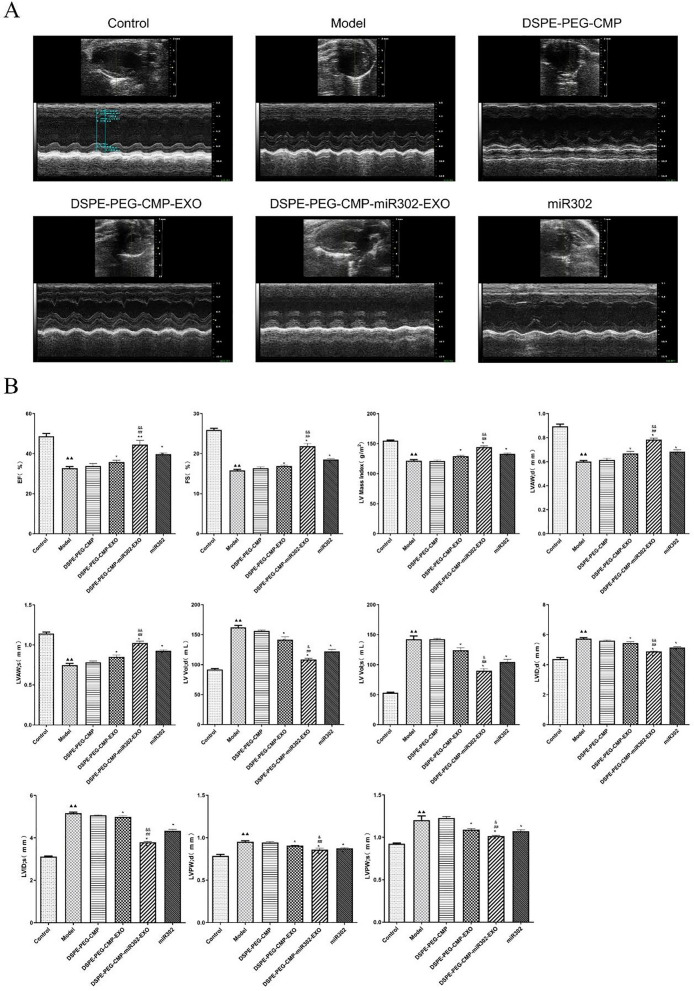
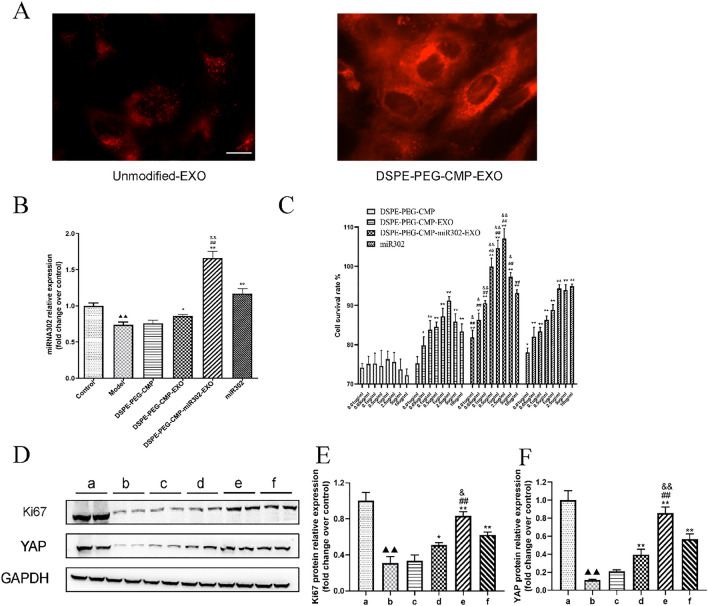
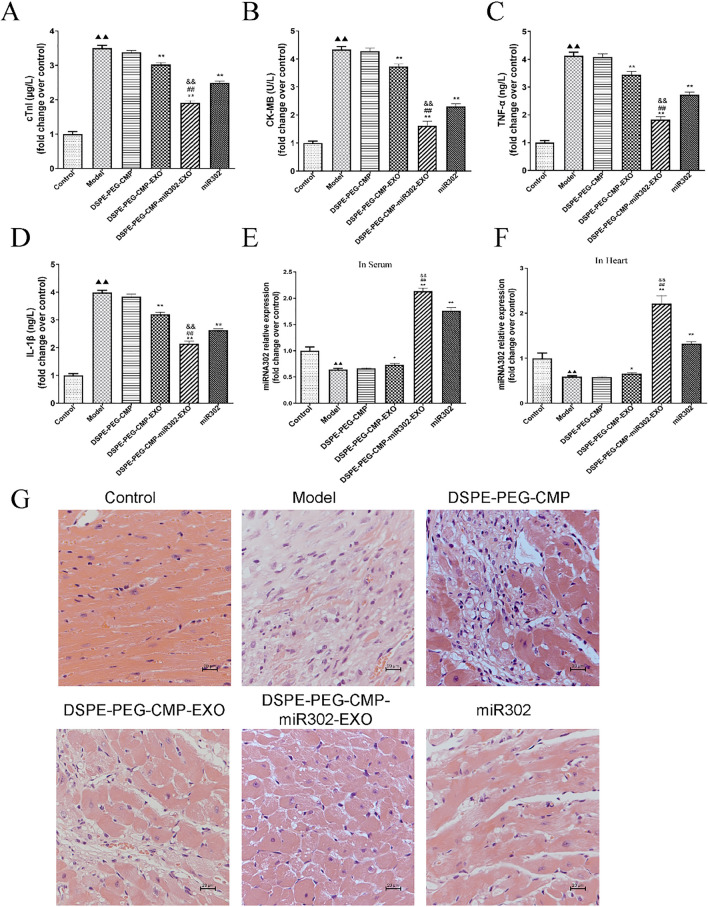
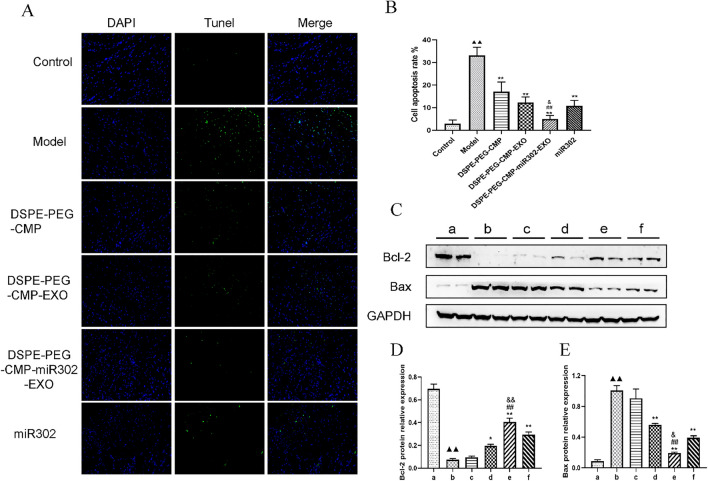
Results of in vitro experimentation showed that DSPE-PEG-CMP-EXO could be more efficiently internalized by H9C2 cells than unmodified exosomes (blank-exosomes). Importantly, compared with the DSPE-PEG-CMP-EXO group, DSPE-PEG-CMP-miR302-EXO significantly upregulated the expression of miR302, while exosomes loaded with miR302 could enhance proliferation of H9C2 cells. Western blot results showed that the DSPE-PEG-CMP-miR302-EXO significantly increased the protein level of Ki67 and Yap, which suggests that DSPE-PEG-CMP-miR302-EXO enhanced the activity of Yap, the principal downstream effector of Hippo pathway. In vivo, DSPE-PEG-CMP-miR302-EXO improved cardiac function, attenuated myocardial apoptosis and inflammatory response, as well as reduced infarct size significantly.
In conclusion, our findings suggest that CMP-engineered exosomes loaded with miR302 was internalized by H9C2 cells, an in vitro model for cardiomyocytes coupled with potential enhancement of the therapeutic effects on myocardial I/R injury.
基于 microRNA(miRNA)的治疗方法在心肌梗死后的心肌修复中显示出巨大的潜力。已经报道 microRNA-302(miR302)对心肌梗死具有保护作用。然而,miRNA 容易降解,并且不易穿透细胞,这限制了它们的临床应用。外泌体作为一种小的生物活性分子,由于其细胞穿透性、低免疫原性和优异的稳定性潜力,已被认为是 miRNA 递送的理想载体。在此,我们探索了心肌细胞靶向的外泌体作为载体,将 miR302 递送到心肌细胞中,以潜在地治疗心肌梗死。
为了开发一种能够靶向心肌细胞的高效外泌体递送系统,我们使用心肌细胞特异性肽(CMP,WLSEAGPVVTVRALRGTGSW)对 exosomes 进行了工程化修饰。然后,使用透射电子显微镜(TEM)和纳米颗粒跟踪分析(NTA)对工程化的 exosomes 进行了表征和鉴定。随后,通过电穿孔技术将 miR302 模拟物加载到工程化的 exosomes 中。随后,在体外和体内评估了工程化的 exosomes 对心肌缺血再灌注(I/R)损伤的影响,包括 MTT、ELISA、实时定量聚合酶链反应(PCR)、Western blot、TUNNEL 染色、超声心动图和苏木精和伊红(HE)染色。
体外实验结果表明,DSPE-PEG-CMP-EXO 比未经修饰的 exosomes(空白-exosomes)更能被 H9C2 细胞有效内化。重要的是,与 DSPE-PEG-CMP-EXO 组相比,DSPE-PEG-CMP-miR302-EXO 显著上调了 miR302 的表达,而负载 miR302 的 exosomes 可增强 H9C2 细胞的增殖。Western blot 结果表明,DSPE-PEG-CMP-miR302-EXO 显著增加了 Ki67 和 yap 的蛋白水平,这表明 DSPE-PEG-CMP-miR302-EXO 增强了 Hippo 通路的主要下游效应物 yap 的活性。在体内,DSPE-PEG-CMP-miR302-EXO 显著改善了心脏功能,减轻了心肌细胞凋亡和炎症反应,并显著减少了梗死面积。
总之,我们的研究结果表明,CMP 工程化的 exosomes 负载 miR302 被 H9C2 细胞内化,这是一种体外心肌细胞模型,同时增强了对心肌 I/R 损伤的治疗效果。