Department of Molecular and Structural Biochemistry, NC State University, Raleigh, NC, USA.
Department of Molecular Physiology and Biophysics, Vanderbilt University School of Medicine, Nashville, TN, USA.
Sci Rep. 2024 Feb 18;14(1):4020. doi: 10.1038/s41598-024-54272-w.
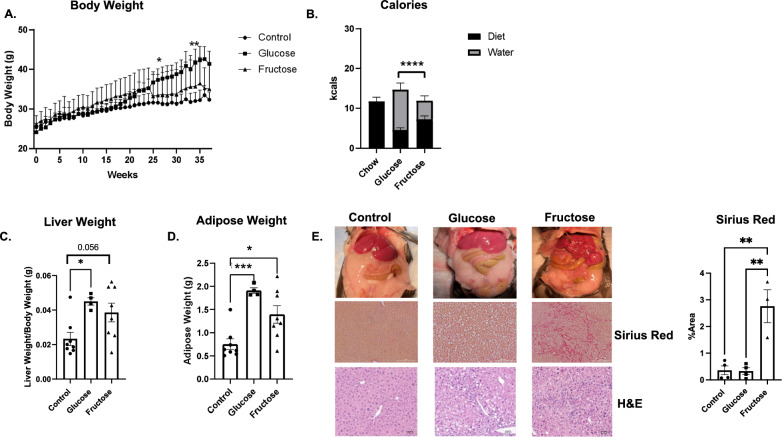
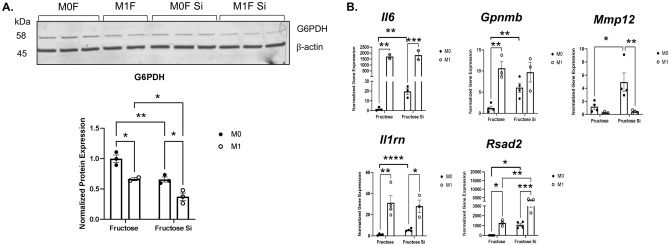
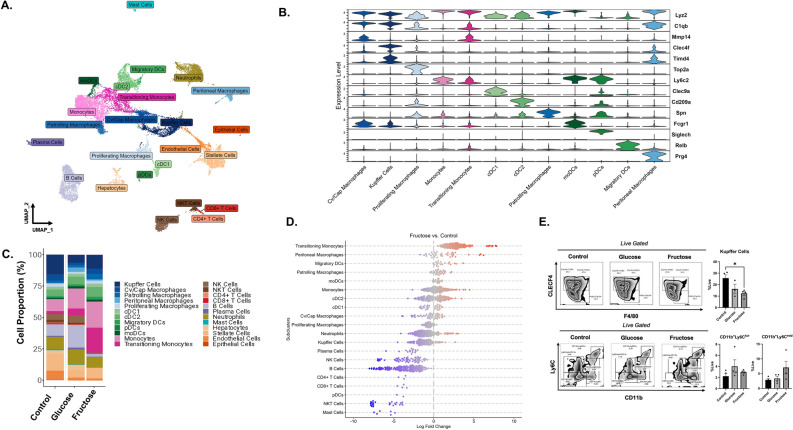
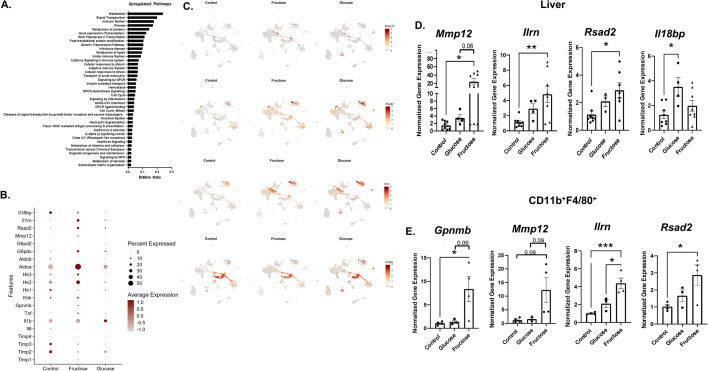
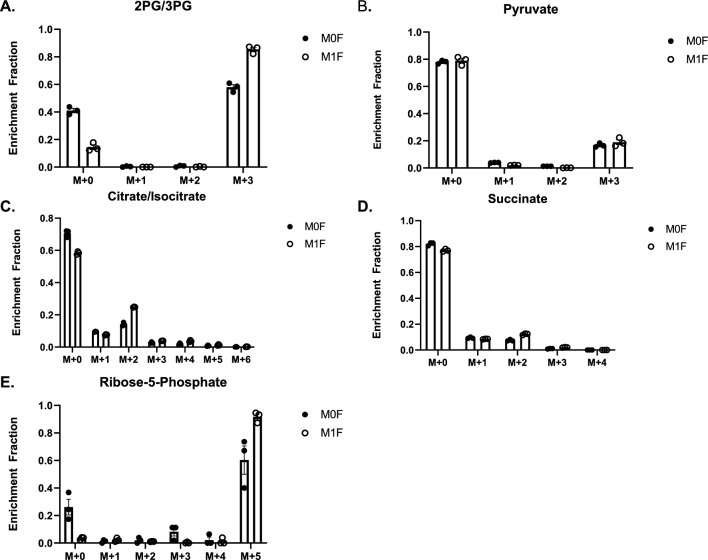
Over-consumption of fructose in adults and children has been linked to increased risk of non-alcoholic fatty liver disease (NAFLD). Recent studies have highlighted the effect of fructose on liver inflammation, fibrosis, and immune cell activation. However, little work summarizes the direct impact of fructose on macrophage infiltration, phenotype, and function within the liver. We demonstrate that chronic fructose diet decreased Kupffer cell populations while increasing transitioning monocytes. In addition, fructose increased fibrotic gene expression of collagen 1 alpha 1 (Col1a1) and tissue metallopeptidase inhibitor 1 (Timp1) as well as inflammatory gene expression of tumor necrosis factor alpha (Tnfa) and expression of transmembrane glycoprotein NMB (Gpnmb) in liver tissue compared to glucose and control diets. Single cell RNA sequencing (scRNAseq) revealed fructose elevated expression of matrix metallopeptidase 12 (Mmp12), interleukin 1 receptor antagonist (Il1rn), and radical S-adenosyl methionine domain (Rsad2) in liver and hepatic macrophages. In vitro studies using IMKC and J774.1 cells demonstrated decreased viability when exposed to fructose. Additionally, fructose increased Gpnmb, Tnfa, Mmp12, Il1rn, and Rsad2 in unpolarized IMKC. By mass spectrometry, C13 fructose tracing detected fructose metabolites in glycolysis and the pentose phosphate pathway (PPP). Inhibition of the PPP further increased fructose induced Il6, Gpnmb, Mmp12, Il1rn, and Rsad2 in nonpolarized IMKC. Taken together, fructose decreases cell viability while upregulating resolution and anti-inflammatory associated genes in Kupffer cells.
在成年人和儿童中,果糖摄入过多与非酒精性脂肪性肝病 (NAFLD) 的风险增加有关。最近的研究强调了果糖对肝脏炎症、纤维化和免疫细胞激活的影响。然而,很少有工作总结果糖对肝脏内巨噬细胞浸润、表型和功能的直接影响。我们证明,慢性果糖饮食会减少库普弗细胞群体,同时增加转化中的单核细胞。此外,与葡萄糖和对照饮食相比,果糖会增加肝脏组织中胶原蛋白 1 阿尔法 1 (Col1a1) 和组织金属蛋白酶抑制剂 1 (Timp1) 的纤维化基因表达,以及肿瘤坏死因子 alpha (Tnfa) 和跨膜糖蛋白 NMB (Gpnmb) 的炎症基因表达。单细胞 RNA 测序 (scRNAseq) 显示,果糖会在肝脏和肝巨噬细胞中上调基质金属蛋白酶 12 (Mmp12)、白细胞介素 1 受体拮抗剂 (Il1rn) 和激进 S-腺苷甲硫氨酸结构域 (Rsad2) 的表达。使用 IMKC 和 J774.1 细胞进行的体外研究表明,暴露于果糖会降低细胞活力。此外,果糖会增加未极化 IMKC 中的 Gpnmb、Tnfa、Mmp12、Il1rn 和 Rsad2。通过质谱分析,C13 果糖追踪检测到糖酵解和戊糖磷酸途径 (PPP) 中的果糖代谢物。PPP 的抑制进一步增加了非极化 IMKC 中果糖诱导的 Il6、Gpnmb、Mmp12、Il1rn 和 Rsad2 的表达。总之,果糖会降低细胞活力,同时上调库普弗细胞中与分辨率和抗炎相关的基因。