Sun Yimeng, Wang Xiaoyan, Yao Lin, He Rong, Man Changfeng, Fan Yu
Cancer Institute, Affiliated People's Hospital of Jiangsu University, Zhenjiang, Jiangsu, China.
Department of Gastroenterology, Suqian First People's Hospital, Suqian, Jiangsu, China.
Front Oncol. 2024 Feb 5;14:1246308. doi: 10.3389/fonc.2024.1246308. eCollection 2024.
Tumor immune microenvironment (TiME) is prognostically instructive in Pancreatic adenocarcinoma (PAAD). However, the potential value of TiME-related genes in the individualized immunotherapy of PAAD has not been clarified.
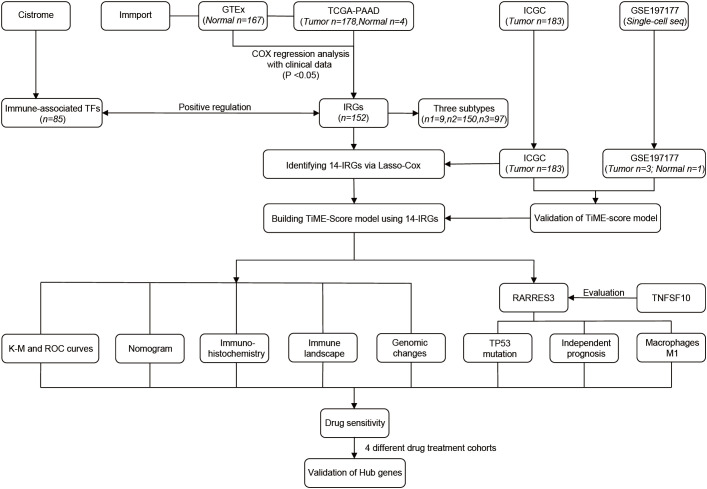
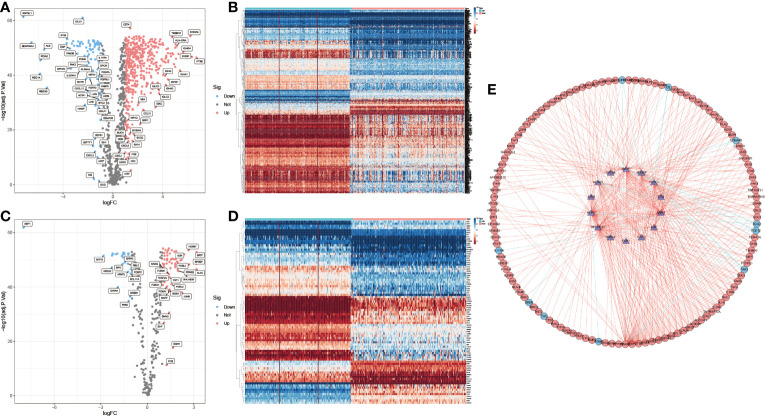
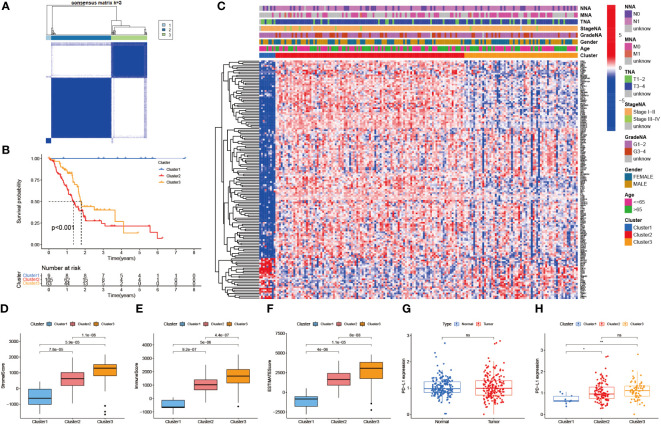
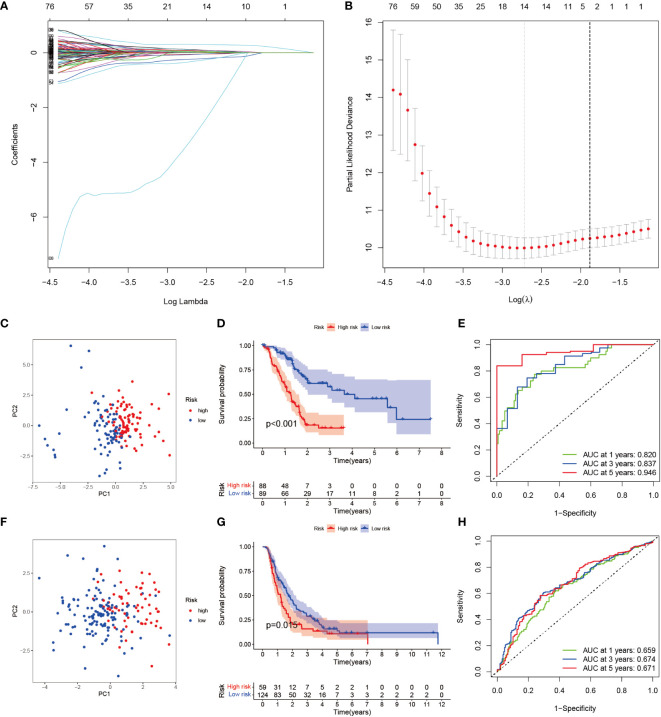
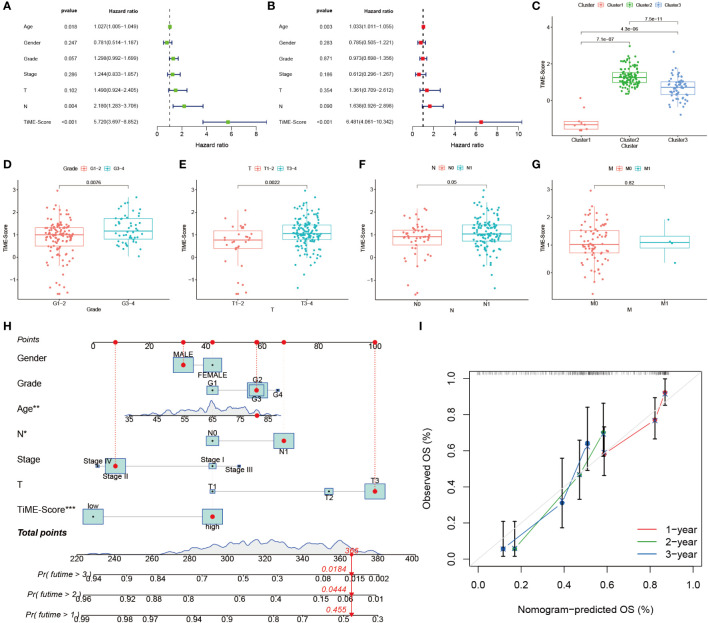
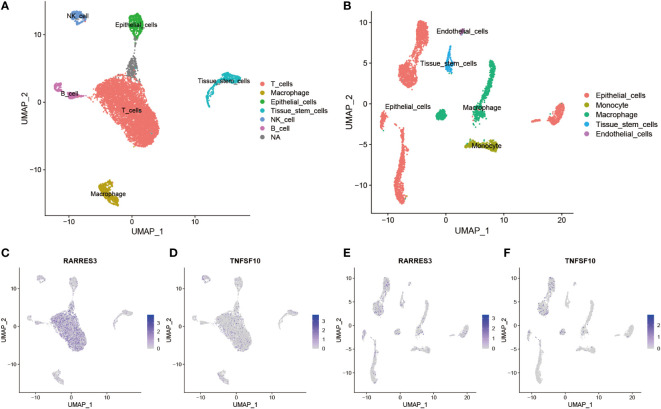
Correlation between Immune-Related Genes (IRGs) and immune-related transcription factors (TFs) was performed to prove the immune correlation of selected genes. Immune-related molecular subtypes were identified by consensus clustering. The TiME-score, an immune microenvironment-related prognostic signature for PAAD, was constructed using minimum absolute contraction and selection operator regression (Lasso-Cox). The International Cancer Genome Consortium (ICGC) dataset validated the reliability of TiME-score as external validation. Single-cell samples from GSE197177 confirmed microenvironment differences of TiME-score hub genes between tumor and its paracancer tissues. Then, RARRES3, a hub gene in TiME-score, was further analyzed about its upstream TP53 mutation and the specific immune landscape of itself in transcriptome and Single-cell level. Eventually, TiME-score were validated in different therapeutic cohorts of PAAD mice models.
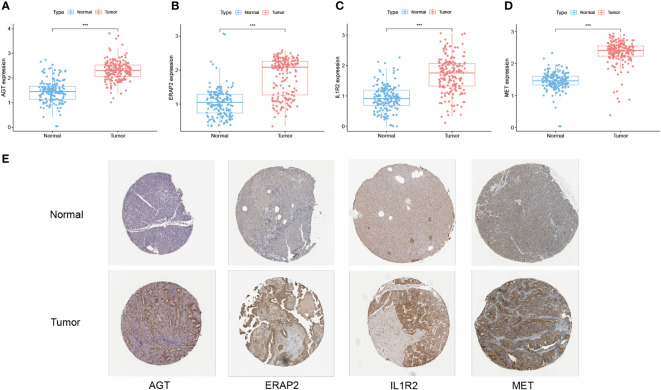
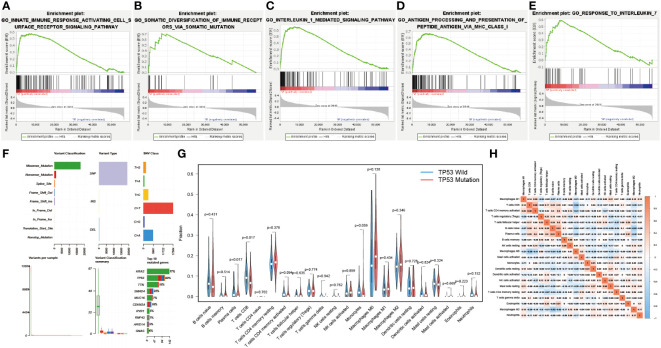
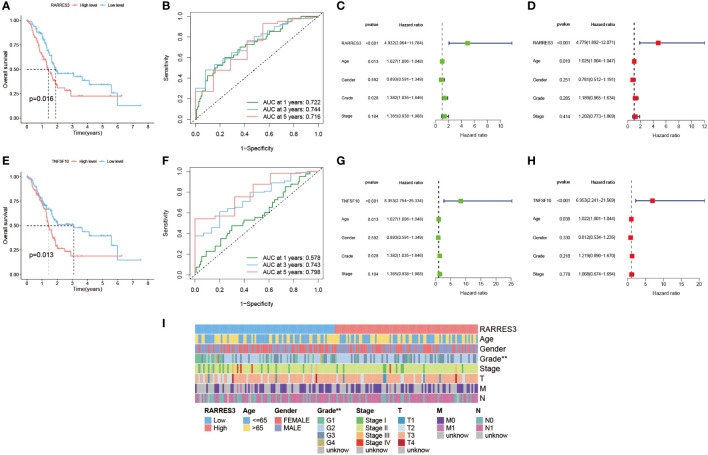
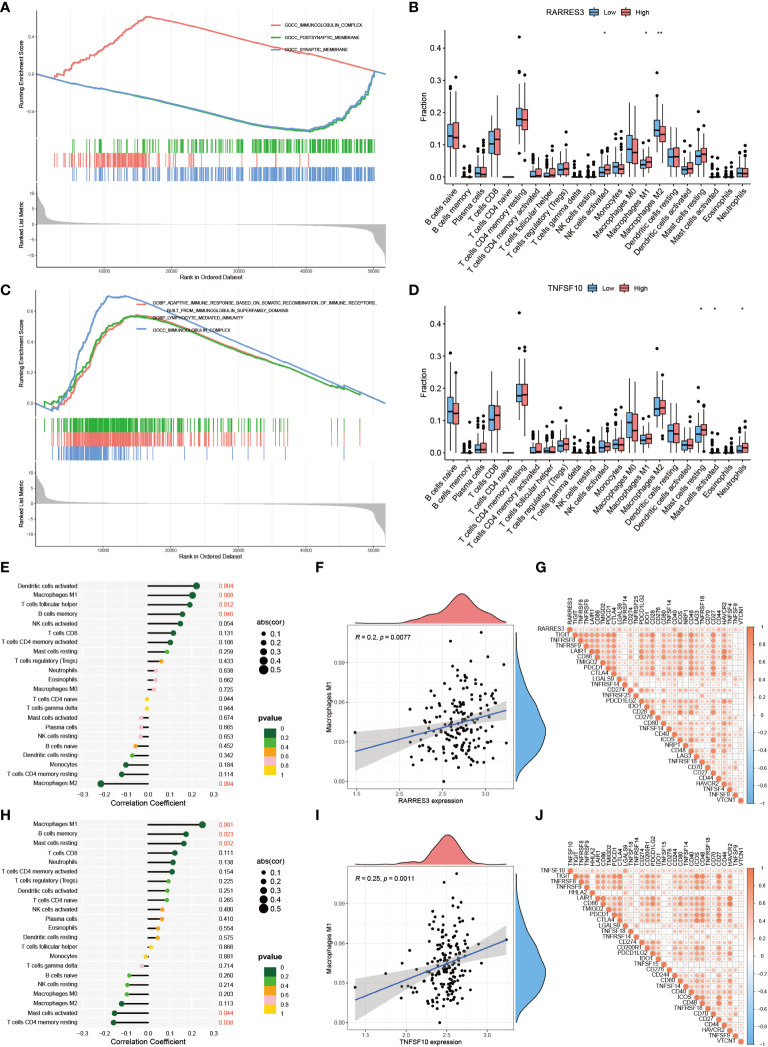
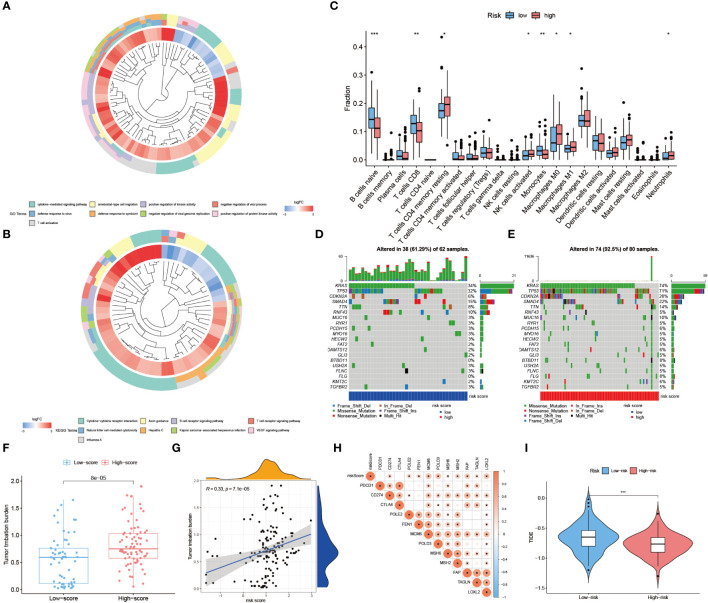
A 14-genes PAAD immune-related risk signature, TiME-score, was constructed based on IRGs. The differences of TiME-score hub genes in single-cell samples of PAAD cancer tissues and adjacent tissues were consistent with the transcriptome. Single-cell samples of cancer tissues showed more pronounced immune cell infiltration. The upstream mutation factor TP53 of RARRES3 was significantly enriched in immune-related biological processes. High RARRES3 expression was correlated with a worse prognosis and high macrophages M1 infiltration. Additionally, the immunohistochemistry of hub genes AGT, DEFB1, GH1, IL20RB, and TRAF3 in different treatment cohorts of mice PAAD models were consistent with the predicted results. The combination of immunotherapy, chemotherapy and targeted therapy has shown significantly better therapeutic effects than single drug therapy in PAAD.
TiME-score, as a prognostic signature related to PAAD-specific immune microenvironment constructed based on RARRES3, has predictive value for prognosis and the potential to guide individualized immunotherapy for PAAD patients.
肿瘤免疫微环境(TiME)对胰腺腺癌(PAAD)的预后具有指导意义。然而,TiME相关基因在PAAD个体化免疫治疗中的潜在价值尚未明确。
进行免疫相关基因(IRGs)与免疫相关转录因子(TFs)之间的相关性分析,以证明所选基因的免疫相关性。通过一致性聚类确定免疫相关分子亚型。使用最小绝对收缩和选择算子回归(Lasso-Cox)构建TiME评分,这是一种与PAAD免疫微环境相关的预后特征。国际癌症基因组联盟(ICGC)数据集作为外部验证,验证了TiME评分的可靠性。来自GSE197177的单细胞样本证实了肿瘤及其癌旁组织之间TiME评分枢纽基因的微环境差异。然后,进一步分析TiME评分中的枢纽基因RARRES3的上游TP53突变及其在转录组和单细胞水平上自身的特定免疫格局。最终,在PAAD小鼠模型的不同治疗队列中验证了TiME评分。
基于IRGs构建了一个包含14个基因的PAAD免疫相关风险特征TiME评分。PAAD癌组织和相邻组织单细胞样本中TiME评分枢纽基因的差异与转录组一致。癌组织的单细胞样本显示出更明显的免疫细胞浸润。RARRES3的上游突变因子TP53在免疫相关生物学过程中显著富集。高RARRES3表达与较差的预后和高巨噬细胞M1浸润相关。此外,在小鼠PAAD模型的不同治疗队列中,枢纽基因AGT、DEFB1、GH1、IL20RB和TRAF3的免疫组化结果与预测结果一致。在PAAD中,免疫治疗、化疗和靶向治疗联合使用显示出比单一药物治疗显著更好的治疗效果。
TiME评分作为基于RARRES3构建的与PAAD特异性免疫微环境相关的预后特征,对PAAD患者的预后具有预测价值,并具有指导个体化免疫治疗的潜力。