Thomas W Mitchel, Zuniga Steven A, Sondh Inderbir, Leber Moritz, Solzbacher Florian, Lenarz Thomas, Lim Hubert H, Warren David J, Rieth Loren, Adams Meredith E
Department of Biomedical Engineering, University of Utah, Salt Lake City, UT, United States.
Department of Otolaryngology-Head and Neck Surgery, University of Minnesota, Minneapolis, MN, United States.
Front Neurosci. 2024 Feb 6;18:1308663. doi: 10.3389/fnins.2024.1308663. eCollection 2024.
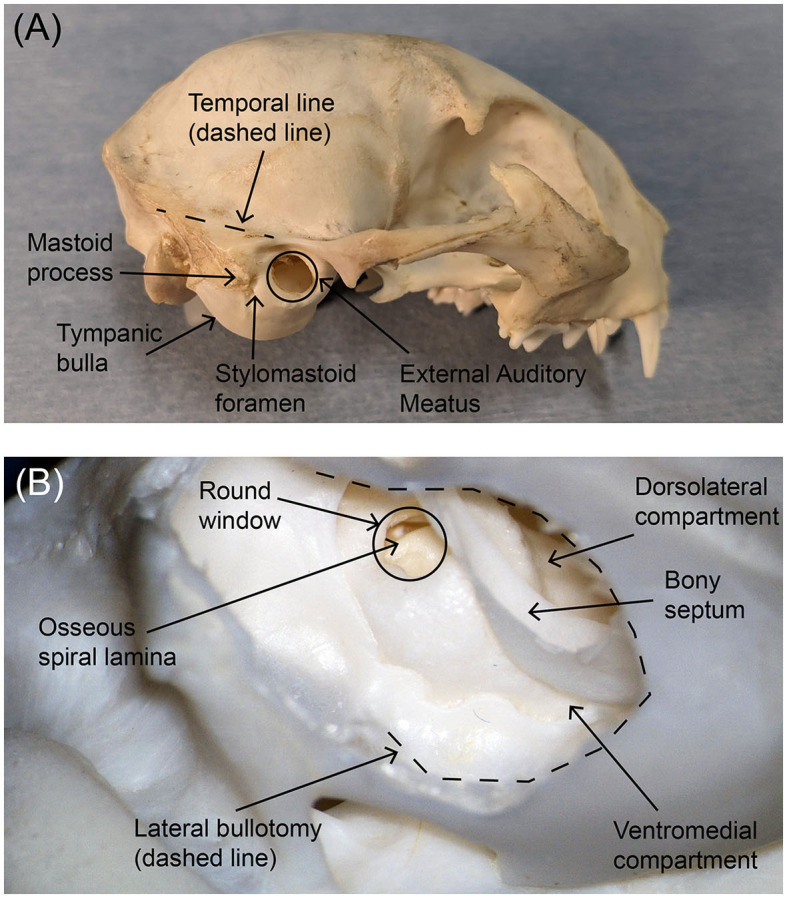
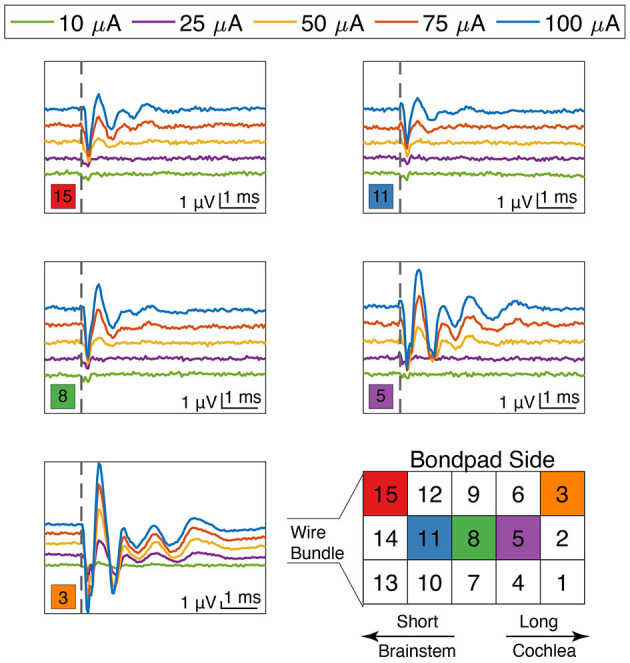
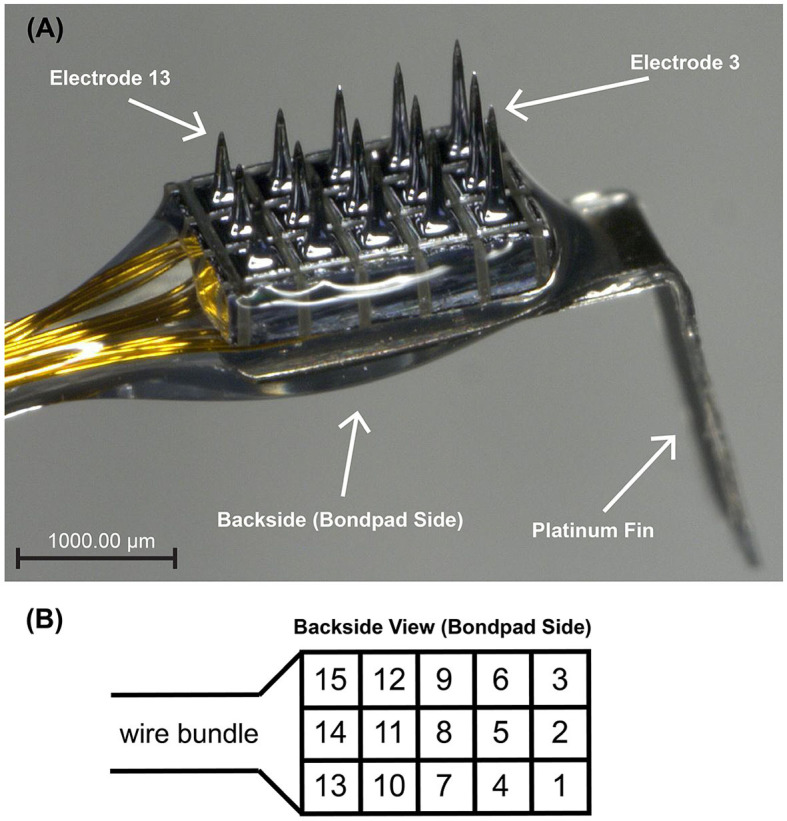
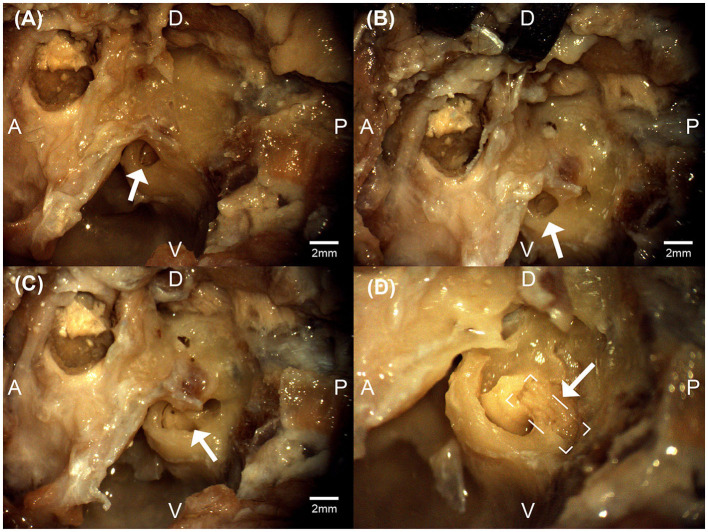
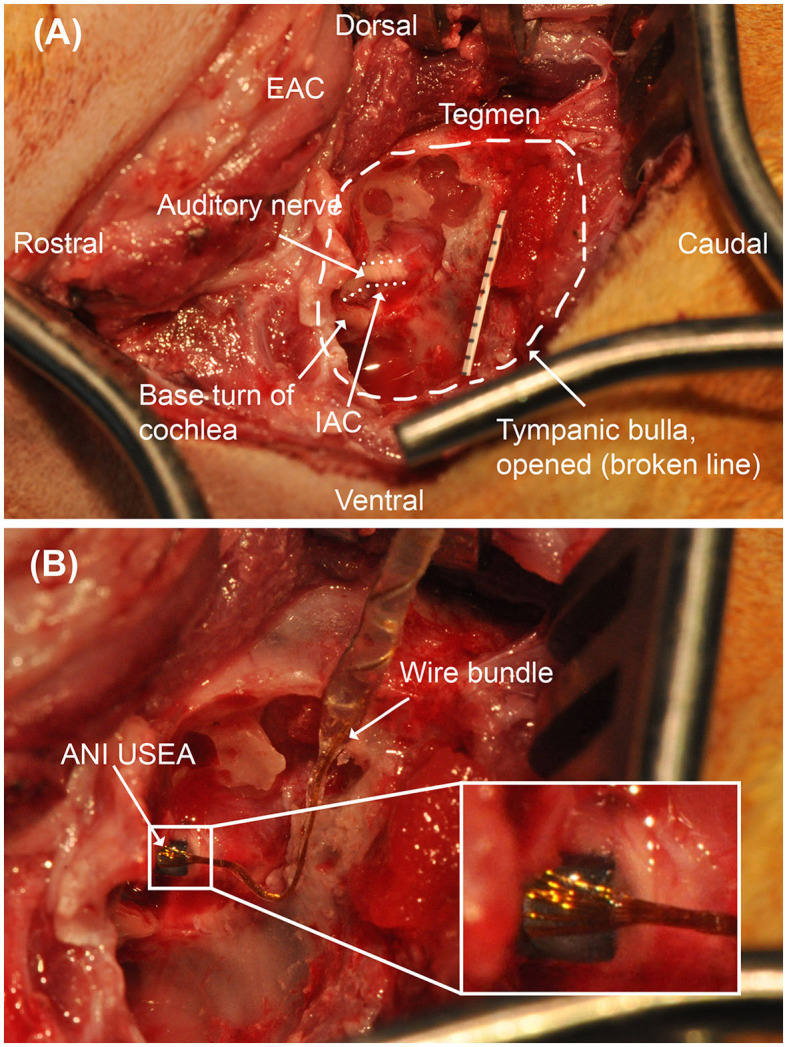
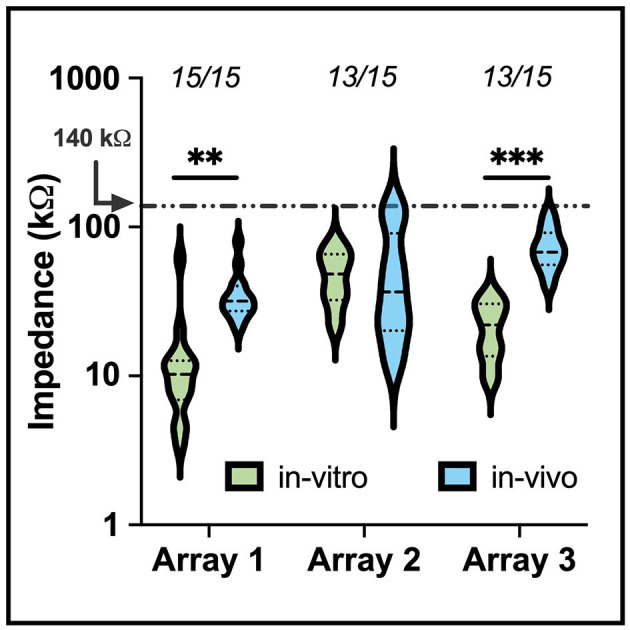
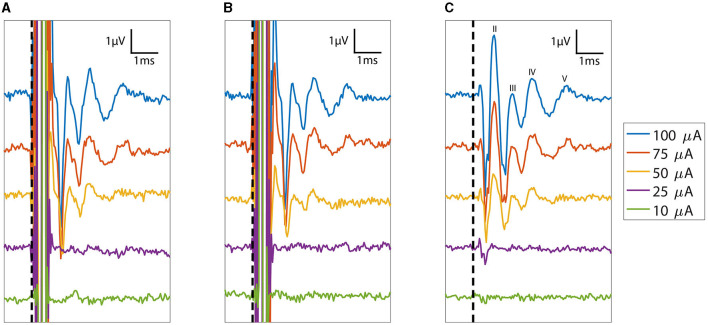
Cochlear implants are among the most successful neural prosthetic devices to date but exhibit poor frequency selectivity and the inability to consistently activate apical (low frequency) spiral ganglion neurons. These issues can limit hearing performance in many cochlear implant patients, especially for understanding speech in noisy environments and in perceiving or appreciating more complex inputs such as music and multiple talkers. For cochlear implants, electrical current must pass through the bony wall of the cochlea, leading to widespread activation of auditory nerve fibers. Cochlear implants also cannot be implanted in some individuals with an obstruction or severe malformations of the cochlea. Alternatively, intraneural stimulation delivered via an auditory nerve implant could provide direct contact with neural fibers and thus reduce unwanted current spread. More confined current during stimulation can increase selectivity of frequency fiber activation. Furthermore, devices such as the Utah Slanted Electrode Array can provide access to the full cross section of the auditory nerve, including low frequency fibers that are difficult to reach using a cochlear implant. However, further scientific and preclinical research of these Utah Slanted Electrode Array devices is limited by the lack of a chronic large animal model for the auditory nerve implant, especially one that leverages an appropriate surgical approach relevant for human translation. This paper presents a newly developed transbullar translabyrinthine surgical approach for implanting the auditory nerve implant into the cat auditory nerve. In our first of a series of studies, we demonstrate a surgical approach in non-recovery experiments that enables implantation of the auditory nerve implant into the auditory nerve, without damaging the device and enabling effective activation of the auditory nerve fibers, as measured by electrode impedances and electrically evoked auditory brainstem responses. These positive results motivate performing future chronic cat studies to assess the long-term stability and function of these auditory nerve implant devices, as well as development of novel stimulation strategies that can be translated to human patients.
人工耳蜗是迄今为止最成功的神经假体装置之一,但存在频率选择性差以及无法持续激活顶端(低频)螺旋神经节神经元的问题。这些问题会限制许多人工耳蜗植入患者的听力表现,尤其是在嘈杂环境中理解言语以及感知或欣赏更复杂的输入内容(如音乐和多个说话者)方面。对于人工耳蜗来说,电流必须穿过耳蜗的骨壁,导致听神经纤维广泛激活。人工耳蜗也无法植入一些耳蜗有阻塞或严重畸形的个体。相比之下,通过听神经植入物进行的神经内刺激可以直接接触神经纤维,从而减少不必要的电流扩散。刺激过程中更局限的电流可以提高频率纤维激活的选择性。此外,诸如犹他倾斜电极阵列之类的装置可以接触到听神经的整个横截面,包括使用人工耳蜗难以触及的低频纤维。然而,这些犹他倾斜电极阵列装置的进一步科学研究和临床前研究受到缺乏用于听神经植入的慢性大型动物模型的限制,尤其是缺乏一种利用与人类转化相关的合适手术方法的模型。本文介绍了一种新开发的经鼓室经迷路手术方法,用于将听神经植入物植入猫的听神经。在我们一系列研究的第一项中,我们在非恢复性实验中展示了一种手术方法,该方法能够将听神经植入物植入听神经,而不会损坏该装置,并能有效激活听神经纤维,这通过电极阻抗和电诱发听性脑干反应来衡量。这些积极结果促使我们开展未来的慢性猫研究,以评估这些听神经植入装置的长期稳定性和功能,以及开发可转化应用于人类患者的新型刺激策略。