Zou Yue, Zhang Guodong, Sun Xiujiang
Department of Articular Surgery, Yantaishan Hospital, Yantai, Shandong, China.
Heliyon. 2024 Feb 10;10(4):e25939. doi: 10.1016/j.heliyon.2024.e25939. eCollection 2024 Feb 29.
To evaluate the risk factors for increased risk of venous thrombosis after arthroscopic knee surgery.
PubMed, EMBASE and Cochrane Library were searched from their inception to April 4, 2023. Observational studies investigated venous thrombosis following arthroscopic knee surgery were included. The Newcastle Ottawa Scale (NOS) was used to evaluate the methodological quality of included studies. The odd ratios (ORs) and 95% confidence intervals (CIs) pertaining to each risk factor were synthesized through a random effects model by STATA 14 software.
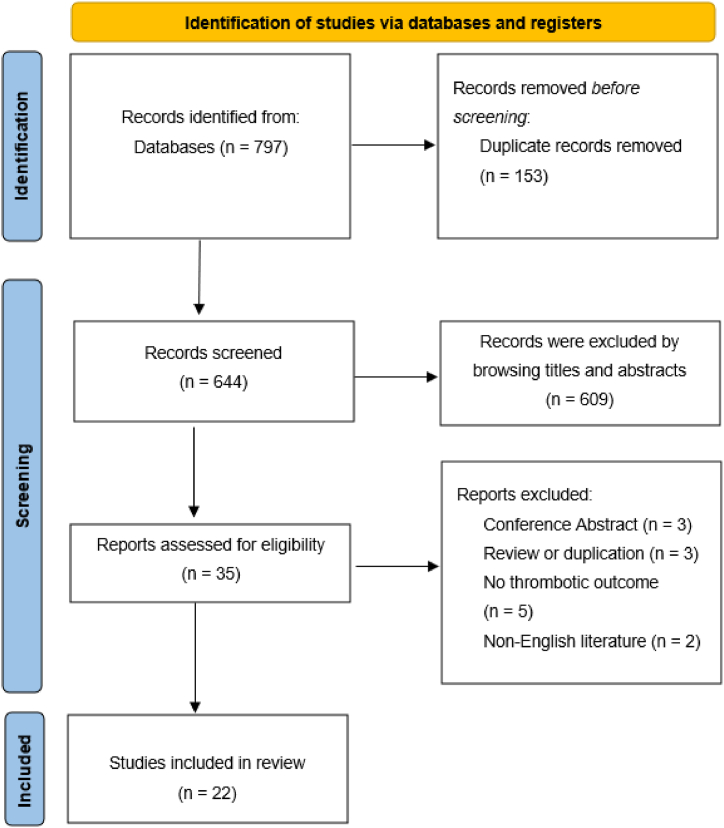
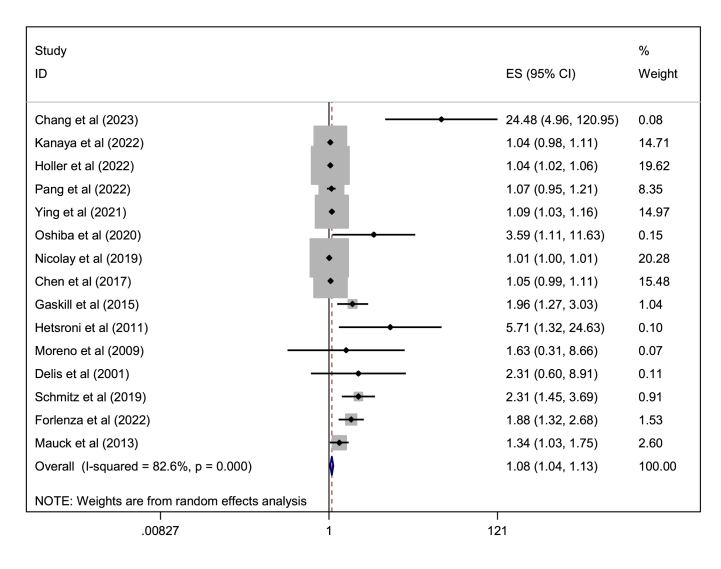
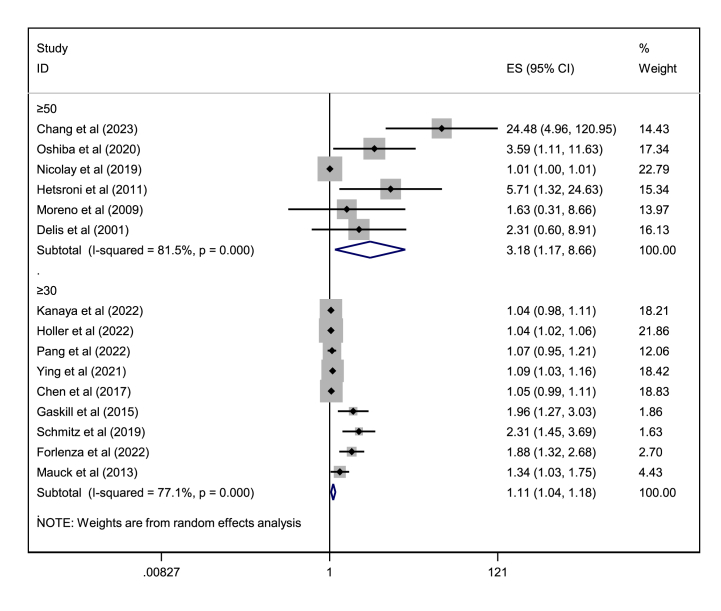
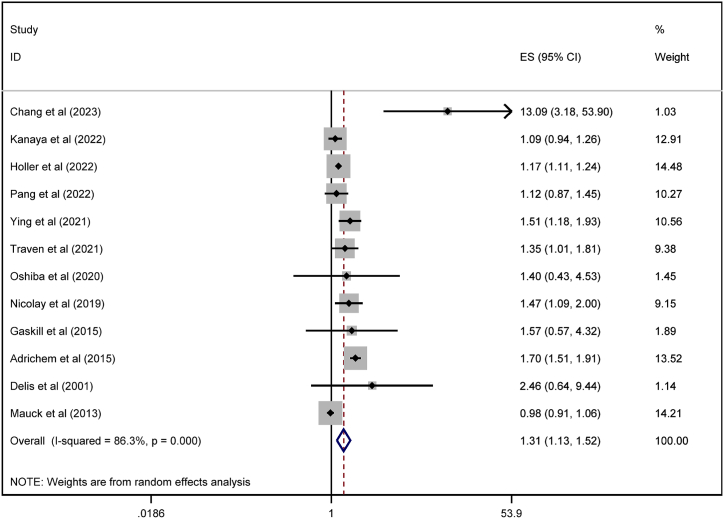
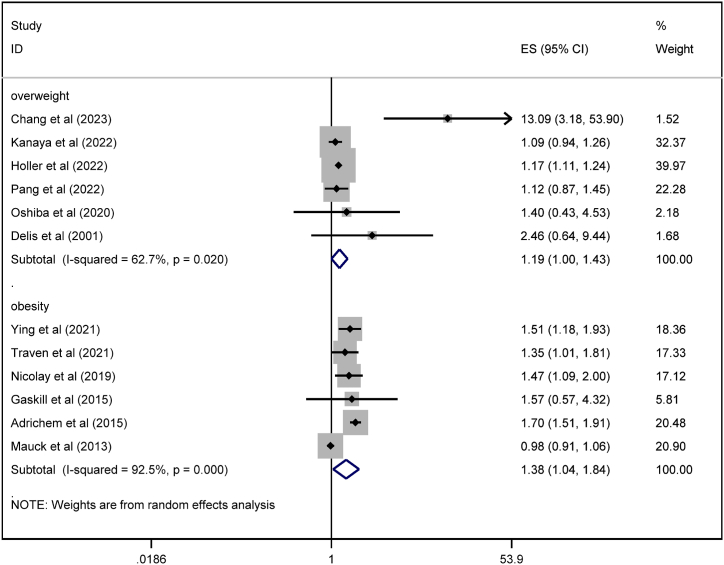
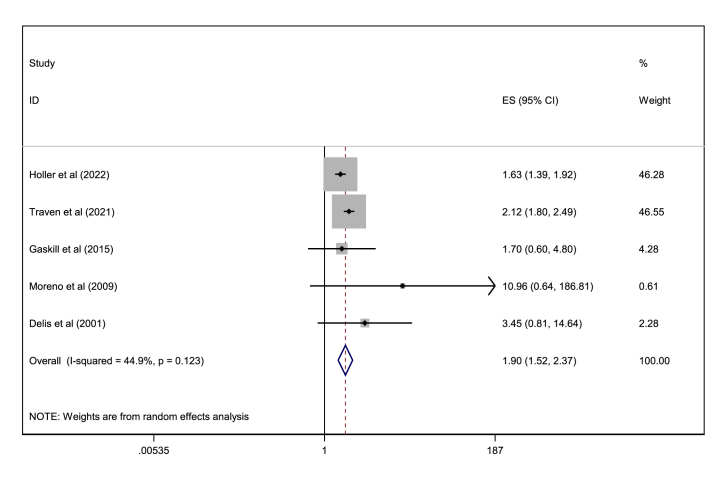
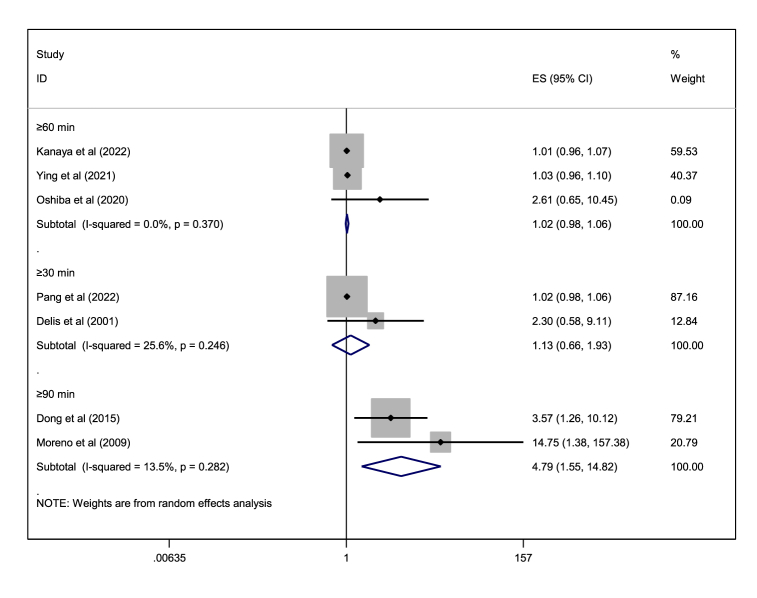
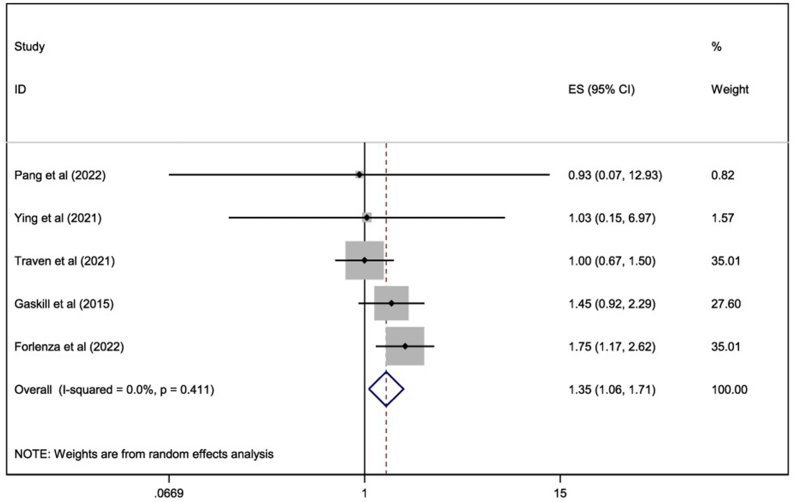
The protocol this meta-analysis has been registered on PROSPERO (CRD42023410283). A total of 22 observational studies were included in the systematic review, all of which were of moderate or high methodological quality. The results of the meta-analysis revealed that several factors were significantly associated with an elevated risk of venous thrombosis following arthroscopic knee surgery. These factors included age (mean age ≥30 years) [OR = 1.08, 95%CI (1.04, 1.13), P = 0.001], overweight or obesity [OR = 1.31, 95%CI (1.13, 1.52), P<0.001], oral contraceptive use [OR = 1.90, 95%CI (1.52, 2.37), P<0.001], and smoking history [OR = 1.35, 95%CI (1.06, 1.71), P = 0.014]. Furthermore, the subgroup analysis indicated that patients with an average age over 50 years [OR = 3.18, 95%CI (1.17, 8.66), P = 0.001] and those who underwent surgery with a tourniquet for ≥90 min [OR = 4.79, 95%CI (1.55, 14.81), P = 0.007] were at a significantly increased risk of venous thrombosis after knee arthroscopy.
Age, obesity, oral contraceptives, smoking history, and prolonged tourniquet use may increase the risk of venous thrombosis after arthroscopic knee surgery. The incidence of venous thrombosis after knee arthroscopy is on a downward trend, but due to its severity, increasing awareness of risk factors and implementing effective prophylaxis are important tasks for clinicians to prevent the risk of venous thrombosis after knee arthroscopy.
评估膝关节镜手术后静脉血栓形成风险增加的危险因素。
检索PubMed、EMBASE和Cochrane图书馆自建库至2023年4月4日的文献。纳入调查膝关节镜手术后静脉血栓形成的观察性研究。采用纽卡斯尔渥太华量表(NOS)评估纳入研究的方法学质量。通过STATA 14软件的随机效应模型综合各危险因素的比值比(OR)和95%置信区间(CI)。
本荟萃分析方案已在PROSPERO(CRD42023410283)注册。系统评价共纳入22项观察性研究,所有研究的方法学质量均为中等或高等。荟萃分析结果显示,几个因素与膝关节镜手术后静脉血栓形成风险升高显著相关。这些因素包括年龄(平均年龄≥30岁)[OR = 1.08,95%CI(1.04,1.13),P = 0.001]、超重或肥胖[OR = 1.31,95%CI(1.13,1.52),P<0.001]、口服避孕药的使用[OR = 1.90,95%CI(1.52,2.37),P<0.001]和吸烟史[OR = 1.35,9