Rangel Margarita V, Bourguet Feliza A, Hall Carolyn I, Weilhammer Dina R
Biosciences and Biotechnology Division, Lawrence Livermore National Laboratory, Livermore, CA 94550, USA.
Environment, Safety & Health, Biosafety & Biogovernance Functional Area, Lawrence Livermore National Laboratory, Livermore, CA 94550, USA.
Pathogens. 2024 Feb 10;13(2):159. doi: 10.3390/pathogens13020159.
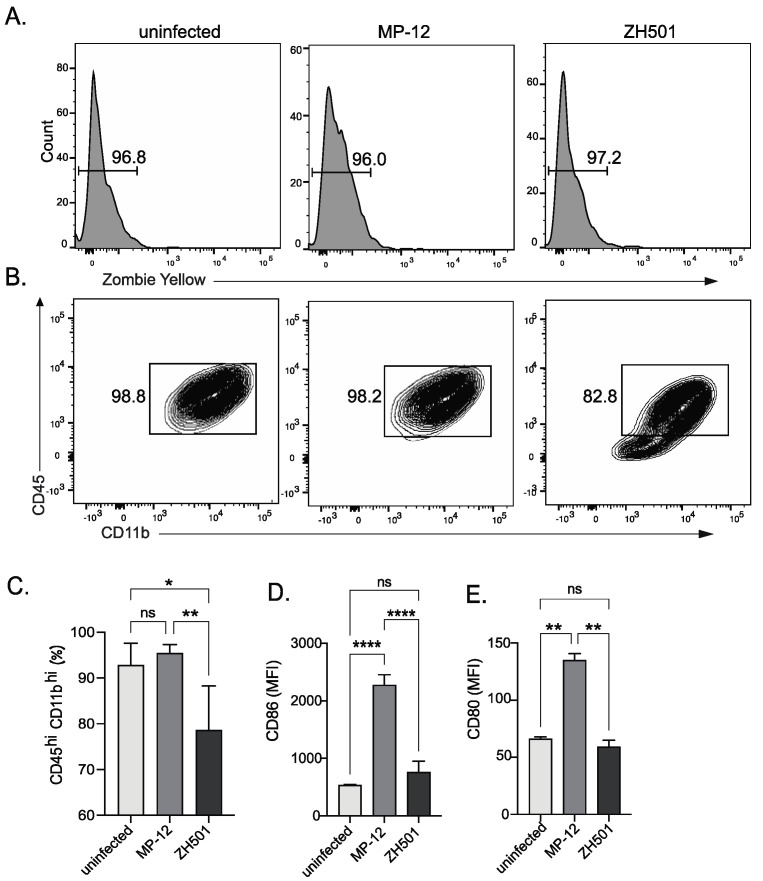
Rift Valley fever phlebovirus (RVFV) is a highly pathogenic mosquito-borne virus with bioweapon potential due to its ability to be spread by aerosol transmission. Neurological symptoms are among the worst outcomes of infection, and understanding of pathogenesis mechanisms within the brain is limited. RVFV is classified as an overlap select agent by the CDC and USDA; therefore, experiments involving fully virulent strains of virus are tightly regulated. Here, we present two methods for inactivation of live virus within samples derived from mouse microglia cells using commercially available kits for the preparation of cells for flow cytometry and RNA extraction. Using the flow cytometry protocol, we demonstrate key differences in the response of primary murine microglia to infection with fully virulent versus attenuated RVFV.
裂谷热静脉病毒(RVFV)是一种高致病性的蚊媒病毒,因其能够通过气溶胶传播,具有作为生物武器的潜力。神经症状是感染最严重的后果之一,而对大脑内发病机制的了解有限。RVFV被美国疾病控制与预防中心(CDC)和美国农业部(USDA)列为重叠选择制剂;因此,涉及完全有毒力病毒株的实验受到严格监管。在这里,我们展示了两种使用市售试剂盒使从小鼠小胶质细胞获得的样本中的活病毒失活的方法,这些试剂盒用于制备用于流式细胞术和RNA提取的细胞。使用流式细胞术方案,我们证明了原代小鼠小胶质细胞对完全有毒力与减毒RVFV感染反应的关键差异。