Illah Ojone, Adeeko Deborah, Olaitan Adeola, Gentry-Maharaj Aleksandra
Department of Women's Cancer, Elizabeth Garrett Anderson Institute for Women's Health, University College London, London WC1E 6DD, UK.
Elizabeth Garrett Anderson Institute for Women's Health, University College London, London WC1E 6AU, UK.
Diagnostics (Basel). 2024 Feb 14;14(4):417. doi: 10.3390/diagnostics14040417.
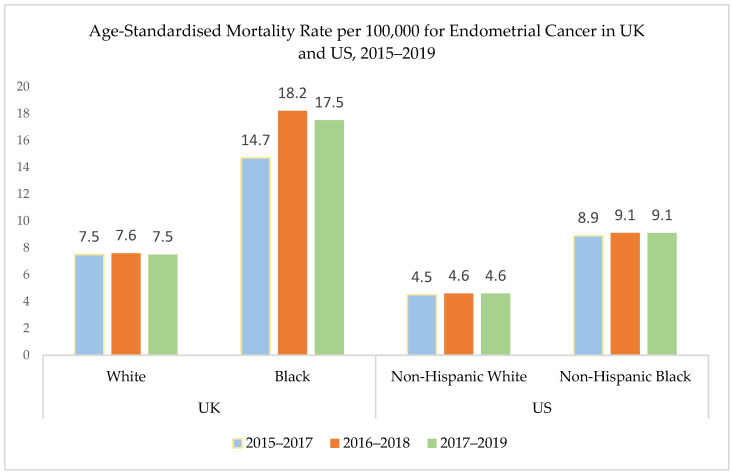
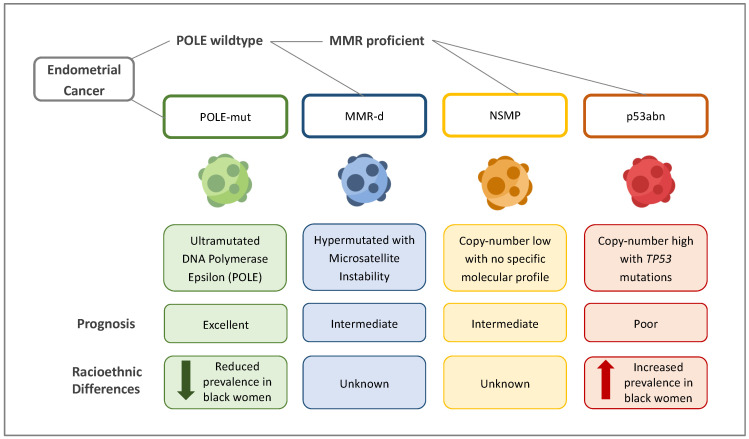
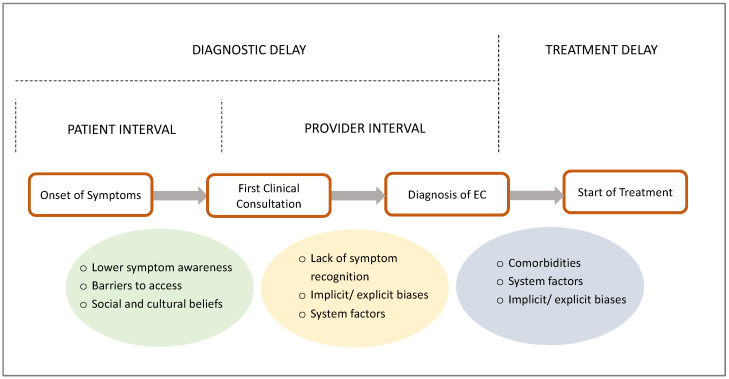
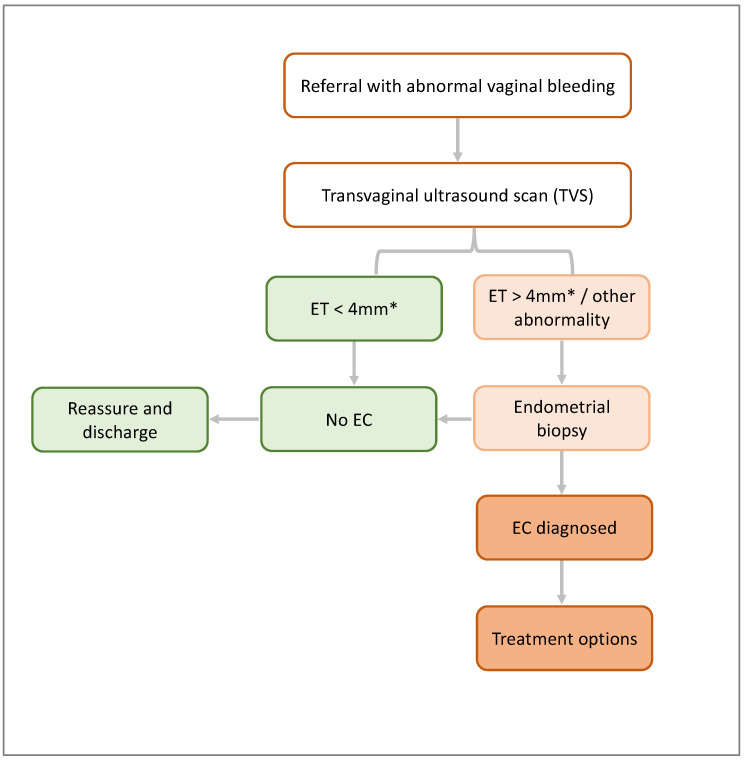
Black women are twice as likely to die from endometrial cancer (EC) compared with white women. This represents one of the worst racioethnic disparities amongst all cancers globally. Compared with white women, black women are more likely to be diagnosed with advanced EC, have more barriers to accessing care and experience increased delays in obtaining an EC diagnosis and commencing treatment. Histological and molecular differences place black women at higher risk of being diagnosed with more aggressive EC subtypes that carry less favourable outcomes. Furthermore, EC diagnostic pathways are less reliable in black women, and black women are less likely to receive evidence-based treatment for EC. This racioethnic disparity in EC outcomes exists both in the UK and US, despite differences in healthcare systems. This review methodically describes the key factors along the patient journey that contribute to the disparity in black women and proposes multifaceted approaches to lessen these gaps.
与白人女性相比,黑人女性死于子宫内膜癌(EC)的可能性是白人女性的两倍。这是全球所有癌症中最严重的种族差异之一。与白人女性相比,黑人女性更有可能被诊断为晚期子宫内膜癌,在获得医疗服务方面面临更多障碍,并且在获得子宫内膜癌诊断和开始治疗方面经历更长的延迟。组织学和分子学差异使黑人女性被诊断为侵袭性更强、预后较差的子宫内膜癌亚型的风险更高。此外,子宫内膜癌的诊断途径在黑人女性中不太可靠,而且黑人女性接受基于证据的子宫内膜癌治疗的可能性较小。尽管医疗保健系统存在差异,但英国和美国都存在这种子宫内膜癌结局的种族差异。本综述系统地描述了患者就医过程中导致黑人女性差异的关键因素,并提出了多方面的方法来缩小这些差距。