Department of Medical Education, Weill Cornell Medicine-Qatar, Education City, Qatar Foundation, Doha P.O. Box 24144, Qatar.
Department of Physiology and Biophysics, Weill Cornell Medicine-Qatar, Education City, Qatar Foundation, Doha P.O. Box 24144, Qatar.
Biomolecules. 2024 Jan 24;14(2):145. doi: 10.3390/biom14020145.
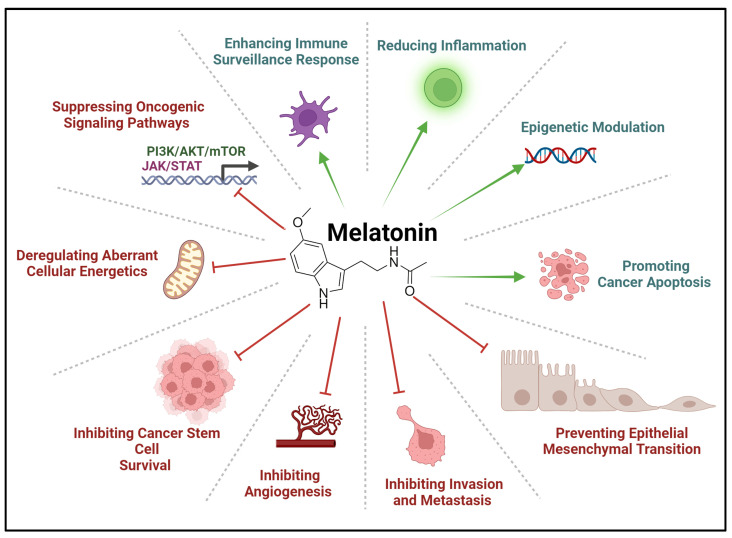
Melatonin, an endogenous neurohormone produced by the pineal gland, has received increased interest due to its potential anti-cancer properties. Apart from its well-known role in the sleep-wake cycle, extensive scientific evidence has shown its role in various physiological and pathological processes, such as inflammation. Additionally, melatonin has demonstrated promising potential as an anti-cancer agent as its function includes inhibition of tumorigenesis, induction of apoptosis, and regulation of anti-tumor immune response. Although a precise pathophysiological mechanism is yet to be established, several pathways related to the regulation of cell cycle progression, DNA repair mechanisms, and antioxidant activity have been implicated in the anti-neoplastic potential of melatonin. In the current manuscript, we focus on the potential anti-cancer properties of melatonin and its use in treating and managing pediatric osteosarcoma. This aggressive bone tumor primarily affects children and adolescents and is treated mainly by surgical and radio-oncological interventions, which has improved survival rates among affected individuals. Significant disadvantages to these interventions include disease recurrence, therapy-related toxicity, and severe/debilitating side effects that the patients have to endure, significantly affecting their quality of life. Melatonin has therapeutic effects when used for treating osteosarcoma, attributed to its ability to halt cancer cell proliferation and trigger apoptotic cell death, thereby enhancing chemotherapeutic efficacy. Furthermore, the antioxidative function of melatonin alleviates harmful side effects of chemotherapy-induced oxidative damage, aiding in decreasing therapeutic toxicities. The review concisely explains the many mechanisms by which melatonin targets osteosarcoma, as evidenced by significant results from several in vitro and animal models. Nevertheless, if further explored, human trials remain a challenge that could shed light and support its utility as an adjunctive therapeutic modality for treating osteosarcoma.
褪黑素是由松果体分泌的内源性神经激素,因其潜在的抗癌特性而受到越来越多的关注。除了在睡眠-觉醒周期中众所周知的作用外,大量科学证据表明它在各种生理和病理过程中发挥作用,如炎症。此外,褪黑素作为一种抗癌药物具有很大的潜力,因为它的功能包括抑制肿瘤发生、诱导细胞凋亡和调节抗肿瘤免疫反应。虽然精确的病理生理学机制尚未建立,但与细胞周期进程、DNA 修复机制和抗氧化活性调节相关的几种途径已被牵涉到褪黑素的抗肿瘤潜力中。在本手稿中,我们重点关注褪黑素的潜在抗癌特性及其在治疗和管理儿科骨肉瘤中的应用。这种侵袭性骨肿瘤主要影响儿童和青少年,主要通过手术和放射肿瘤学干预进行治疗,这提高了受影响个体的生存率。这些干预措施的显著缺点包括疾病复发、与治疗相关的毒性以及患者必须忍受的严重/使人衰弱的副作用,这严重影响了他们的生活质量。褪黑素在治疗骨肉瘤方面具有治疗作用,这归因于其能够阻止癌细胞增殖并引发细胞凋亡,从而增强化疗效果。此外,褪黑素的抗氧化功能缓解了化疗诱导的氧化损伤的有害副作用,有助于降低治疗毒性。该综述简明地解释了褪黑素针对骨肉瘤的多种机制,这已得到几项体外和动物模型的显著结果的证实。然而,如果进一步探索,人类试验仍然是一个挑战,这可能会为其作为治疗骨肉瘤的辅助治疗模式的效用提供启示和支持。