Environment and Health Unit, KU Leuven, Leuven, Belgium.
Department of Molecular Medicine, Scripps Research, La Jolla, CA, USA.
Part Fibre Toxicol. 2024 Feb 27;21(1):8. doi: 10.1186/s12989-024-00569-7.
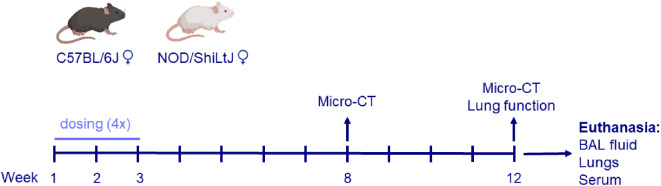
Inhalation of airborne particulate matter, such as silica and diesel exhaust particles, poses serious long-term respiratory and systemic health risks. Silica exposure can lead to silicosis and systemic autoimmune diseases, while DEP exposure is linked to asthma and cancer. Combined exposure to silica and DEP, common in mining, may have more severe effects. This study investigates the separate and combined effects of occupational-level silica and ambient-level DEP on lung injury, inflammation, and autoantibody formation in two genetically distinct mouse strains, thereby aiming at understanding the interplay between genetic susceptibility, particulate exposure, and disease outcomes. Silica and diesel exhaust particles were administered to mice via oropharyngeal aspiration. Assessments of lung injury and host response included in vivo lung micro-computed tomography, lung function tests, bronchoalveolar lavage fluid analysis including inflammatory cytokines and antinuclear antibodies, and histopathology with particle colocalization.
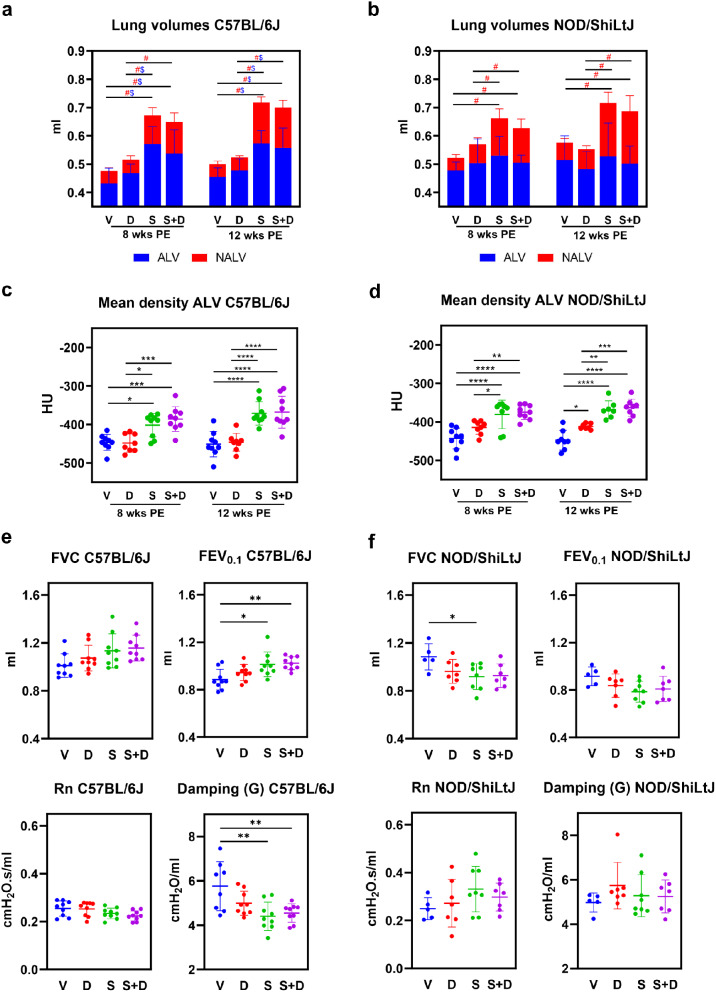
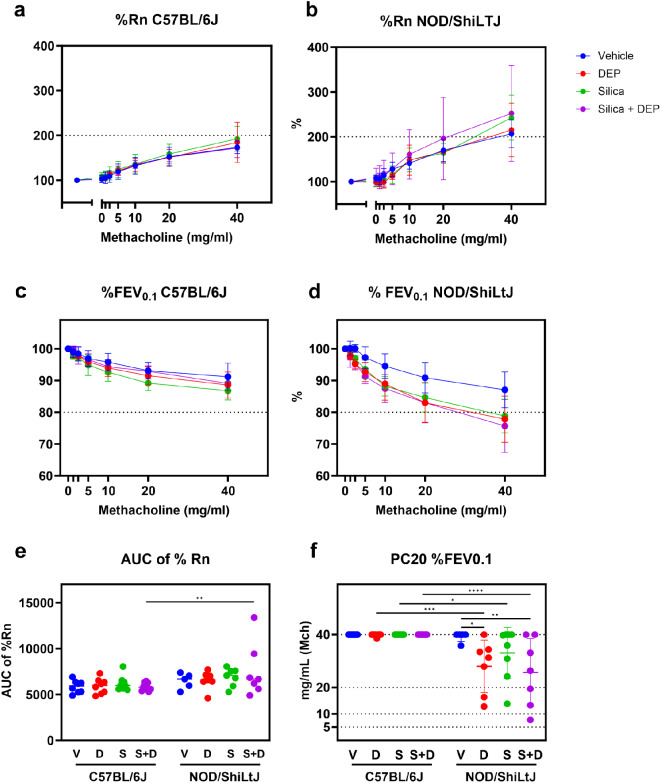
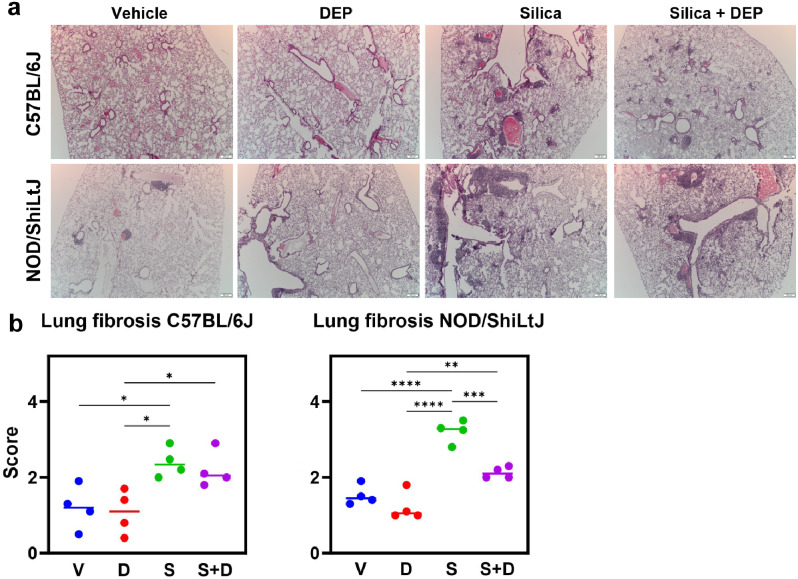
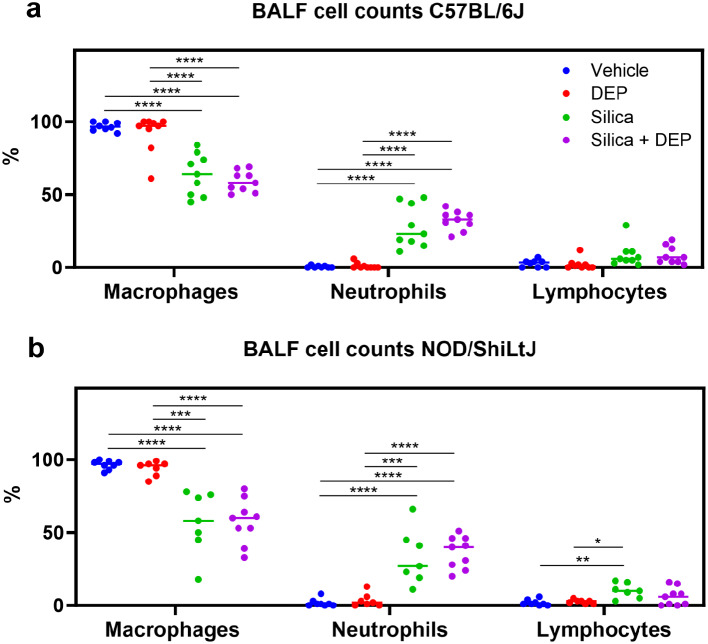
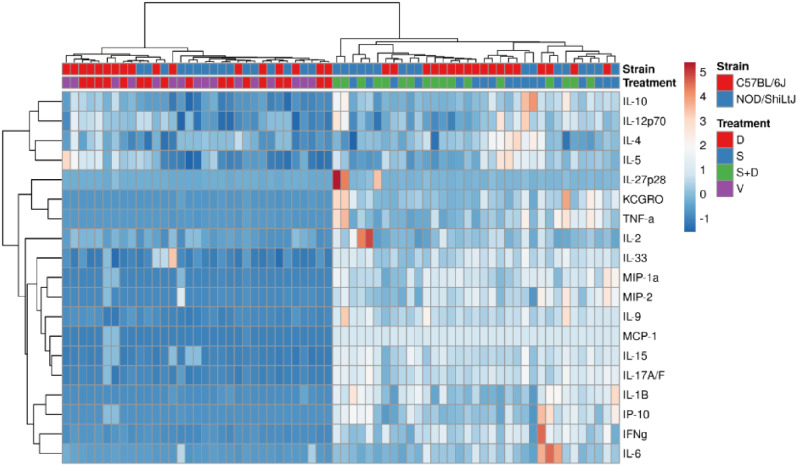
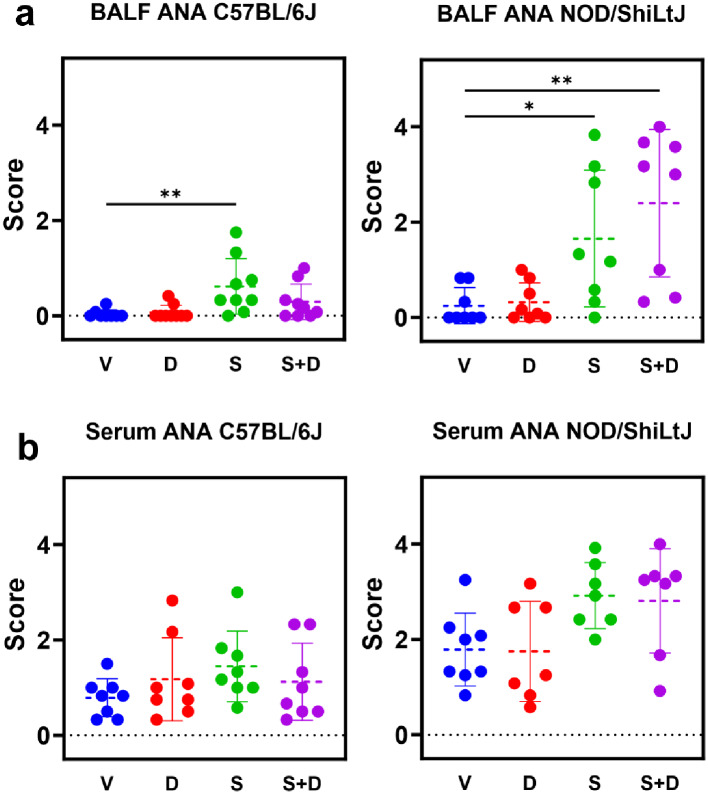
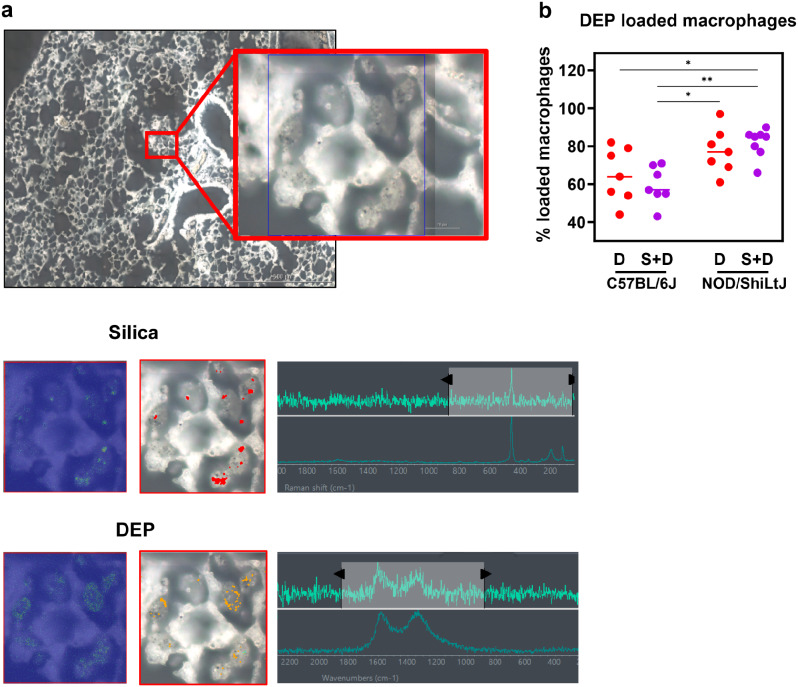
The findings highlight the distinct effects of silica and diesel exhaust particles (DEP) on lung injury, inflammation, and autoantibody formation in C57BL/6J and NOD/ShiLtJ mice. Silica exposure elicited a well-established inflammatory response marked by inflammatory infiltrates, release of cytokines, and chemokines, alongside mild fibrosis, indicated by collagen deposition in the lungs of both C57BL/6J and NOD/ShilLtJ mice. Notably, these strains exhibited divergent responses in terms of respiratory function and lung volumes, as assessed through micro-computed tomography. Additionally, silica exposure induced airway hyperreactivity and elevated antinuclear antibody levels in bronchoalveolar lavage fluid, particularly prominent in NOD/ShiLtJ mice. Moreover, antinuclear antibodies correlated with extent of lung inflammation in NOD/ShiLTJ mice. Lung tissue analysis revealed DEP loaded macrophages and co-localization of silica and DEP particles. However, aside from contributing to airway hyperreactivity specifically in NOD/ShiLtJ mice, the ambient-level DEP did not significantly amplify the effects induced by silica. There was no evidence of synergistic or additive interaction between these specific doses of silica and DEP in inducing lung damage or inflammation in either of the mouse strains.
Mouse strain variations exerted a substantial influence on the development of silica induced lung alterations. Furthermore, the additional impact of ambient-level DEP on these silica-induced effects was minimal.
吸入空气中的颗粒物,如二氧化硅和柴油机尾气颗粒,会对呼吸系统和全身健康造成严重的长期风险。二氧化硅暴露可导致矽肺和自身免疫性疾病,而柴油机尾气颗粒暴露与哮喘和癌症有关。在采矿等常见情况下,同时接触二氧化硅和柴油机尾气颗粒可能会产生更严重的影响。本研究通过口咽吸入的方式,在两种遗传特征不同的小鼠模型中分别和共同研究职业性二氧化硅和环境水平柴油机尾气颗粒对肺损伤、炎症和自身抗体形成的作用,旨在了解遗传易感性、颗粒物暴露和疾病结果之间的相互作用。评估肺损伤和宿主反应的方法包括体内肺微计算机断层扫描、肺功能测试、支气管肺泡灌洗液分析,包括炎症细胞因子和抗核抗体,以及组织病理学与颗粒共定位。
研究结果突出了二氧化硅和柴油机尾气颗粒(DEP)对 C57BL/6J 和 NOD/ShiLtJ 小鼠肺损伤、炎症和自身抗体形成的不同作用。二氧化硅暴露引发了明显的炎症反应,表现为炎症浸润、细胞因子和趋化因子的释放,以及轻度纤维化,在两种 C57BL/6J 和 NOD/ShiLtJ 小鼠的肺部均有胶原沉积。值得注意的是,这两种品系在呼吸功能和肺容积方面表现出不同的反应,通过微计算机断层扫描进行评估。此外,二氧化硅暴露导致气道高反应性和支气管肺泡灌洗液中抗核抗体水平升高,在 NOD/ShiLtJ 小鼠中尤为明显。此外,抗核抗体与 NOD/ShiLTJ 小鼠肺部炎症的严重程度相关。肺组织分析显示,DEP 加载的巨噬细胞和二氧化硅与 DEP 颗粒的共定位。然而,除了在 NOD/ShiLtJ 小鼠中特异性地导致气道高反应性外,环境水平的 DEP 并没有显著增强二氧化硅引起的作用。在这两种小鼠品系中,没有证据表明这些特定剂量的二氧化硅和 DEP 之间存在协同或相加的相互作用,导致肺损伤或炎症。
小鼠品系的差异对二氧化硅诱导的肺改变的发展有很大影响。此外,环境水平的 DEP 对这些二氧化硅诱导作用的额外影响很小。