Department of Rheumatology and Clinical Immunology, Charité - Universitätsmedizin Berlin, corporate member of Freie Universität Berlin and Humboldt-Universität zu Berlin, 10117, Berlin, Germany.
Immune Dynamics, Deutsches Rheuma-Forschungszentrum (DRFZ), a Leibniz Institute, Charitéplatz 1, 10117, Berlin, Germany.
Nat Commun. 2024 Feb 26;15(1):1764. doi: 10.1038/s41467-024-45827-6.
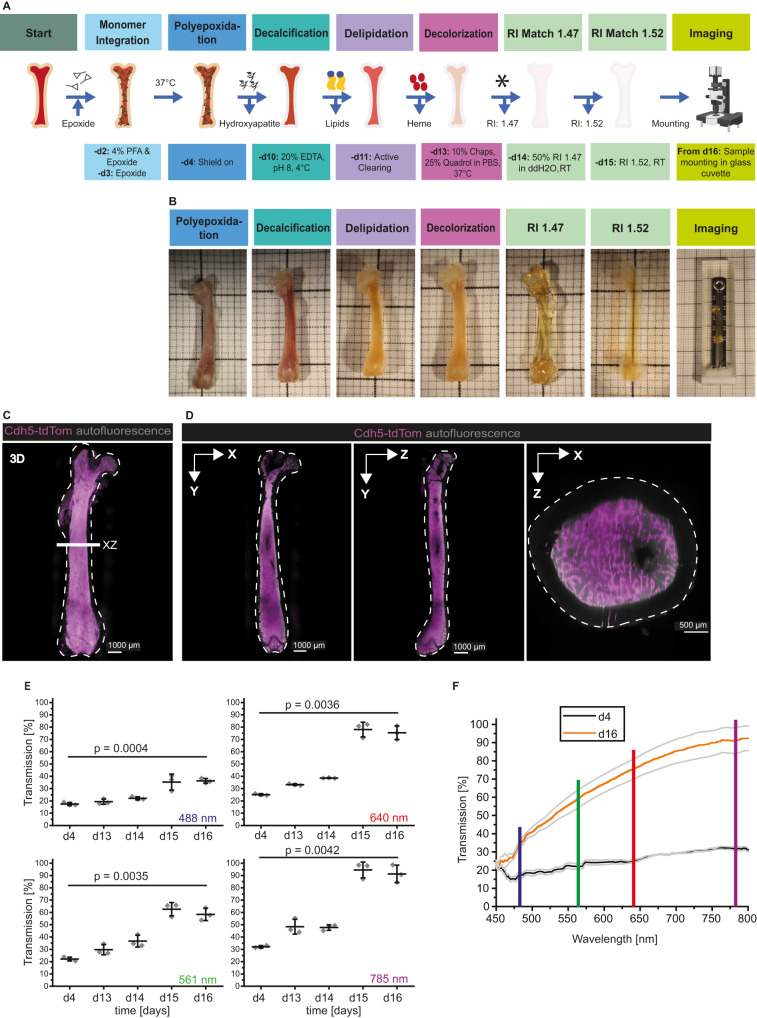
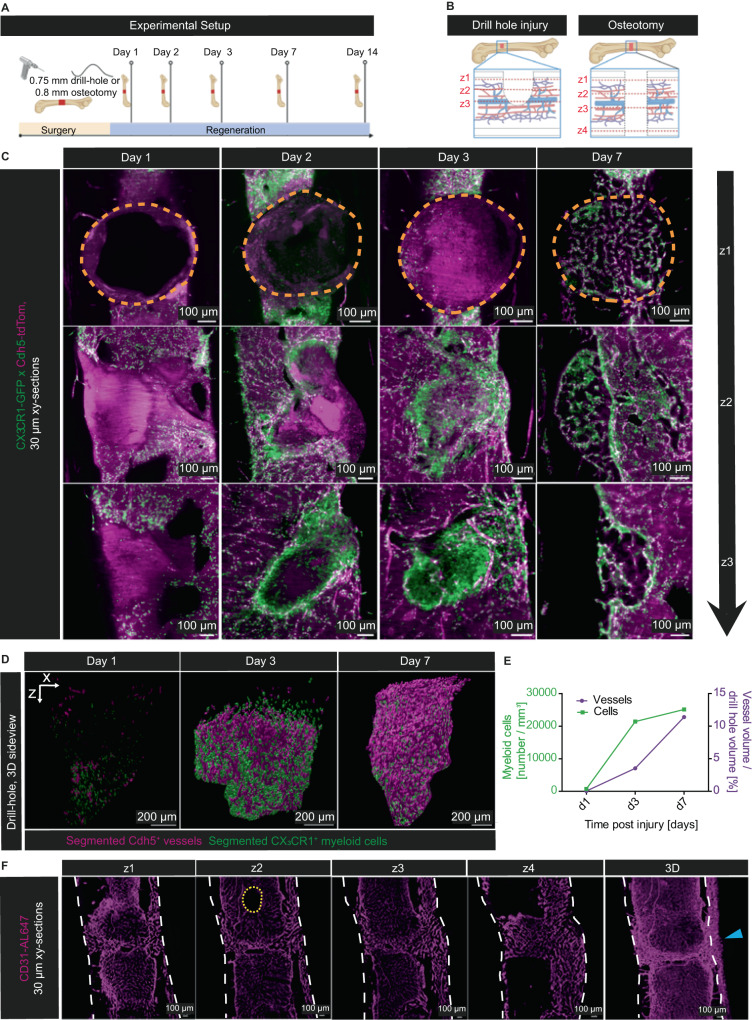
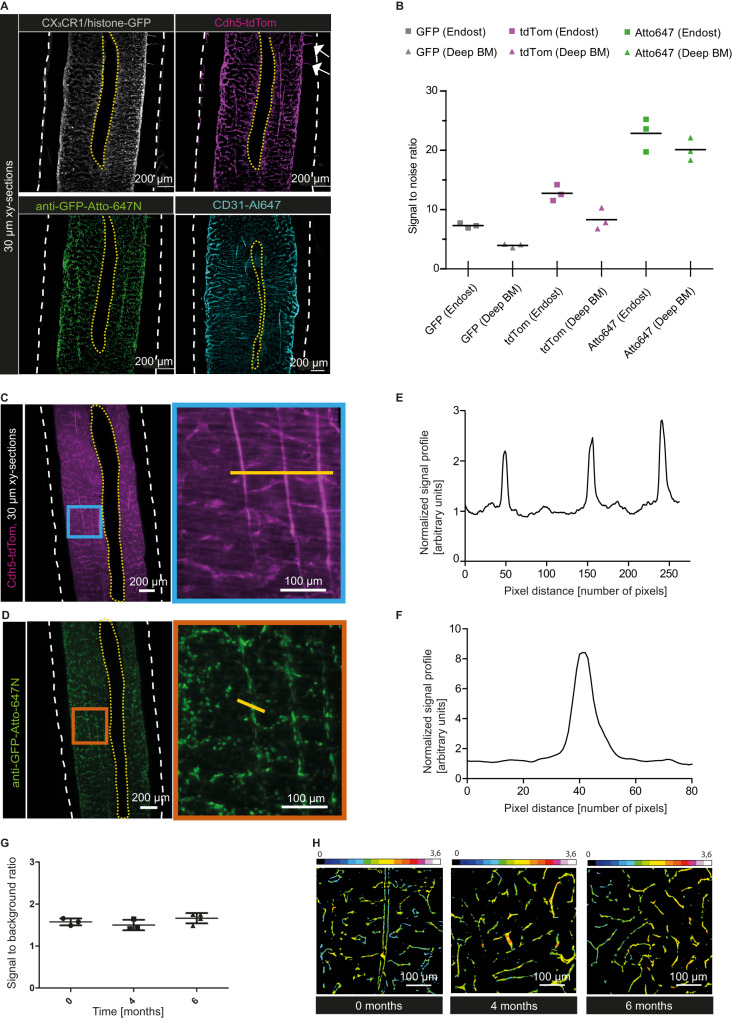
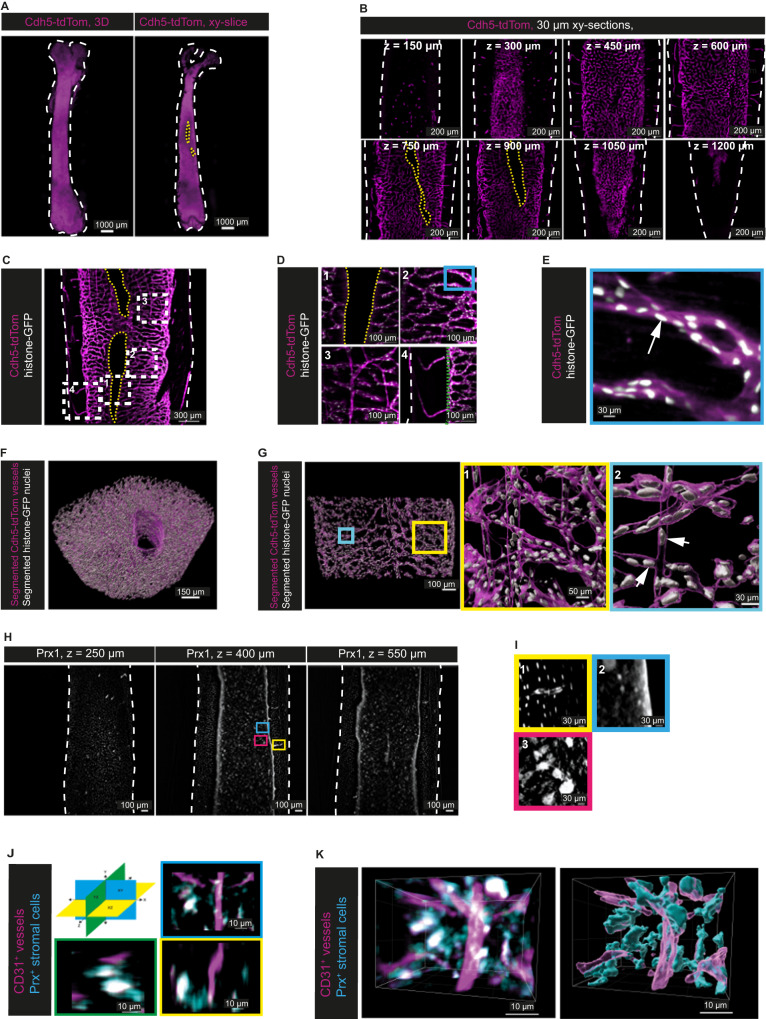
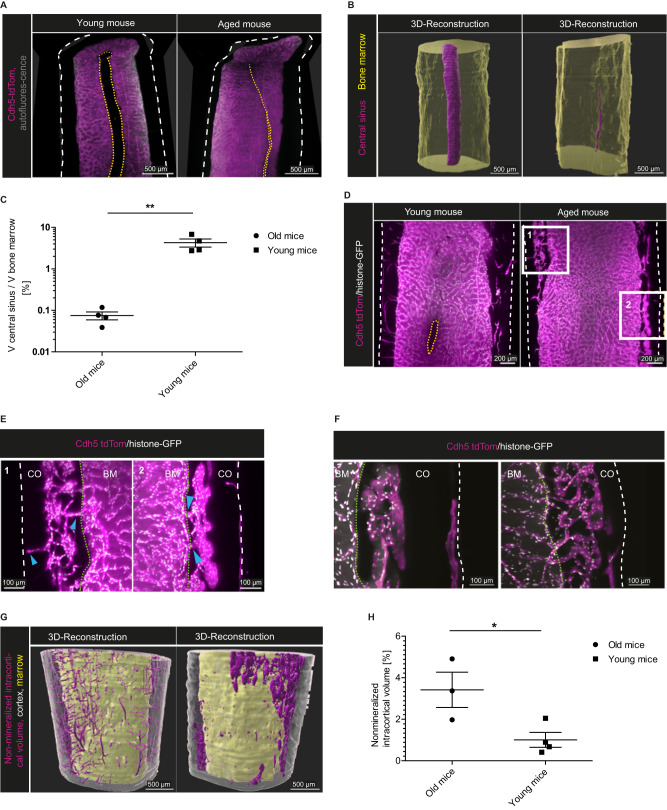
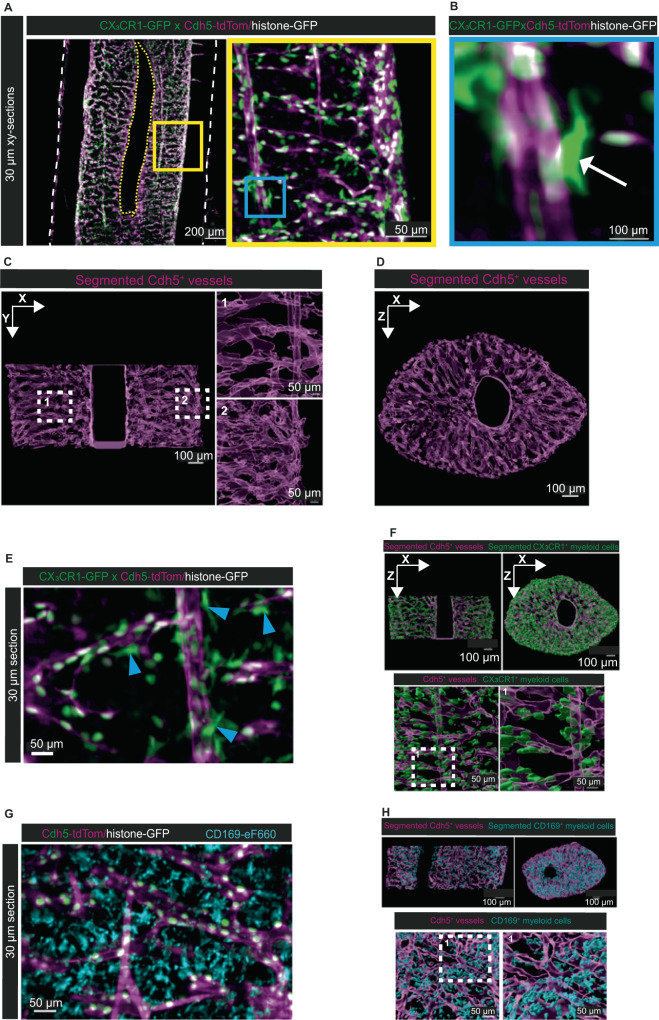
Analyzing immune cell interactions in the bone marrow is vital for understanding hematopoiesis and bone homeostasis. Three-dimensional analysis of the complete, intact bone marrow within the cortex of whole long bones remains a challenge, especially at subcellular resolution. We present a method that stabilizes the marrow and provides subcellular resolution of fluorescent signals throughout the murine femur, enabling identification and spatial characterization of hematopoietic and stromal cell subsets. By combining a pre-processing algorithm for stripe artifact removal with a machine-learning approach, we demonstrate reliable cell segmentation down to the deepest bone marrow regions. This reveals age-related changes in the marrow. It highlights the interaction between CXCR1 cells and the vascular system in homeostasis, in contrast to other myeloid cell types, and reveals their spatial characteristics after injury. The broad applicability of this method will contribute to a better understanding of bone marrow biology.
分析骨髓中的免疫细胞相互作用对于理解造血和骨稳态至关重要。在完整的长骨皮质内对整个骨髓进行三维分析仍然是一个挑战,尤其是在亚细胞分辨率下。我们提出了一种方法,该方法可以稳定骨髓并提供整个股骨的荧光信号的亚细胞分辨率,从而能够识别和空间描述造血和基质细胞亚群。通过将用于去除条纹伪影的预处理算法与机器学习方法相结合,我们证明了可以可靠地对细胞进行分割,直到最深的骨髓区域。这揭示了骨髓的年龄相关性变化。它突出了 CXCR1 细胞与血管系统在稳态中的相互作用,与其他髓样细胞类型形成对比,并揭示了它们受伤后的空间特征。该方法的广泛适用性将有助于更好地了解骨髓生物学。