College of Life Science, Nanjing Normal University, Nanjing, People's Republic of China.
School of Food and Pharmaceutical Engineering, Nanjing Normal University, Nanjing, People's Republic of China.
Int J Nanomedicine. 2024 Feb 23;19:1809-1825. doi: 10.2147/IJN.S449042. eCollection 2024.
Tumor hypoxia and invasion present significant challenges for the efficacy of photodynamic therapy (PDT) in triple-negative breast cancer (TNBC). This study developed a mitochondrial targeting strategy that combined PDT and gene therapy to promote each other and address the challenges.
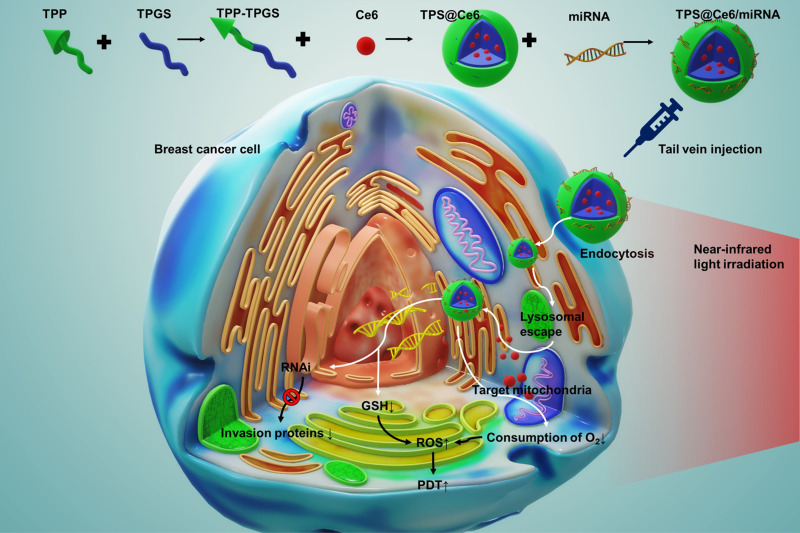
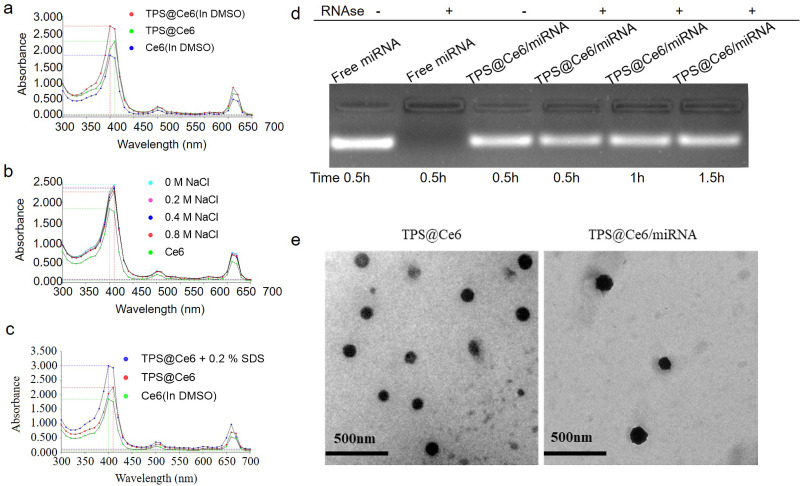
The positively charged amphiphilic material triphenylphosphine-tocopherol polyethylene glycol succinate (TPP-TPGS, TPS) and the photosensitizer chloride e6 (Ce6) formed TPS@Ce6 nanoparticles (NPs) by hydrophobic interaction. They electrostatically condensed microRNA-34a (miR-34a) to form stable TPS@Ce6/miRNA NPs.
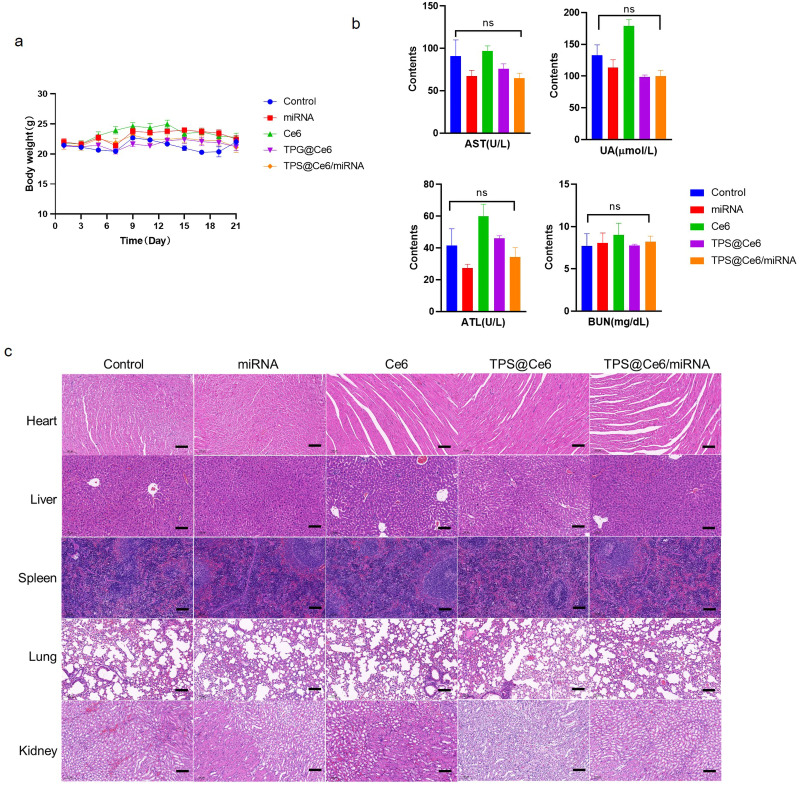
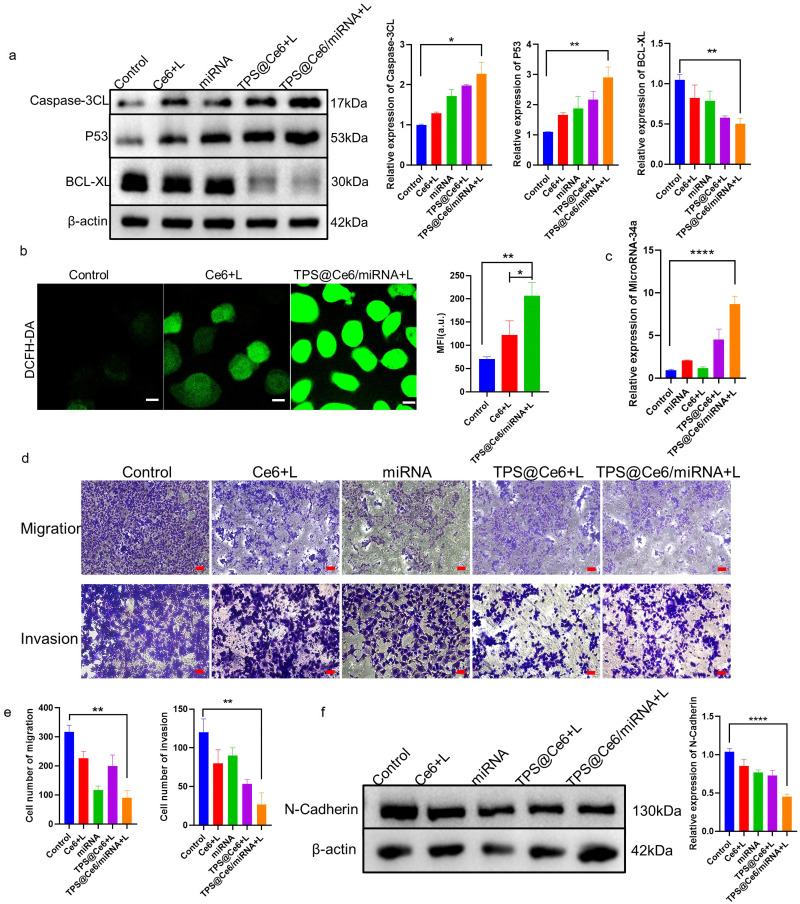
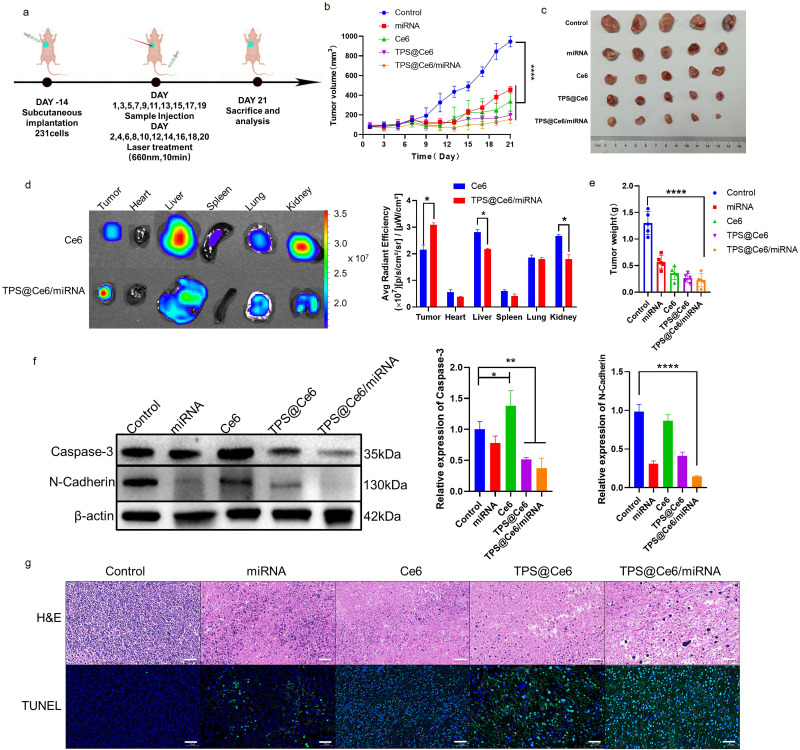
Firstly, Ce6 disrupted the lysosomal membrane, followed by successful delivery of miR-34a by TPS@Ce6/miRNA NPs. Meanwhile, miR-34a reduced ROS depletion and further enhanced the effectiveness of PDT. Consequently, the mutual promotion between PDT and gene therapy led to enhanced anti-tumor effects. Furthermore, the TPS@Ce6/miRNA NPs promoted apoptosis by down-regulating Caspase-3 and inhibited tumor cell migration and invasion by down-regulating N-Cadherin. In addition, in vitro and in vivo experiments demonstrated that the TPS@Ce6/miRNA NPs achieved excellent anti-tumor effects. These findings highlighted the enhanced anticancer effects and reduced migration of tumor cells through the synergistic effects of PDT and gene therapy.
Taken together, the targeted co-delivery of Ce6 and miR-34a will facilitate the application of photodynamic and genic nanomedicine in the treatment of aggressive tumors, particularly TNBC.
肿瘤缺氧和侵袭对三阴性乳腺癌(TNBC)的光动力疗法(PDT)疗效构成了重大挑战。本研究开发了一种线粒体靶向策略,将 PDT 和基因治疗相结合,以相互促进并应对这些挑战。
带正电荷的两亲性材料三苯基膦-生育酚聚乙二醇琥珀酸酯(TPP-TPGS,TPS)和光敏剂氯 e6(Ce6)通过疏水相互作用形成 TPS@Ce6 纳米颗粒(NPs)。它们通过静电作用将 microRNA-34a(miR-34a)凝聚形成稳定的 TPS@Ce6/miRNA NPs。
首先,Ce6 破坏了溶酶体膜,随后 TPS@Ce6/miRNA NPs 成功递送了 miR-34a。同时,miR-34a 减少了 ROS 耗竭,并进一步增强了 PDT 的效果。因此,PDT 和基因治疗的相互促进导致了更强的抗肿瘤效果。此外,TPS@Ce6/miRNA NPs 通过下调 Caspase-3 促进细胞凋亡,并通过下调 N-Cadherin 抑制肿瘤细胞迁移和侵袭。此外,体外和体内实验表明,TPS@Ce6/miRNA NPs 实现了优异的抗肿瘤效果。这些发现强调了 PDT 和基因治疗的协同作用可增强抗肿瘤效果并减少肿瘤细胞的迁移。
综上所述,Ce6 和 miR-34a 的靶向共递药将促进光动力和基因纳米医学在侵袭性肿瘤,特别是 TNBC 治疗中的应用。