Department of Mechanical Engineering, São Paulo State University (UNESP), School of Engineering of Ilha Solteira, Ilha Solteira, São Paulo, Brazil.
Department of Neurology and Neurosurgery, Federal University of São Paulo (UNIFESP), São Paulo, São Paulo, Brazil.
PLoS One. 2024 Feb 28;19(2):e0298762. doi: 10.1371/journal.pone.0298762. eCollection 2024.
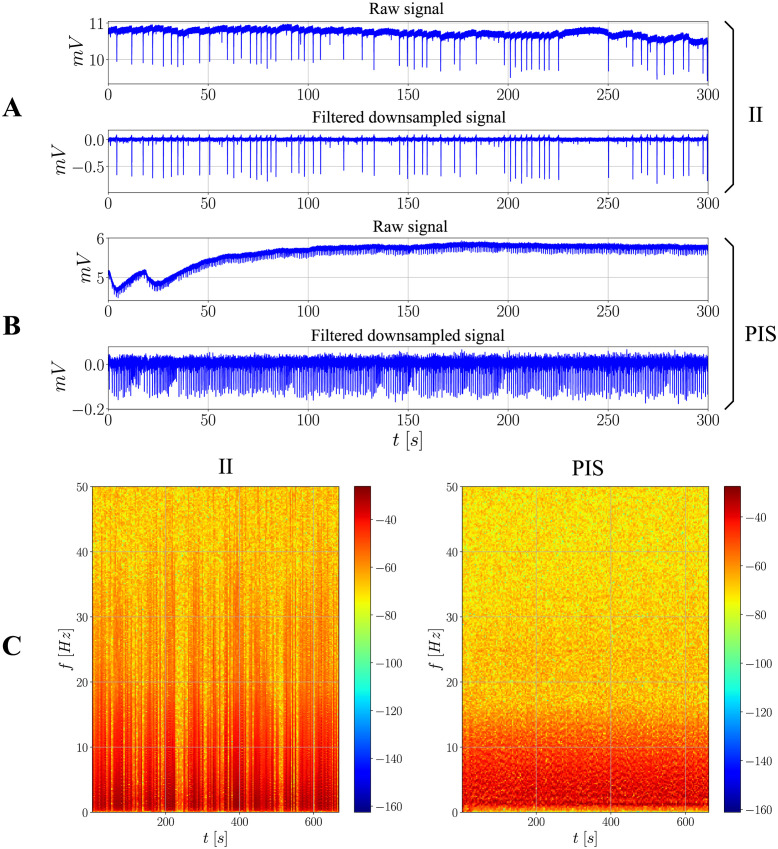
Epilepsy affects millions of people worldwide every year and remains an open subject for research. Current development on this field has focused on obtaining computational models to better understand its triggering mechanisms, attain realistic descriptions and study seizure suppression. Controllers have been successfully applied to mitigate epileptiform activity in dynamic models written in state-space notation, whose applicability is, however, restricted to signatures that are accurately described by them. Alternatively, autoregressive modeling (AR), a typical data-driven tool related to system identification (SI), can be directly applied to signals to generate more realistic models, and since it is inherently convertible into state-space representation, it can thus be used for the artificial reconstruction and attenuation of seizures as well. Considering this, the first objective of this work is to propose an SI approach using AR models to describe real epileptiform activity. The second objective is to provide a strategy for reconstructing and mitigating such activity artificially, considering non-hybrid and hybrid controllers - designed from ictal and interictal events, respectively. The results show that AR models of relatively low order represent epileptiform activities fairly well and both controllers are effective in attenuating the undesired activity while simultaneously driving the signal to an interictal condition. These findings may lead to customized models based on each signal, brain region or patient, from which it is possible to better define shape, frequency and duration of external stimuli that are necessary to attenuate seizures.
癫痫影响着全球数以百万计的人,并且仍然是一个开放的研究课题。目前这一领域的发展重点是获得计算模型,以更好地了解其触发机制,实现真实的描述,并研究癫痫发作的抑制。控制器已成功应用于减轻状态空间表示中动态模型中的癫痫样活动,但其适用性仅限于它们能准确描述的特征。或者,自回归建模(AR),一种与系统识别(SI)相关的典型数据驱动工具,可以直接应用于信号以生成更真实的模型,并且由于它可以固有地转换为状态空间表示,因此也可以用于人工重建和抑制癫痫发作。考虑到这一点,这项工作的第一个目标是提出一种使用 AR 模型的 SI 方法来描述真实的癫痫样活动。第二个目标是提供一种策略,用于人工重建和减轻这种活动,同时考虑到非混合和混合控制器 - 分别从发作期和发作间期事件设计。结果表明,相对较低阶的 AR 模型可以很好地表示癫痫样活动,并且两种控制器都可以有效地减轻不需要的活动,同时将信号驱动到发作间期状态。这些发现可能会导致针对每个信号、脑区或患者的定制模型,从而可以更好地定义衰减癫痫发作所需的外部刺激的形状、频率和持续时间。