Wang Yazhou, Chen Kai, Liu Gang, Du Chong, Cheng Zhaoxia, Wei Dan, Li Fenfen, Li Chen, Yang Yinmo, Zhao Ying, Nie Guangjun
Pancreas Center, The First Affiliated Hospital of Nanjing Medical University, Nanjing, 210000, China.
CAS Key Laboratory for Biomedical Effects of Nanomaterials & Nanosafety, CAS Center of Excellence in Nanoscience, National Center for Nanoscience and Technology, Beijing, 100190, China.
Adv Sci (Weinh). 2024 Apr;11(16):e2308637. doi: 10.1002/advs.202308637. Epub 2024 Feb 28.
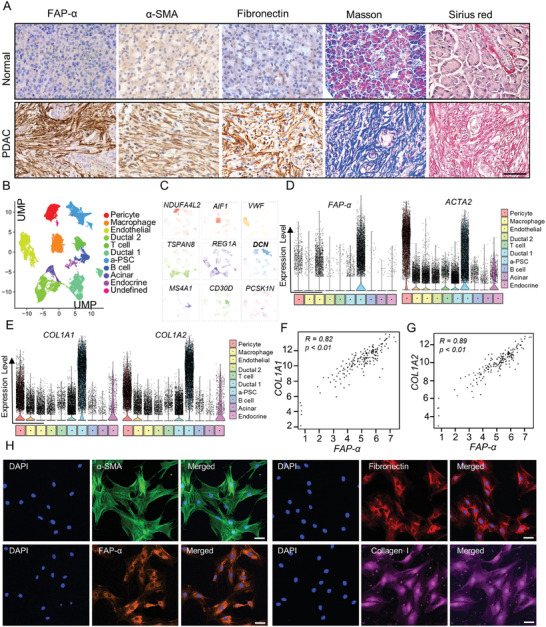
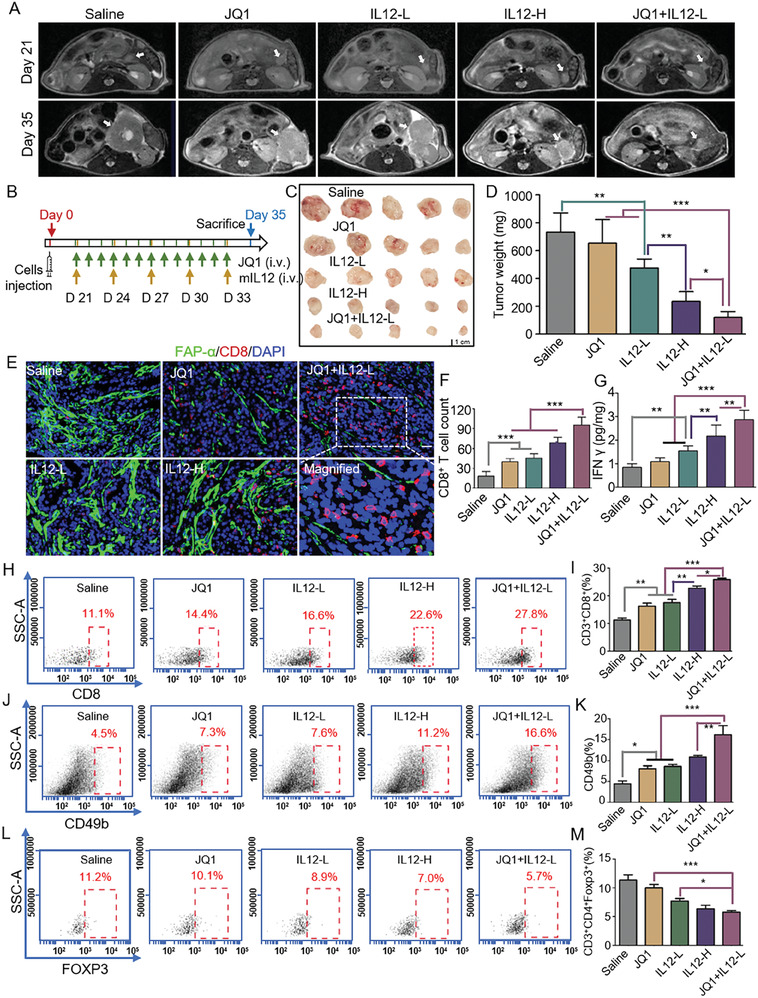
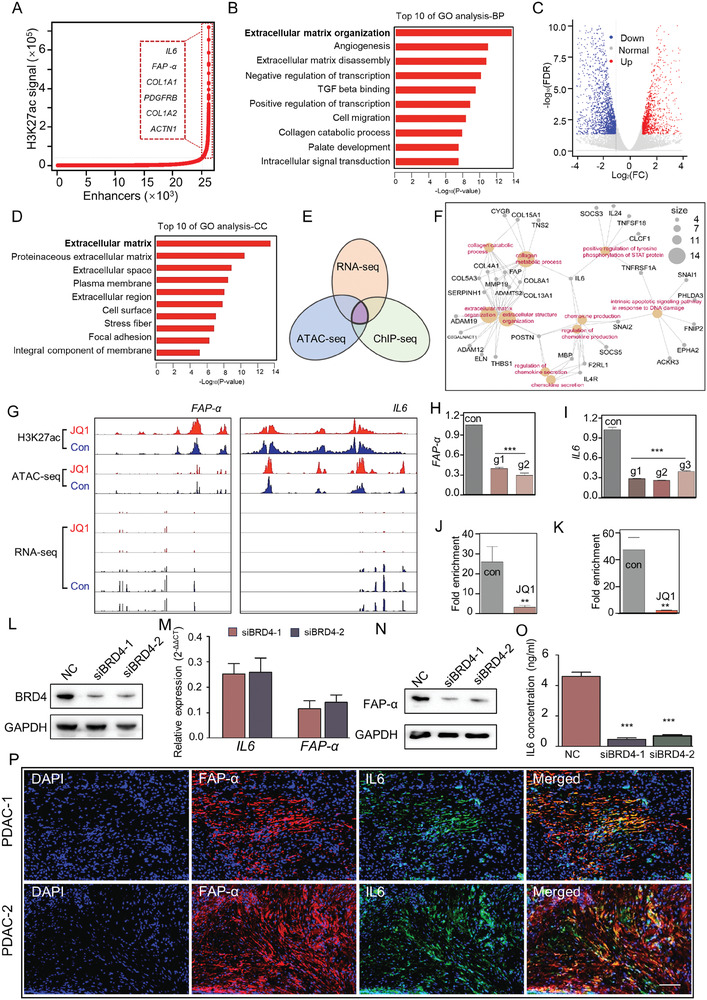
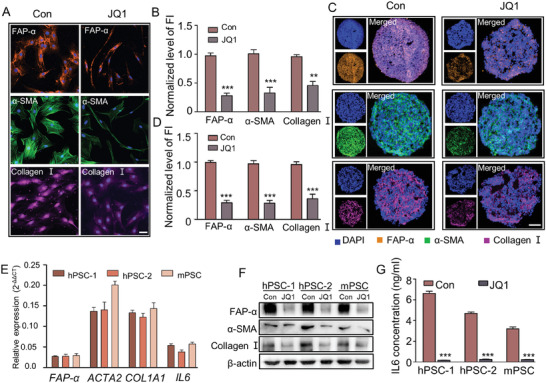
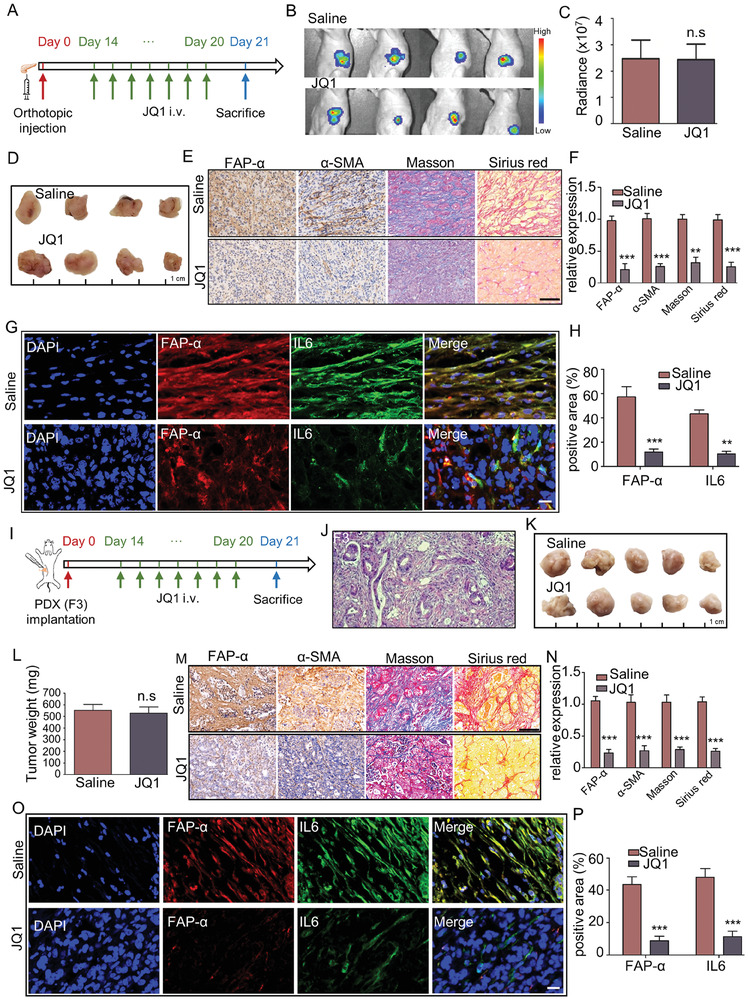
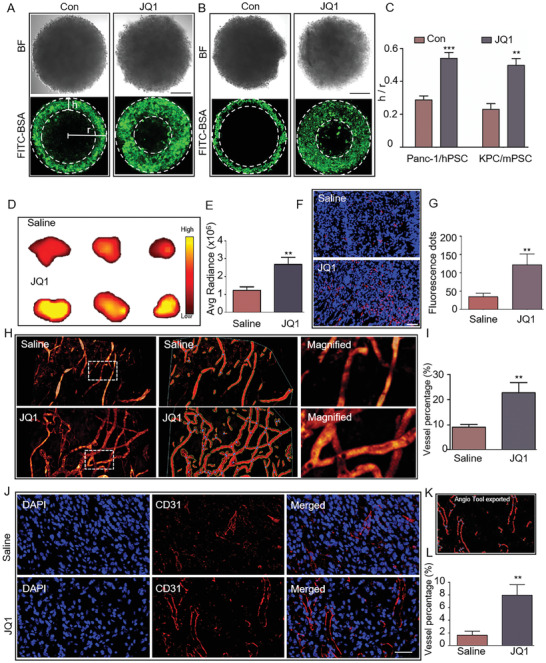
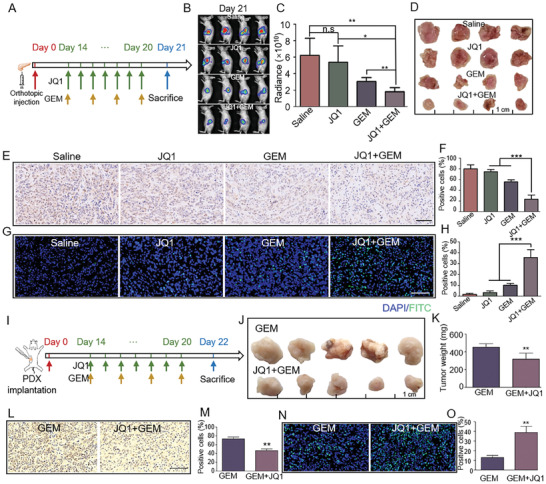
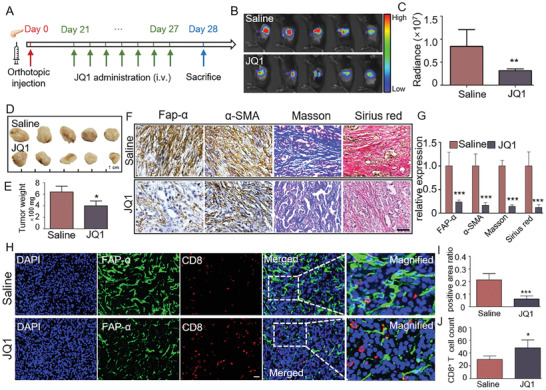
One major obstacle in the drug treatment of pancreatic ductal adenocarcinoma (PDAC) is its highly fibrotic tumor microenvironment, which is replete with activated pancreatic stellate cells (a-PSCs). These a-PSCs generate abundant extracellular matrix and secrete various cytokines to form biophysical and biochemical barriers, impeding drug access to tumor tissues. Therefore, it is imperative to develop a strategy for reversing PSC activation and thereby removing the barriers to facilitate PDAC drug treatment. Herein, by integrating chromatin immunoprecipitation (ChIP)-seq, Assays for Transposase-Accessible Chromatin (ATAC)-seq, and RNA-seq techniques, this work reveals that super-enhancers (SEs) promote the expression of various genes involved in PSC activation. Disruption of SE-associated transcription with JQ1 reverses the activated phenotype of a-PSCs and decreases stromal fibrosis in both orthotopic and patient-derived xenograft (PDX) models. More importantly, disruption of SEs by JQ1 treatments promotes vascularization, facilitates drug delivery, and alters the immune landscape in PDAC, thereby improving the efficacies of both chemotherapy (with gemcitabine) and immunotherapy (with IL-12). In summary, this study not only elucidates the contribution of SEs of a-PSCs in shaping the PDAC tumor microenvironment but also highlights that targeting SEs in a-PSCs may become a gate-opening strategy that benefits PDAC drug therapy by removing stromal barriers.
胰腺导管腺癌(PDAC)药物治疗的一个主要障碍是其高度纤维化的肿瘤微环境,其中充满了活化的胰腺星状细胞(a-PSC)。这些a-PSC产生大量细胞外基质并分泌各种细胞因子,形成生物物理和生化屏障,阻碍药物进入肿瘤组织。因此,必须制定一种策略来逆转PSC活化,从而消除这些屏障以促进PDAC的药物治疗。在此,通过整合染色质免疫沉淀(ChIP)-seq、转座酶可及染色质分析(ATAC)-seq和RNA-seq技术,这项研究揭示了超级增强子(SE)促进参与PSC活化的各种基因的表达。用JQ1破坏与SE相关的转录可逆转a-PSC的活化表型,并降低原位和患者来源异种移植(PDX)模型中的基质纤维化。更重要的是,JQ1处理破坏SE可促进血管生成,促进药物递送,并改变PDAC中的免疫格局,从而提高化疗(使用吉西他滨)和免疫治疗(使用IL-12)的疗效。总之,这项研究不仅阐明了a-PSC的SE在塑造PDAC肿瘤微环境中的作用,还强调了靶向a-PSC中的SE可能成为一种开启大门的策略,通过消除基质屏障使PDAC药物治疗受益。