Andrade Luis Jesuino de Oliveira, de Oliveira Luís Matos, Bittencourt Alcina Maria Vinhaes, Lourenço Letícia Góes de Carvalho, de Oliveira Gabriela Correia Matos
Universidade do Estado de Santa Cruz, Department of Health, Ilhéus BA, Brazil.
Escola Bahiana de Medicina e Saúde Pública, Salvador BA, Brazil.
Dement Neuropsychol. 2024 Feb 9;18:e20230032. doi: 10.1590/1980-5764-DN-2023-0032. eCollection 2024.
The disability of cells to react to insulin, causing glucose intolerance and hyperglycemia, is referred to as insulin resistance. This clinical condition, which has been well-researched in organs such as adipose tissue, muscle, and liver, has been linked to neurodegenerative diseases like Alzheimer's disease (AD) when it occurs in the brain.
The authors aimed to gather data from the current literature on brain insulin resistance (BIR) and its likely repercussions on neurodegenerative disorders, more specifically AD, through a systematic review.
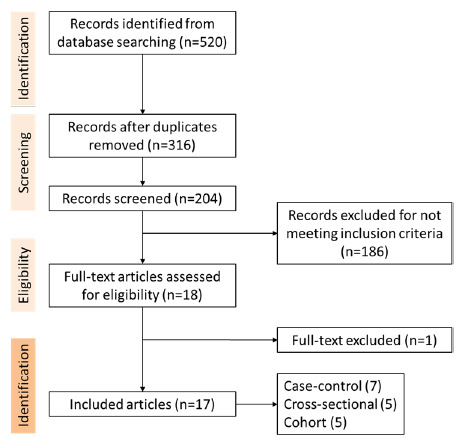
A comprehensive search was conducted in multiple medical databases, including the Cochrane Central Register of Controlled Trials, EMBASE, Medical Literature Analysis and Retrieval System Online (Medline), and PubMed, employing the descriptors: "insulin resistance", "brain insulin resistance", "Alzheimer's disease", "neurodegeneration", and "cognition". The authors focused their search on English-language studies published between 2000 and 2023 that investigated the influence of BIR on neurodegenerative disorders or offered insights into BIR's underlying mechanisms. Seventeen studies that met the inclusion criteria were selected.
The results indicate that BIR is a phenomenon observed in a variety of neurodegenerative disorders, including AD. Studies suggest that impaired glucose utilization and uptake, reduced adenosine triphosphate (ATP) production, and synaptic plasticity changes caused by BIR are linked to cognitive problems. However, conflicting results were observed regarding the association between AD and BIR, with some studies suggesting no association.
Based on the evaluated studies, it can be concluded that the association between AD and BIR remains inconclusive, and additional research is needed to elucidate this relationship.
细胞对胰岛素反应的能力丧失,导致葡萄糖不耐受和高血糖,被称为胰岛素抵抗。这种临床状况在脂肪组织、肌肉和肝脏等器官中已有充分研究,当它发生在大脑中时,已与阿尔茨海默病(AD)等神经退行性疾病相关联。
作者旨在通过系统综述,从当前关于脑胰岛素抵抗(BIR)及其对神经退行性疾病,更具体地说是AD,可能产生的影响的文献中收集数据。
在多个医学数据库中进行了全面搜索,包括Cochrane对照试验中央登记册、EMBASE、医学文献分析和检索系统在线(Medline)以及PubMed,使用的描述词为:“胰岛素抵抗”、“脑胰岛素抵抗”、“阿尔茨海默病”、“神经退行性变”和“认知”。作者将搜索重点放在2000年至2023年发表的英文研究上,这些研究调查了BIR对神经退行性疾病的影响或提供了BIR潜在机制的见解。选择了17项符合纳入标准的研究。
结果表明,BIR是在包括AD在内的多种神经退行性疾病中观察到的一种现象。研究表明,BIR导致的葡萄糖利用和摄取受损、三磷酸腺苷(ATP)生成减少以及突触可塑性变化与认知问题有关。然而,关于AD与BIR之间的关联观察到了相互矛盾的结果,一些研究表明没有关联。
基于评估的研究,可以得出结论,AD与BIR之间的关联仍无定论,需要更多研究来阐明这种关系。