Miller Lauren R, Bickel Marisa A, Tarantini Stefano, Runion Megan E, Matacchiera Zoe, Vance Michaela L, Hibbs Clara, Vaden Hannah, Nagykaldi Domonkos, Martin Teryn, Bullen Elizabeth C, Pinckard Jessica, Kiss Tamas, Howard Eric W, Yabluchanskiy Andriy, Conley Shannon M
Department of Cell Biology, University of Oklahoma Health Sciences Center, Oklahoma City, OK, United States.
Vascular Cognitive Impairment and Neurodegeneration Program, Oklahoma Center for Geroscience and Healthy Brain Aging, University of Oklahoma Health Sciences Center, Oklahoma City, OK, United States.
Front Aging Neurosci. 2024 Feb 15;16:1320808. doi: 10.3389/fnagi.2024.1320808. eCollection 2024.
Cerebrovascular pathologies contribute to cognitive decline during aging, leading to vascular cognitive impairment and dementia (VCID). Levels of circulating insulin-like growth factor 1 (IGF-1), a vasoprotective hormone, decrease during aging. Decreased circulating IGF-1 in animal models leads to the development of VCID-like symptoms, but the cellular mechanisms underlying IGF-1-deficiency associated pathologies in the aged cerebrovasculature remain poorly understood. Here, we test the hypothesis that vascular smooth muscle cells (VSMCs) play an integral part in mediating the vasoprotective effects of IGF-1.
We used a hypertension-based model of cerebrovascular dysfunction in mice with VSMC-specific IGF-1 receptor () deficiency and evaluated the development of cerebrovascular pathologies and cognitive dysfunction.
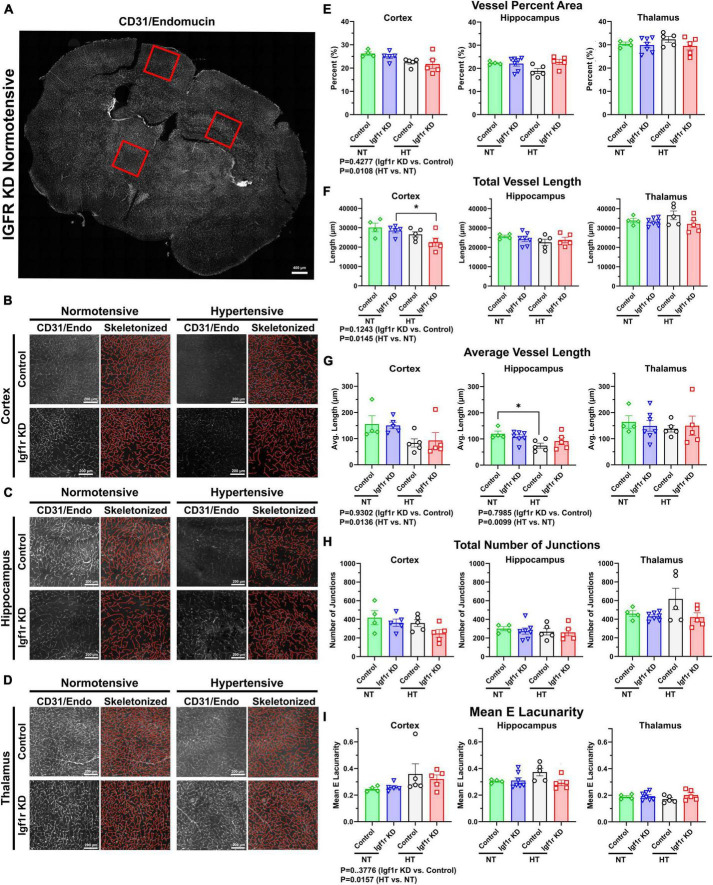
VSMC-specific deficiency led to impaired cerebral myogenic autoregulation, independent of blood pressure changes, which was also associated with impaired spatial learning and memory function as measured by radial arm water maze and impaired motor learning measured by rotarod. In contrast, VSMC-specific IGF-1 receptor knockdown did not lead to cerebral microvascular rarefaction.
These studies suggest that VSMCs are key targets for IGF-1 in the context of cerebrovascular health, playing a role in vessel stability alongside other cells in the neurovascular unit, and that VSMC dysfunction in aging likely contributes to VCID.
脑血管病变会导致衰老过程中的认知衰退,进而引发血管性认知障碍和痴呆(VCID)。胰岛素样生长因子1(IGF-1)是一种血管保护激素,其循环水平在衰老过程中会下降。动物模型中循环IGF-1水平降低会导致类似VCID症状的出现,但衰老脑血管中与IGF-1缺乏相关病理的细胞机制仍知之甚少。在此,我们检验了血管平滑肌细胞(VSMC)在介导IGF-1的血管保护作用中起重要作用这一假说。
我们使用了一种基于高血压的脑血管功能障碍小鼠模型,该模型中VSMC特异性IGF-1受体()缺乏,并评估了脑血管病变和认知功能障碍的发展情况。
VSMC特异性缺乏导致脑肌源性自身调节受损,且与血压变化无关,这也与通过放射状臂水迷宫测量的空间学习和记忆功能受损以及通过转棒试验测量的运动学习受损有关。相比之下,VSMC特异性IGF-1受体敲低并未导致脑微血管稀疏。
这些研究表明,在脑血管健康方面,VSMC是IGF-1的关键靶点,与神经血管单元中的其他细胞一起在血管稳定性中发挥作用,并且衰老过程中的VSMC功能障碍可能导致VCID。