Bhuiyan Mohammad Iqbal H, Habib Khadija, Sultan Md Tipu, Chen Fenghua, Jahan Israt, Weng Zhongfang, Rahman Md Shamim, Islam Rabia, Foley Lesley M, Hitchens T Kevin, Deng Xianming, Canna Scott W, Sun Dandan, Cao Guodong
Department of Pharmaceutical Sciences, School of Pharmacy, University of Texas at El Paso, El Paso, Texas, USA.
Department of Neurology, University of Pittsburgh, Pittsburgh, Pennsylvania, USA.
CNS Neurosci Ther. 2024 Mar;30(3):e14654. doi: 10.1111/cns.14654.
Astrogliosis and white matter lesions (WML) are key characteristics of vascular contributions to cognitive impairment and dementia (VCID). However, the molecular mechanisms underlying VCID remain poorly understood. Stimulation of Na-K-Cl cotransport 1 (NKCC1) and its upstream kinases WNK (with no lysine) and SPAK (the STE20/SPS1-related proline/alanine-rich kinase) play a role in astrocytic intracellular Na overload, hypertrophy, and swelling. Therefore, in this study, we assessed the effect of SPAK inhibitor ZT-1a on pathogenesis and cognitive function in a mouse model of VCID induced by bilateral carotid artery stenosis (BCAS).
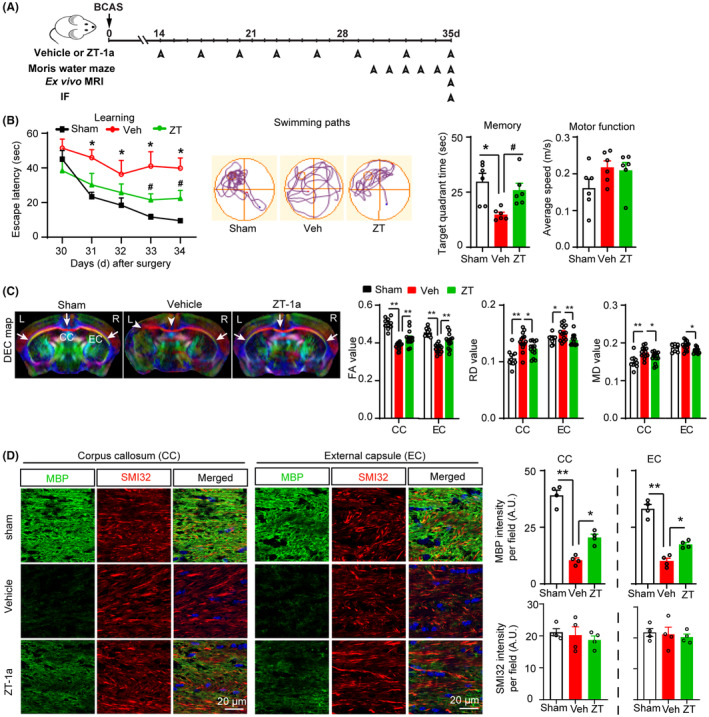
Following sham or BCAS surgery, mice were randomly assigned to receive either vehicle (DMSO) or SPAK inhibitor ZT-1a treatment regimen (days 14-35 post-surgery). Mice were then evaluated for cognitive functions by Morris water maze, WML by ex vivo MRI-DTI analysis, and astrogliosis/demyelination by immunofluorescence and immunoblotting.
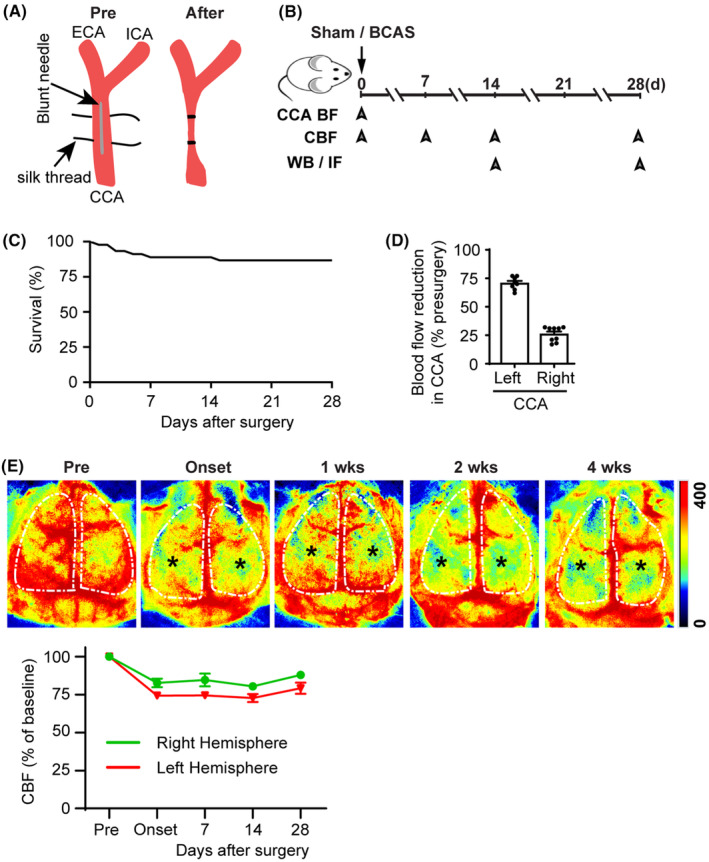
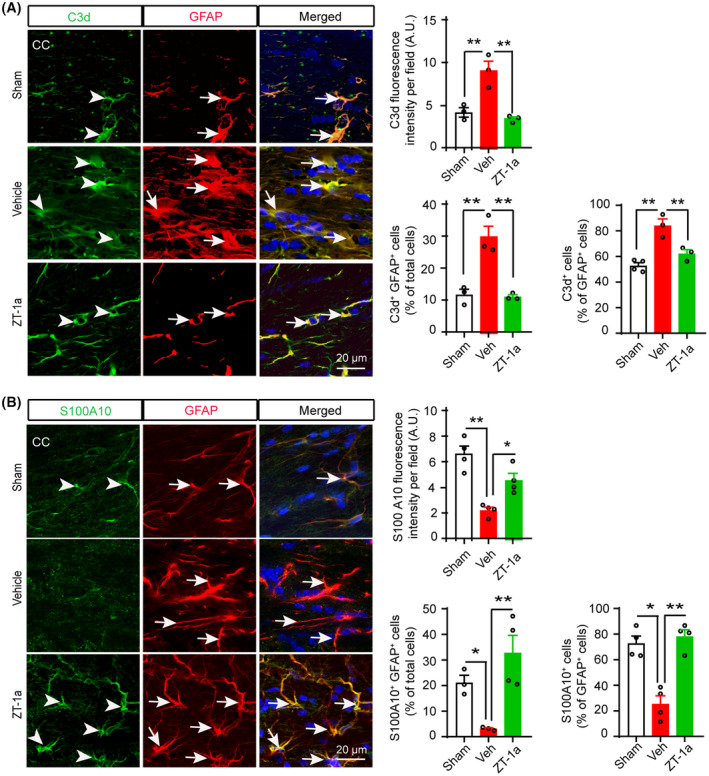
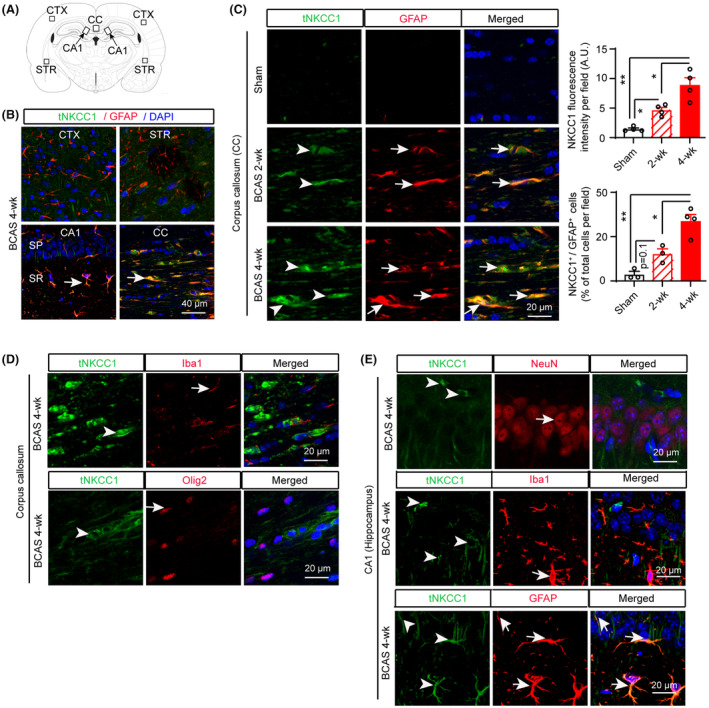
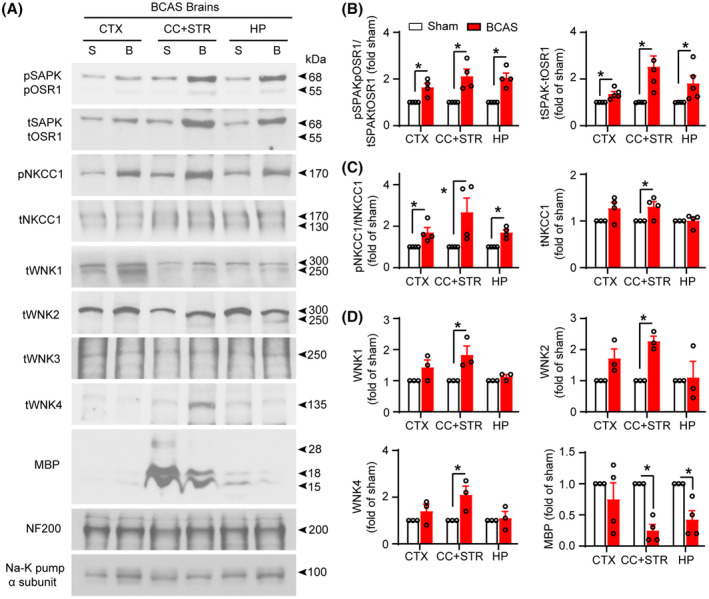
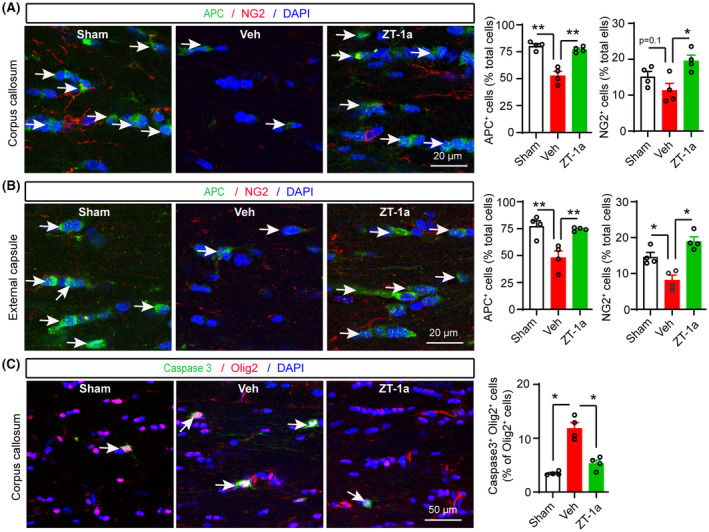
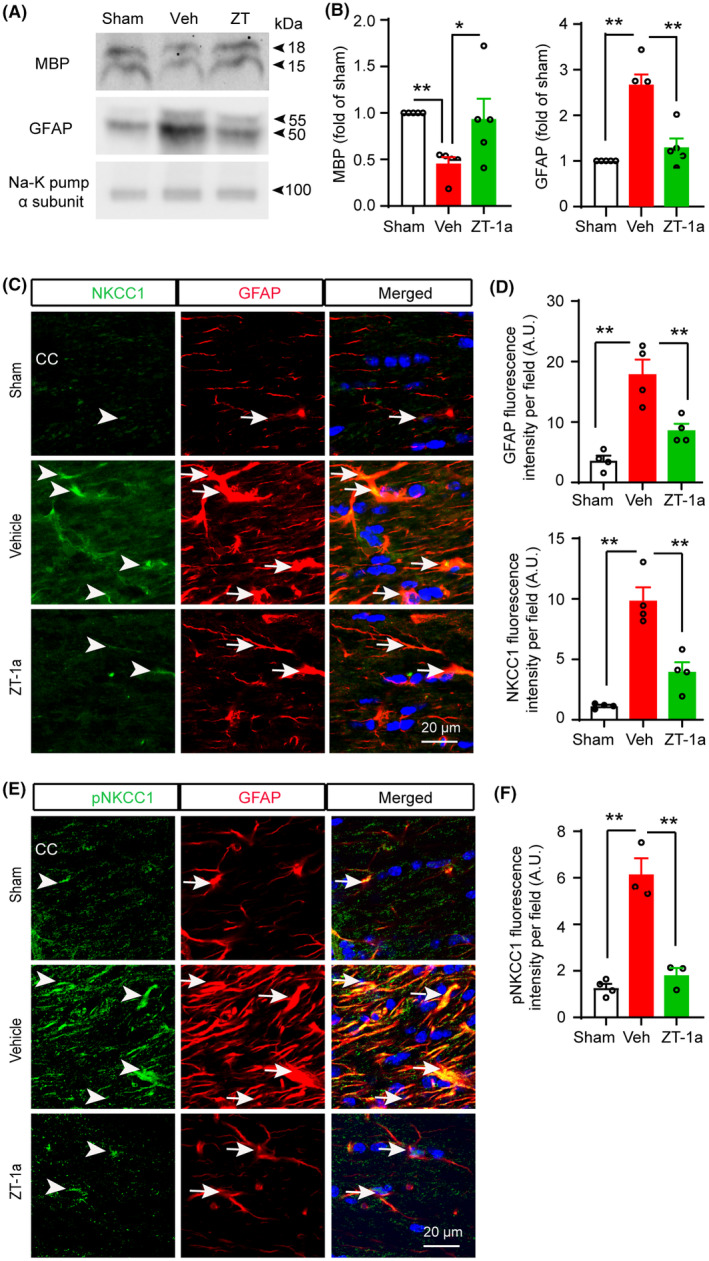
Compared to sham control mice, BCAS-Veh mice exhibited chronic cerebral hypoperfusion and memory impairments, accompanied by significant MRI DTI-detected WML and oligodendrocyte (OL) death. Increased activation of WNK-SPAK-NKCC1-signaling proteins was detected in white matter tissues and in C3d GFAP cytotoxic astrocytes but not in S100A10 GFAP homeostatic astrocytes in BCAS-Veh mice. In contrast, ZT-1a-treated BCAS mice displayed reduced expression and phosphorylation of NKCC1, decreased astrogliosis, OL death, and WML, along with improved memory functions.
BCAS-induced upregulation of WNK-SPAK-NKCC1 signaling contributes to white matter-reactive astrogliosis, OL death, and memory impairment. Pharmacological inhibition of the SPAK activity has therapeutic potential for alleviating pathogenesis and memory impairment in VCID.
星形胶质细胞增生和白质病变(WML)是血管性认知障碍和痴呆(VCID)的关键特征。然而,VCID的分子机制仍知之甚少。钠-钾-氯协同转运蛋白1(NKCC1)及其上游激酶WNK(无赖氨酸激酶)和SPAK(STE20/SPS1相关脯氨酸/丙氨酸丰富激酶)的激活在星形胶质细胞内钠超载、肥大和肿胀中起作用。因此,在本研究中,我们评估了SPAK抑制剂ZT-1a对双侧颈动脉狭窄(BCAS)诱导的VCID小鼠模型发病机制和认知功能的影响。
在假手术或BCAS手术后,将小鼠随机分配接受载体(二甲基亚砜)或SPAK抑制剂ZT-1a治疗方案(术后14-35天)。然后通过莫里斯水迷宫评估小鼠的认知功能,通过离体磁共振成像扩散张量成像(MRI-DTI)分析评估WML,通过免疫荧光和免疫印迹评估星形胶质细胞增生/脱髓鞘。
与假手术对照小鼠相比,BCAS-载体小鼠表现出慢性脑灌注不足和记忆障碍,伴有MRI DTI检测到的明显WML和少突胶质细胞(OL)死亡。在BCAS-载体小鼠的白质组织和C3d胶质纤维酸性蛋白(GFAP)细胞毒性星形胶质细胞中检测到WNK-SPAK-NKCC1信号蛋白的激活增加,但在S100A10 GFAP稳态星形胶质细胞中未检测到。相比之下,ZT-1a治疗的BCAS小鼠显示NKCC1的表达和磷酸化降低,星形胶质细胞增生、OL死亡和WML减少,同时记忆功能改善。
BCAS诱导的WNK-SPAK-NKCC1信号上调导致白质反应性星形胶质细胞增生、OL死亡和记忆障碍。SPAK活性的药理学抑制对减轻VCID的发病机制和记忆障碍具有治疗潜力。