
使用Pt@g-CN/N-CNTs纳米复合材料对抗坏血酸、多巴胺和尿酸进行高灵敏度同步检测。
Highly sensitive and simultaneous detection of ascorbic acid, dopamine, and uric acid using Pt@g-CN/N-CNTs nanocomposites.
作者信息
Zhang Lin, Yu Liu, Peng Junyang, Hou Xiaoying, Du Hongzhi
机构信息
School of Pharmacy, Hubei University of Chinese Medicine, Wuhan 430065, China.
Hubei Shizhen Laboratory, Wuhan 430065, China.
出版信息
iScience. 2024 Feb 15;27(3):109241. doi: 10.1016/j.isci.2024.109241. eCollection 2024 Mar 15.
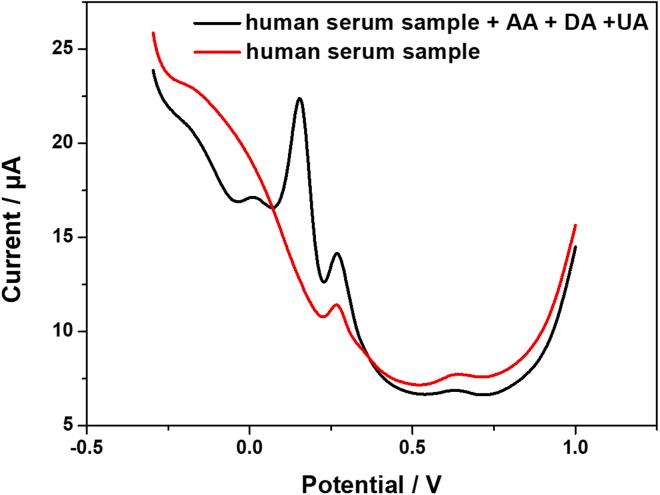
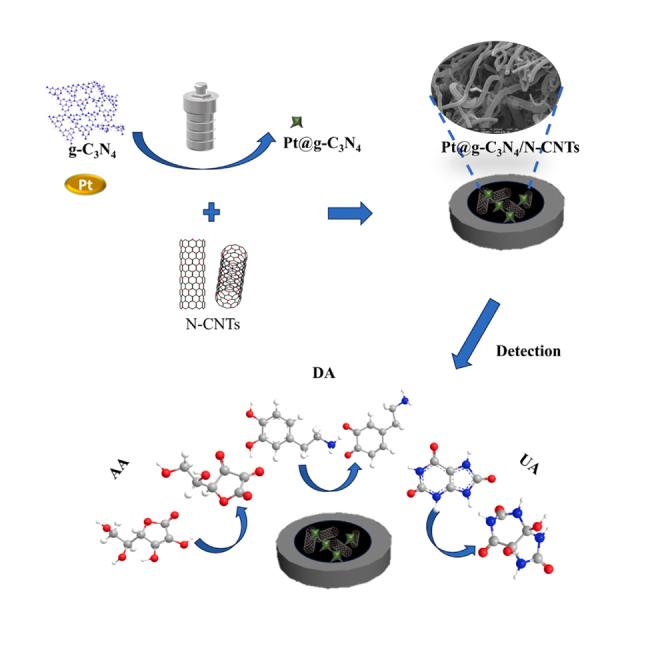
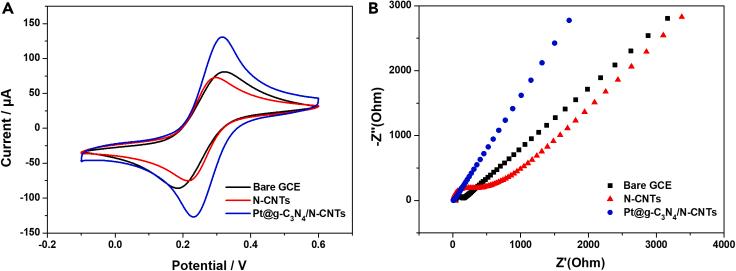
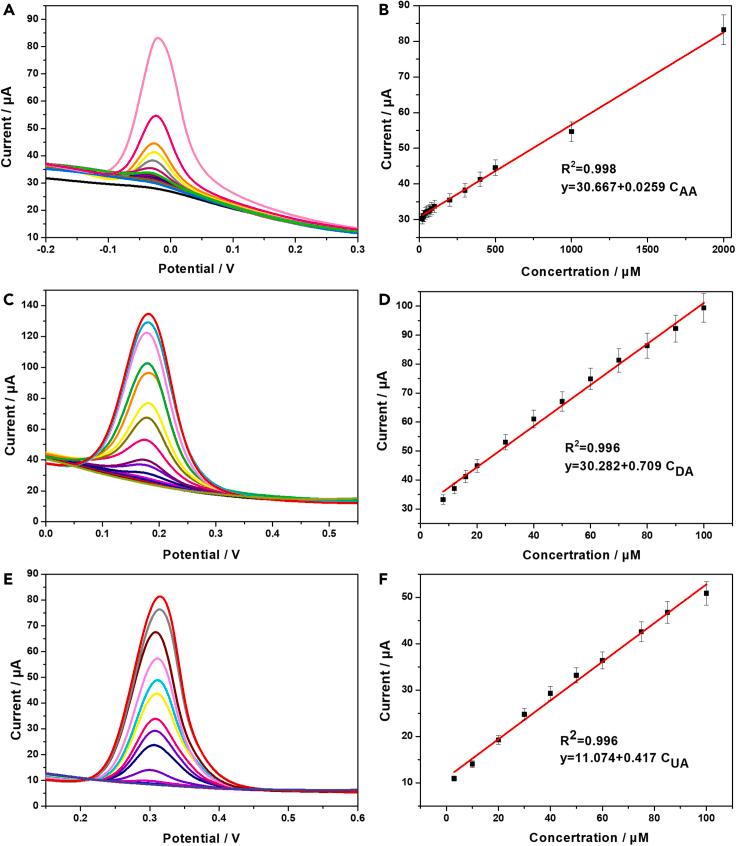
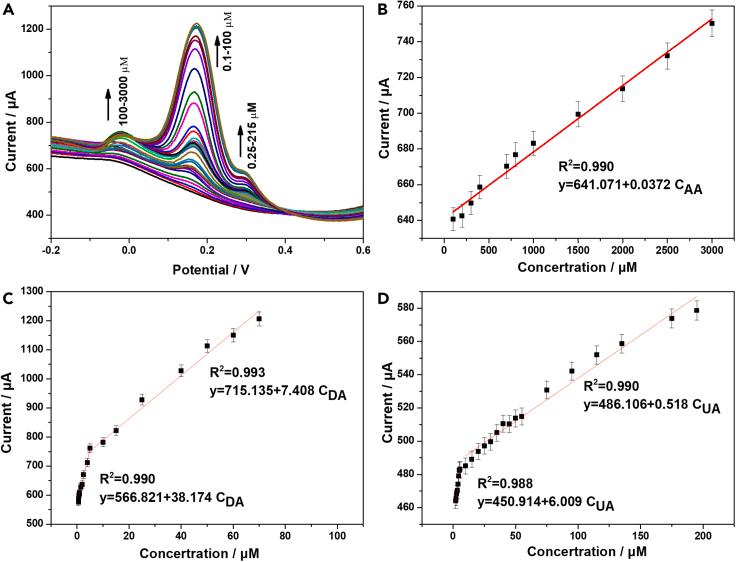
The detection of ascorbic acid (AA), dopamine (DA), and uric acid (UA) is crucial for understanding and managing various illnesses. In this research, Pt@g-CN nanoparticles were synthesized via hydrothermal method and combined with N-doped carbon nanotubes (N-CNTs). The Pt@g-CN/N-CNTs-modified glassy carbon (GC) electrode was fabricated as an electrochemical sensor for the determination of AA, DA, and UA. The linear response range of AA, DA, and UA in the optimal condition was 100-3,000 μM, 1-100 μM, and 2-215 μM boasting a low detection limit (S/N = 3) of 29.44 μM (AA), 0.21 μM (UA), and 2.99 μM (DA), respectively. Additionally, the recoveries of AA, DA, and UA in serum sample were 100.4%-106.7%. These results corroborate the feasibility of the proposed method for the simultaneous, sensitive, and reliable detection of AA, DA, and UA. Our Pt@g-CN/N-CNTs/GC electrode can provide a potential strategy for disease diagnosis and health monitoring in clinical settings.
抗坏血酸(AA)、多巴胺(DA)和尿酸(UA)的检测对于理解和管理各种疾病至关重要。在本研究中,通过水热法合成了Pt@g-CN纳米颗粒,并将其与氮掺杂碳纳米管(N-CNTs)相结合。制备了Pt@g-CN/N-CNTs修饰的玻碳(GC)电极作为用于测定AA、DA和UA的电化学传感器。在最佳条件下,AA、DA和UA的线性响应范围分别为100-3000 μM、1-100 μM和2-215 μM,其低检测限(S/N = 3)分别为29.44 μM(AA)、0.21 μM(UA)和2.99 μM(DA)。此外,血清样品中AA、DA和UA的回收率为100.4%-106.7%。这些结果证实了所提出的方法同时、灵敏且可靠地检测AA、DA和UA的可行性。我们的Pt@g-CN/N-CNTs/GC电极可为临床环境中的疾病诊断和健康监测提供一种潜在策略。



 Zotero 插件