MRC Cognition and Brain Sciences Unit, University of Cambridge, Cambridge, UK.
Division of Psychiatry, University College London, London, UK.
Transl Psychiatry. 2024 Mar 4;14(1):133. doi: 10.1038/s41398-024-02840-z.
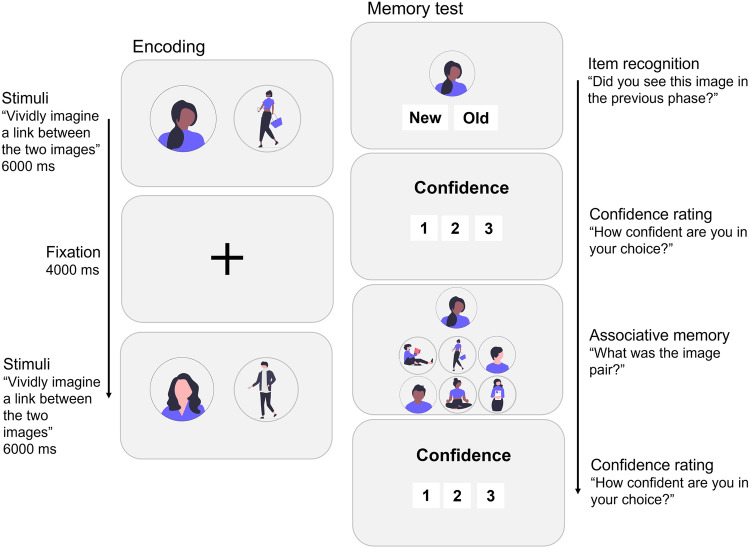
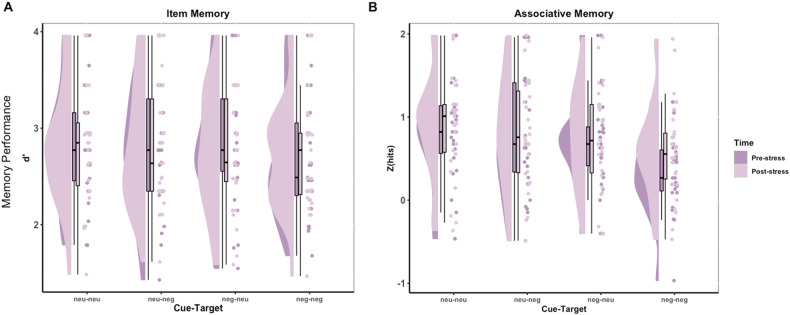
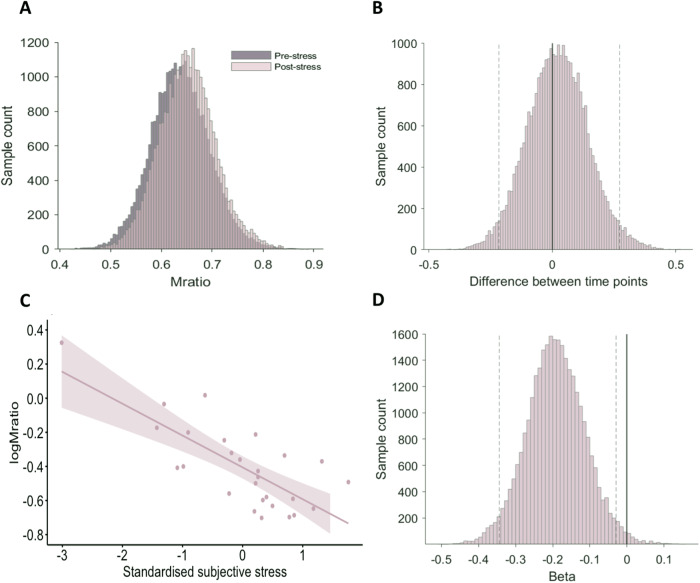
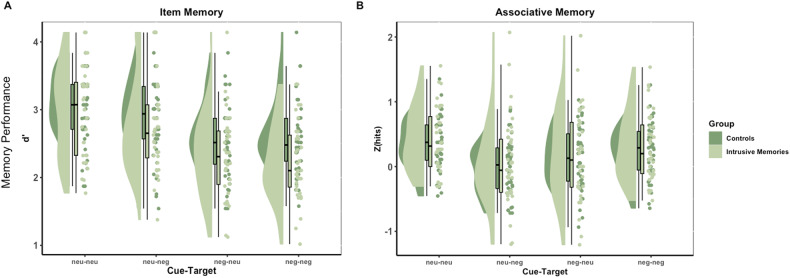
Aberrations to metacognition-the ability to reflect on and evaluate self-performance-are a feature of poor mental health. Theoretical models of post-traumatic stress disorder propose that following severe stress or trauma, maladaptive metacognitive evaluations and appraisals of the event drive the development of symptoms. Empirical research is required in order to reveal whether disruptions to metacognition cause or contribute to symptom development in line with theoretical accounts, or are simply a consequence of ongoing psychopathology. In two experiments, using hierarchical Bayesian modelling of metacognition measured in a memory recognition task, we assessed whether distortions to metacognition occur at a state-level after an acute stress induction, and/or at a trait-level in a sample of individuals experiencing intrusive memories following traumatic stress. Results from experiment 1, an in-person laboratory-based experiment, demonstrated that heightened psychological responses to the stress induction were associated with poorer metacognitive efficiency, despite there being no overall change in metacognitive efficiency from pre- to post-stress (N = 27). Conversely, in experiment 2, an online experiment using the same metamemory task, we did not find evidence of metacognitive alterations in a transdiagnostic sample of patients with intrusive memory symptomatology following traumatic stress (N = 36, compared to 44 matched controls). Our results indicate a relationship between state-level psychological responses to stress and metacognitive alterations. The lack of evidence for pre- to post-stress differences in metamemory illustrates the importance for future studies to reveal the direction of this relationship, and consequently the duration of stress-associated metacognitive impairments and their impact on mental health.
元认知偏差——即反思和评估自我表现的能力——是心理健康不佳的一个特征。创伤后应激障碍的理论模型提出,在经历严重的压力或创伤后,对事件的适应不良的元认知评估和评价会导致症状的发展。需要进行实证研究,以揭示元认知障碍是导致症状发展与理论解释一致,还是仅仅是持续的精神病理学的结果。在两项实验中,我们使用记忆识别任务中测量的元认知的分层贝叶斯模型,评估了元认知是否在急性应激诱导后的状态水平上发生扭曲,以及在经历创伤后应激的侵入性记忆的个体样本中在特质水平上发生扭曲。实验 1 的结果(一项基于现场的实验室实验)表明,对应激诱导的心理反应增强与元认知效率降低有关,尽管元认知效率在应激前后没有总体变化(N=27)。相反,在实验 2 中,我们在一项使用相同元记忆任务的在线实验中,在经历创伤后应激的具有侵入性记忆症状的跨诊断样本中,并未发现元认知改变的证据(N=36,与 44 名匹配的对照组相比)。我们的结果表明,状态水平的应激反应与元认知改变之间存在关系。在元记忆方面,应激前后没有差异的证据表明,未来的研究揭示这种关系的方向非常重要,从而揭示与应激相关的元认知障碍的持续时间及其对心理健康的影响。