Department of Pathology and Forensic Medicine, Institute of Biomedical Sciences of the Faculty of Medicine, Vilnius University, M. K. Ciurlionio Str. 21, 03101, Vilnius, Lithuania.
National Centre of Pathology, Vilnius University Hospital Santaros Klinikos, P. Baublio Str. 5, 08406, Vilnius, Lithuania.
Sci Rep. 2024 Mar 4;14(1):5345. doi: 10.1038/s41598-024-55936-3.
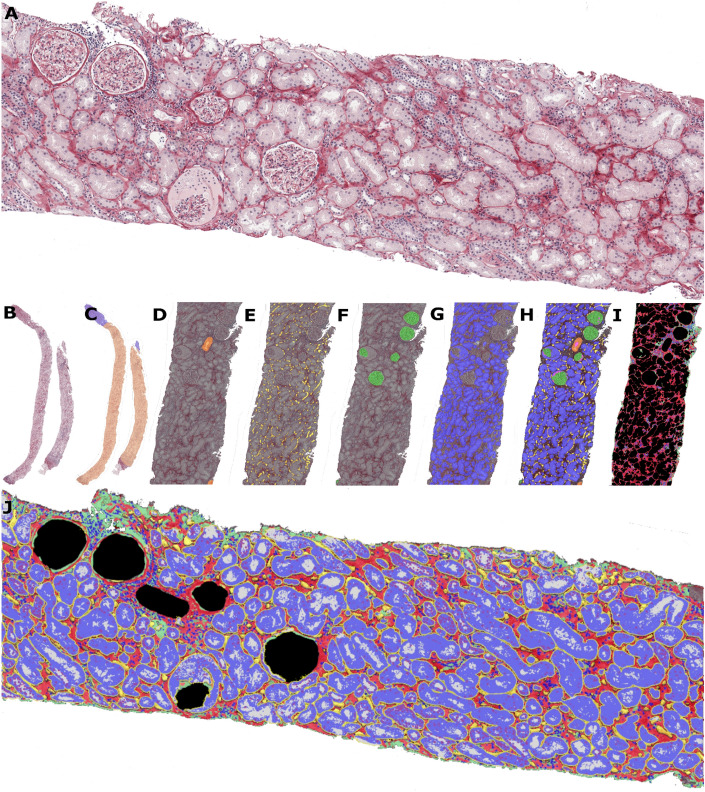
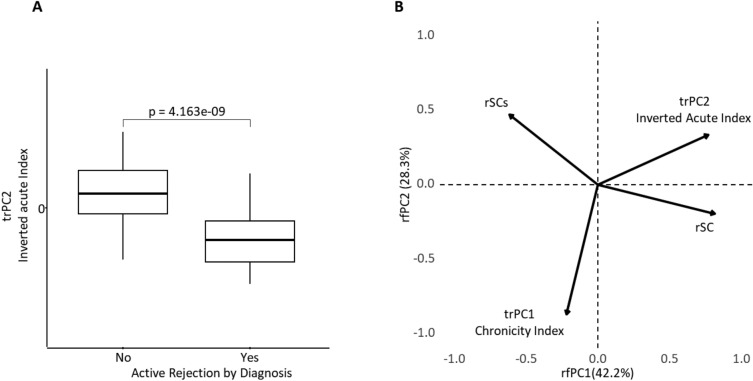
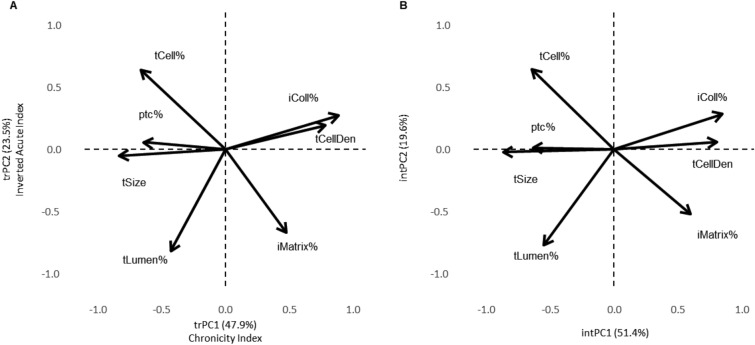
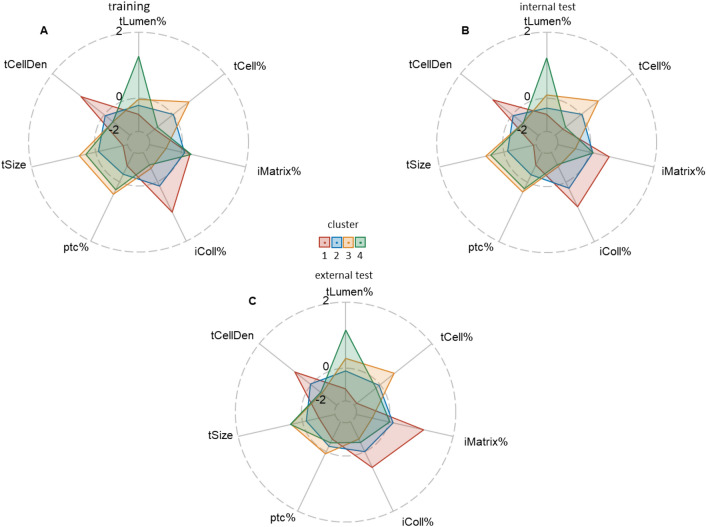
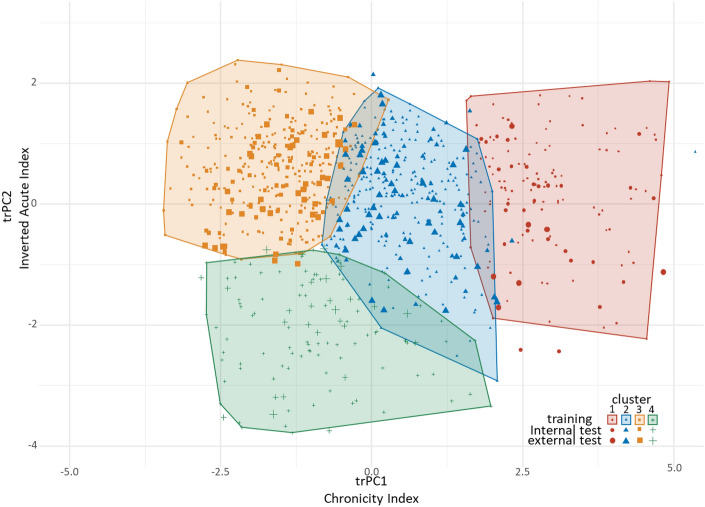
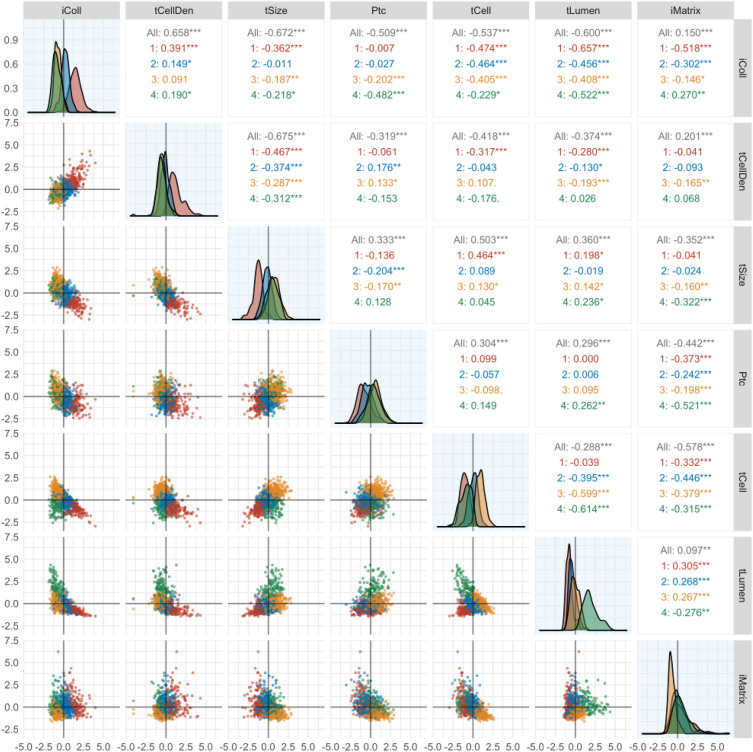
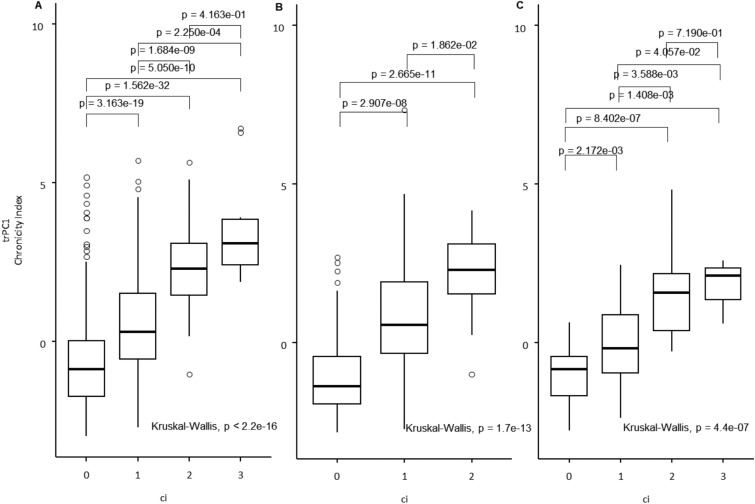
Managing patients with kidney allografts largely depends on biopsy diagnosis which is based on semiquantitative assessments of rejection features and extent of acute and chronic changes within the renal parenchyma. Current methods lack reproducibility while digital image data-driven computational models enable comprehensive and quantitative assays. In this study we aimed to develop a computational method for automated assessment of histopathology transformations within the tubulointerstitial compartment of the renal cortex. Whole slide images of modified Picrosirius red-stained biopsy slides were used for the training (n = 852) and both internal (n = 172) and external (n = 94) tests datasets. The pipeline utilizes deep learning segmentations of renal tubules, interstitium, and peritubular capillaries from which morphometry features were extracted. Seven indicators were selected for exploring the intrinsic spatial interactions within the tubulointerstitial compartment. A principal component analysis revealed two independent factors which can be interpreted as representing chronic and acute tubulointerstitial injury. A K-means clustering classified biopsies according to potential phenotypes of combined acute and chronic transformations of various degrees. We conclude that multivariate analyses of tubulointerstitial morphometry transformations enable extraction of and quantification of acute and chronic components of injury. The method is developed for renal allograft biopsies; however, the principle can be applied more broadly for kidney pathology assessment.
管理肾移植患者主要依赖于活检诊断,其基于对排斥特征的半定量评估以及肾实质内急性和慢性变化的程度。当前的方法缺乏可重复性,而数字图像数据驱动的计算模型则可以实现全面和定量的检测。在这项研究中,我们旨在开发一种用于自动评估肾皮质小管间区组织病理学转化的计算方法。使用改良的苦味酸天狼星红染色活检切片的全幻灯片图像进行训练(n=852)和内部(n=172)以及外部(n=94)测试数据集。该流水线利用深度学习对肾小管、间质和肾小管周毛细血管进行分割,从中提取形态计量学特征。选择了七个指标来探索小管间区内在的空间相互作用。主成分分析揭示了两个独立的因素,可解释为代表慢性和急性小管间损伤。K-均值聚类根据不同程度的急性和慢性联合转化的潜在表型对活检进行分类。我们得出结论,小管间形态计量学转化的多元分析可以提取和量化损伤的急性和慢性成分。该方法是为肾移植活检开发的;然而,该原理可以更广泛地应用于肾脏病理学评估。