Muga Winstoun, Juma Kenneth, Athero Sherine, Kimemia Grace, Bangha Martin, Ouedraogo Ramatou
African Population Health and Research Center, Nairobi, Kenya.
PLOS Glob Public Health. 2024 Mar 7;4(3):e0001862. doi: 10.1371/journal.pgph.0001862. eCollection 2024.
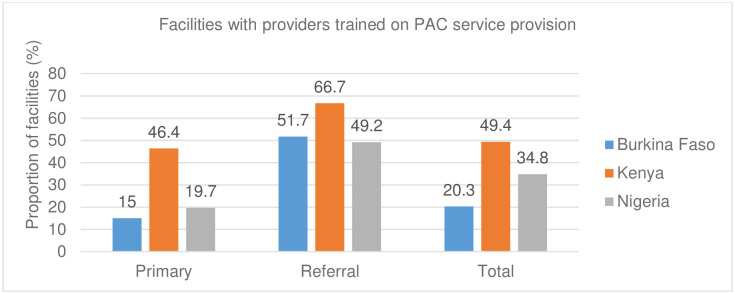
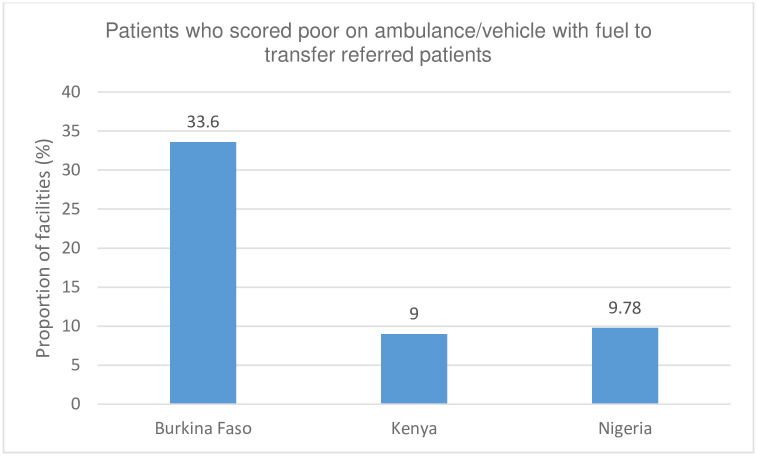
Despite several political commitments to ensure the availability of and access to post-abortion care services, women in sub-Saharan Africa still struggle to access quality post-abortion care, and with devastating social and economic consequences. Expanding access to post-abortion care while eliminating barriers to utilization could significantly reduce abortions-related morbidity and mortality. We describe the barriers to providing and utilizing post-abortion care across health facilities in Burkina Faso, Kenya, and Nigeria. This paper draws on three data sources: health facility assessment data, patient-exit interview data, and qualitative interviews conducted with healthcare providers and policymakers. All data were based on a cross-sectional survey of a nationally representative sample of health facilities conducted between November 2018 and February 2019. Data on post-abortion care service indicators were collected, including staffing levels and staff training, availability of post-abortion care supplies, equipment and commodities. Patient-exit interviews focused on patients treated for post-abortion complications. In-depth interviews were conducted with healthcare providers within a sample of the study health facilities and national or local decision-makers in sexual and reproductive health. Few primary-level facilities in Burkina Faso (15%), Kenya (46%), and Nigeria (20%) had staff trained on post-abortion care. Only 16.6% of facilities in Kenya had functional operating theaters or MVA rooms, Burkina Faso (20.3%) and Nigeria (50.7%). Primary facilities refer post-abortion care cases to higher-level facilities despite needing to be more adequately equipped to facilitate these referrals. Several challenges that impede the provision of quality and comprehensive post-abortion care across the three countries. The absence of post-abortion care training, equipment, and inadequate referral capacity was among the critical reasons for the lack of services. There is a need to strengthen post-abortion care services across all levels of the health system, but especially at lower-level facilities where most patients seek care first.
尽管在政治上做出了多项承诺,以确保提供堕胎后护理服务并使其可及,但撒哈拉以南非洲的妇女仍难以获得高质量的堕胎后护理,且面临着毁灭性的社会和经济后果。在消除利用障碍的同时扩大堕胎后护理的可及性,可显著降低与堕胎相关的发病率和死亡率。我们描述了布基纳法索、肯尼亚和尼日利亚各地医疗机构在提供和利用堕胎后护理方面的障碍。本文借鉴了三个数据源:医疗机构评估数据、患者出院访谈数据,以及与医疗服务提供者和政策制定者进行的定性访谈。所有数据均基于2018年11月至2019年2月期间对全国具有代表性的医疗机构样本进行的横断面调查。收集了堕胎后护理服务指标的数据,包括人员配备水平和人员培训情况、堕胎后护理用品、设备和商品的可获得性。患者出院访谈聚焦于因堕胎后并发症接受治疗的患者。对研究医疗机构样本中的医疗服务提供者以及性健康和生殖健康方面的国家或地方决策者进行了深入访谈。布基纳法索(15%)、肯尼亚(46%)和尼日利亚(20%)只有极少数基层医疗机构有接受过堕胎后护理培训的工作人员。肯尼亚只有16.6%的医疗机构设有功能正常的手术室或手动真空吸引术(MVA)室,布基纳法索为20.3%,尼日利亚为50.7%。基层医疗机构尽管自身需要更充分的设备来便利这些转诊,但仍将堕胎后护理病例转诊至上级医疗机构。在这三个国家,有几个因素阻碍了提供高质量和全面的堕胎后护理。缺乏堕胎后护理培训、设备以及转诊能力不足是服务缺失的关键原因之一。有必要加强卫生系统各级的堕胎后护理服务,尤其是在大多数患者首先寻求护理的基层医疗机构。