
何时扣动扳机:使用仪器化口腔防护用具近似头部加速度事件的概念性考虑。
When to Pull the Trigger: Conceptual Considerations for Approximating Head Acceleration Events Using Instrumented Mouthguards.
机构信息
Carnegie Applied Rugby Research (CARR) Centre, Carnegie School of Sport, Leeds Beckett University, Leeds, UK.
Leeds Rhinos Rugby League Club, Leeds, UK.
出版信息
Sports Med. 2024 Jun;54(6):1361-1369. doi: 10.1007/s40279-024-02012-5. Epub 2024 Mar 9.
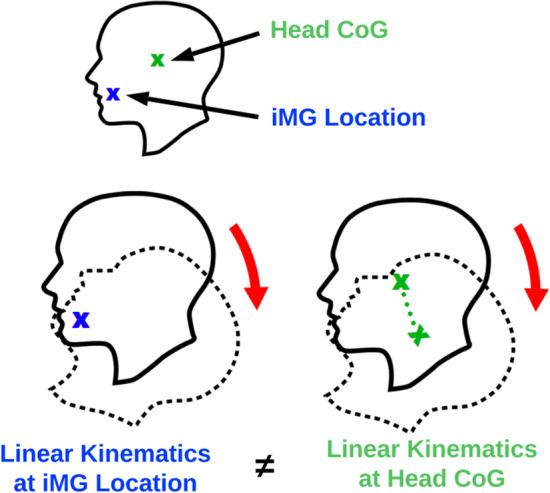
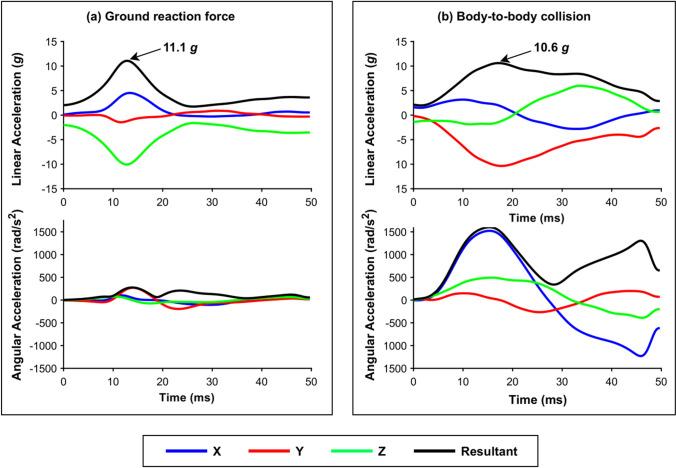
Head acceleration events (HAEs) are acceleration responses of the head following external short-duration collisions. The potential risk of brain injury from a single high-magnitude HAE or repeated occurrences makes them a significant concern in sport. Instrumented mouthguards (iMGs) can approximate HAEs. The distinction between sensor acceleration events, the iMG datum for approximating HAEs and HAEs themselves, which have been defined as the in vivo event, is made to highlight limitations of approximating HAEs using iMGs. This article explores the technical limitations of iMGs that constrain the approximation of HAEs and discusses important conceptual considerations for stakeholders interpreting iMG data. The approximation of HAEs by sensor acceleration events is constrained by false positives and false negatives. False positives occur when a sensor acceleration event is recorded despite no (in vivo) HAE occurring, while false negatives occur when a sensor acceleration event is not recorded after an (in vivo) HAE has occurred. Various mechanisms contribute to false positives and false negatives. Video verification and post-processing algorithms offer effective means for eradicating most false positives, but mitigation for false negatives is less comprehensive. Consequently, current iMG research is likely to underestimate HAE exposures, especially at lower magnitudes. Future research should aim to mitigate false negatives, while current iMG datasets should be interpreted with consideration for false negatives when inferring athlete HAE exposure.
头部加速事件(HAE)是头部对外界短时间碰撞的加速反应。单次高强度 HAE 或多次发生的 HAE 都可能导致脑损伤,这使其成为运动中的一个重大关注点。仪器化防护牙套(iMG)可以近似模拟 HAE。传感器加速度事件、iMG 数据点(用于近似 HAE)和 HAE 本身之间存在区别,后者被定义为体内事件,这突出了使用 iMG 近似 HAE 的局限性。本文探讨了 iMG 的技术限制,这些限制制约了 HAE 的近似模拟,并讨论了利益相关者解释 iMG 数据时的重要概念性考虑因素。传感器加速度事件对 HAE 的近似受到假阳性和假阴性的限制。假阳性是指尽管没有发生(体内)HAE,但仍记录到传感器加速度事件,而假阴性是指在发生(体内)HAE 后未记录到传感器加速度事件。各种机制导致了假阳性和假阴性。视频验证和后处理算法为消除大多数假阳性提供了有效手段,但对假阴性的缓解措施则不那么全面。因此,当前的 iMG 研究可能低估了 HAE 的暴露程度,尤其是在低强度水平下。未来的研究应旨在减少假阴性,而在推断运动员 HAE 暴露时,应考虑到当前 iMG 数据集存在假阴性的情况。


 Zotero 插件