Centers for Disease Control and Prevention, 1600 Clifton Road NE, Atlanta, GA 30333, USA; Epidemic Intelligence Service, Centers for Disease Control and Prevention, 1600 Clifton Road NE, Atlanta, GA 30333, USA.
Centers for Disease Control and Prevention, 1600 Clifton Road NE, Atlanta, GA 30333, USA.
Sci Total Environ. 2024 May 10;924:171566. doi: 10.1016/j.scitotenv.2024.171566. Epub 2024 Mar 9.
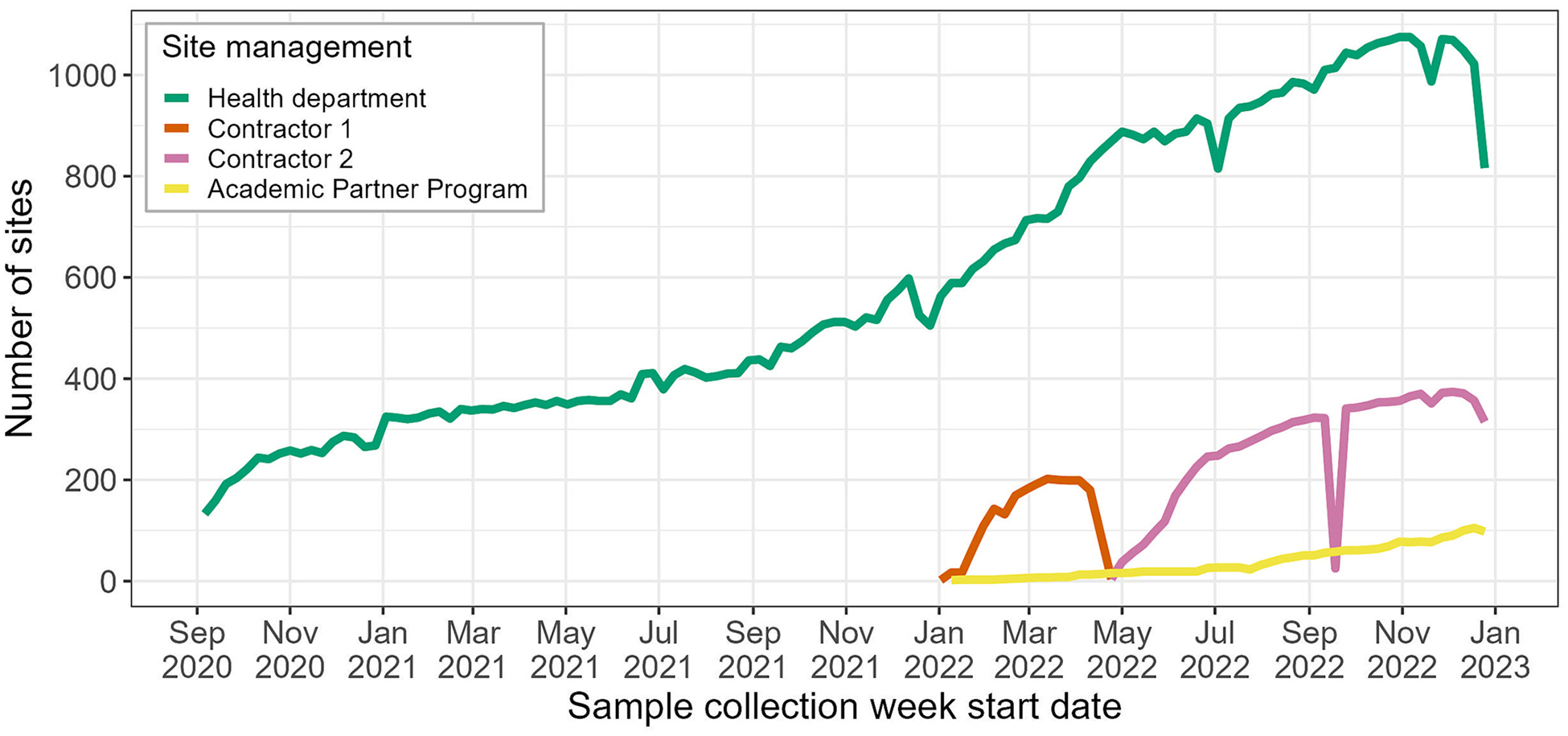
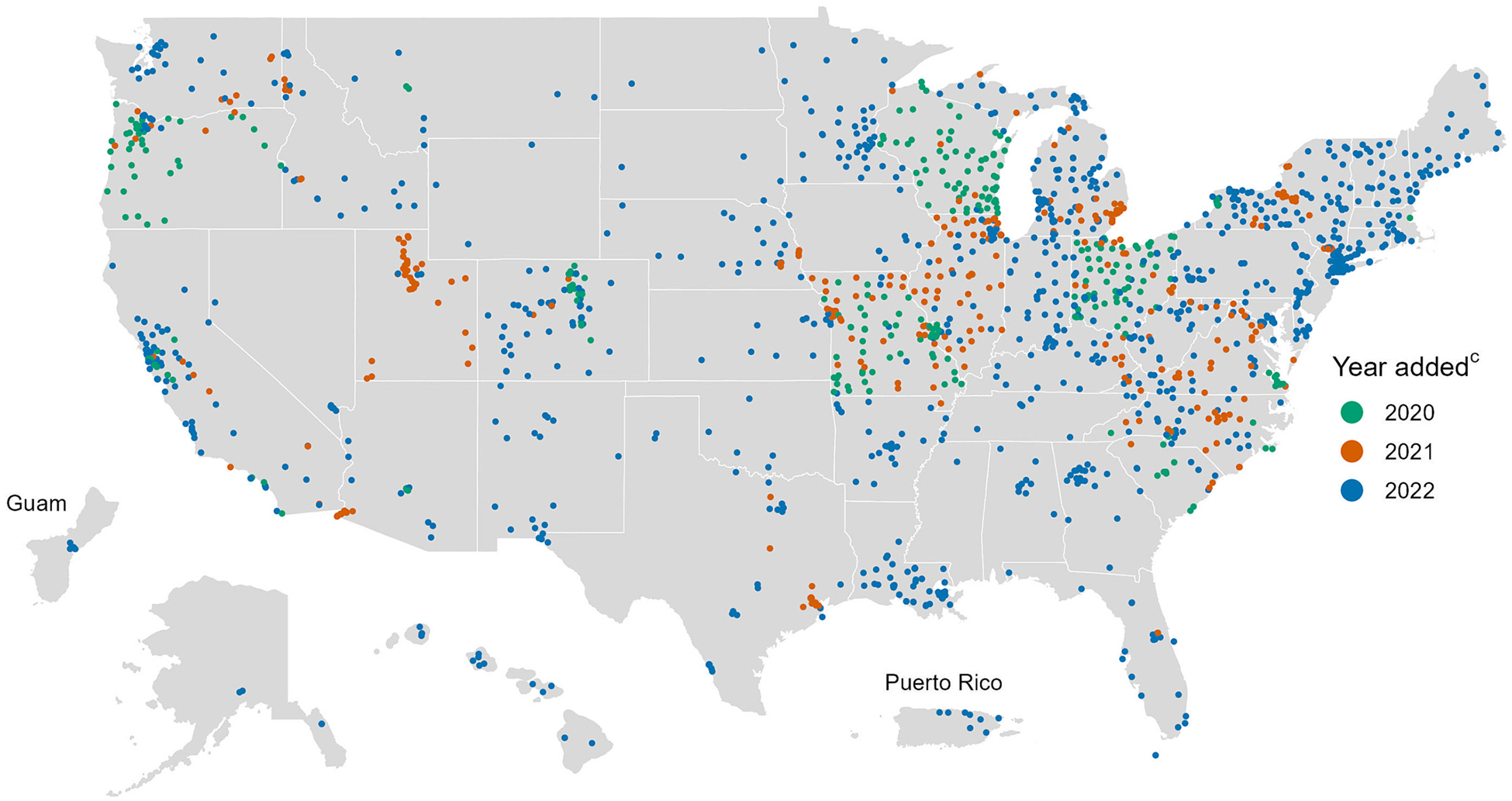
Wastewater surveillance is a valuable tool that can be used to track infectious diseases in a community. In September 2020, the Centers for Disease Control and Prevention (CDC) established the National Wastewater Surveillance System (NWSS) to coordinate and build the nation's capacity to detect and quantify concentrations of SARS-CoV-2 RNA in U.S. wastewater. This is the first surveillance summary of NWSS, covering September 1, 2020 to December 31, 2022. Through partnerships with state, tribal, local, and territorial health departments, NWSS became a national surveillance platform that can be readily expanded and adapted to meet changing public health needs. Beginning with 209 sampling sites in September 2020, NWSS rapidly expanded to >1500 sites by December 2022, covering ≈47 % of the U.S. population. As of December 2022, >152,000 unique wastewater samples have been collected by NWSS partners, primarily from wastewater treatment plants (WWTPs). WWTPs participating in NWSS tend to be larger than the average U.S. WWTP and serve more populated communities. In December 2022, ≈8 % of the nearly 16,000 U.S. WWTPs were participating in NWSS. NWSS partners used a variety of methods for sampling and testing wastewater samples; however, progress is being made to standardize these methods. In July 2021, NWSS partners started submitting SARS-CoV-2 genome sequencing data to NWSS. In October 2022, NWSS expanded to monkeypox virus testing, with plans to include additional infectious disease targets in the future. Through the rapid implementation and expansion of NWSS, important lessons have been learned. Wastewater surveillance programs should consider both surge and long-term capacities when developing an implementation plan, and early standardization of sampling and testing methods is important to facilitate data comparisons across sites. NWSS has proven to be a flexible and sustainable surveillance system that will continue to be a useful complement to case-based surveillance for guiding public health action.
污水监测是一种有价值的工具,可用于跟踪社区中的传染病。2020 年 9 月,疾病控制与预防中心 (CDC) 建立了国家污水监测系统 (NWSS),以协调和建立国家检测和量化美国废水中 SARS-CoV-2 RNA 浓度的能力。这是 NWSS 的第一个监测总结,涵盖 2020 年 9 月 1 日至 2022 年 12 月 31 日。通过与州、部落、地方和地区卫生部门的合作,NWSS 成为一个全国性的监测平台,可以随时扩展和调整以满足不断变化的公共卫生需求。NWSS 从 2020 年 9 月的 209 个采样点迅速扩展到 2022 年 12 月的 1500 多个采样点,覆盖了美国约 47%的人口。截至 2022 年 12 月,NWSS 合作伙伴已收集了超过 152000 个独特的污水样本,主要来自污水处理厂 (WWTP)。参与 NWSS 的 WWTP 通常比美国平均 WWTP 更大,为更多有人居住的社区提供服务。2022 年 12 月,近 16000 个美国 WWTP 中有约 8%参与了 NWSS。NWSS 合作伙伴使用各种方法对污水样本进行采样和测试;然而,正在努力使这些方法标准化。2021 年 7 月,NWSS 合作伙伴开始向 NWSS 提交 SARS-CoV-2 基因组测序数据。2022 年 10 月,NWSS 扩展到猴痘病毒检测,并计划未来纳入其他传染病目标。通过 NWSS 的快速实施和扩展,已经吸取了重要经验。污水监测计划在制定实施计划时应考虑到激增和长期能力,早期对采样和测试方法进行标准化对于促进各站点之间的数据比较非常重要。NWSS 已被证明是一个灵活和可持续的监测系统,将继续成为基于案例的监测的有用补充,以指导公共卫生行动。