Wu Jieyuan, Liang Chaoning, Li Yufei, Zeng Yueting, Sun Xu, Jiang Peixia, Chen Wei, Xiong Dandan, Jin Jian-Ming, Tang Shuang-Yan
CAS Key Laboratory of Microbial Physiological and Metabolic Engineering, State Key Laboratory of Microbial Resources, Institute of Microbiology, Chinese Academy of Sciences, Beijing, China.
University of Chinese Academy of Sciences, Beijing, China.
Microb Biotechnol. 2024 Mar;17(3):e14427. doi: 10.1111/1751-7915.14427.
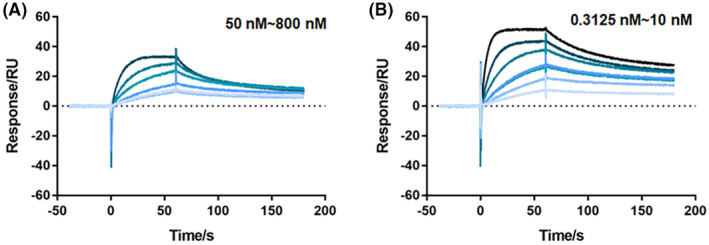
Optimal transcriptional regulatory circuits are expected to exhibit stringent control, maintaining silence in the absence of inducers while exhibiting a broad induction dynamic range upon the addition of effectors. In the P /LacI pair, the promoter of the lac operon in Escherichia coli is characterized by its leakiness, attributed to the moderate affinity of LacI for its operator target. In response to this limitation, the LacI regulatory protein underwent engineering to enhance its regulatory properties. The M7 mutant, carrying I79T and N246S mutations, resulted in the lac promoter displaying approximately 95% less leaky expression and a broader induction dynamic range compared to the wild-type LacI. An in-depth analysis of each mutation revealed distinct regulatory profiles. In contrast to the wild-type LacI, the M7 mutant exhibited a tighter binding to the operator sequence, as evidenced by surface plasmon resonance studies. Leveraging the capabilities of the M7 mutant, a high-value sugar biosensor was constructed. This biosensor facilitated the selection of mutant galactosidases with approximately a seven-fold improvement in specific activity for transgalactosylation. Consequently, this advancement enabled enhanced biosynthesis of galacto-oligosaccharides (GOS).
最佳转录调控回路应表现出严格的控制,在没有诱导剂时保持沉默,而在添加效应物时展现出广泛的诱导动态范围。在P/LacI对中,大肠杆菌中乳糖操纵子的启动子具有渗漏性,这归因于LacI对其操纵子靶点的中等亲和力。针对这一局限性,对LacI调节蛋白进行了改造以增强其调节特性。携带I79T和N246S突变的M7突变体,使得乳糖启动子与野生型LacI相比,渗漏表达减少了约95%,诱导动态范围更广。对每个突变的深入分析揭示了不同的调节模式。与野生型LacI相比,表面等离子体共振研究表明M7突变体与操纵子序列的结合更紧密。利用M7突变体的特性,构建了一种高价值的糖生物传感器。该生物传感器有助于筛选转半乳糖基化比活性提高约7倍的突变半乳糖苷酶。因此,这一进展使得低聚半乳糖(GOS)的生物合成得到增强。