Currie Jordan, Manda Vyshnavi, Robinson Sean K, Lai Celine, Agnihotri Vertica, Hidalgo Veronica, Ludwig R W, Zhang Kai, Pavelka Jay, Wang Zhao V, Rhee June-Wha, Lam Maggie P Y, Lau Edward
Department of Medicine, University of Colorado School of Medicine, Aurora, CO, 80045, USA.
Stanford Cardiovascular Institute, Stanford University, Stanford, CA, 94305, USA.
Nat Commun. 2024 Mar 11;15(1):2207. doi: 10.1038/s41467-024-46600-5.
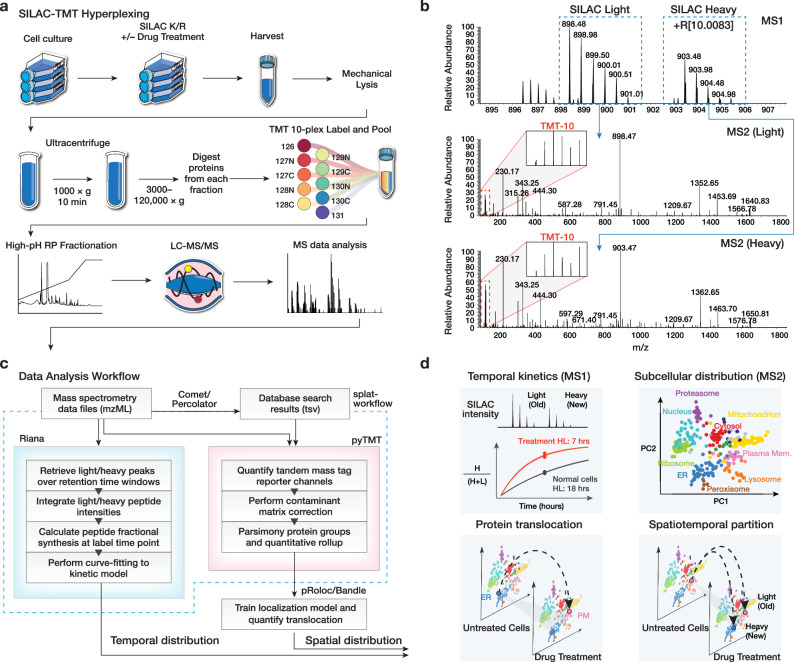
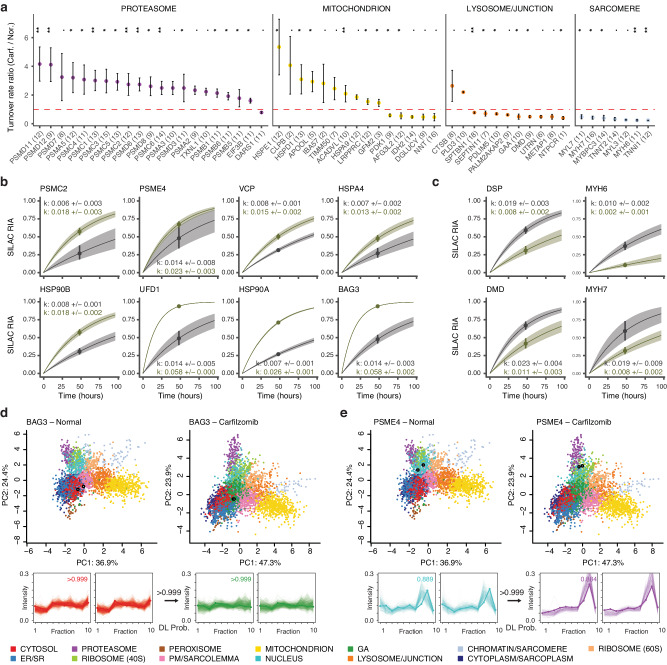
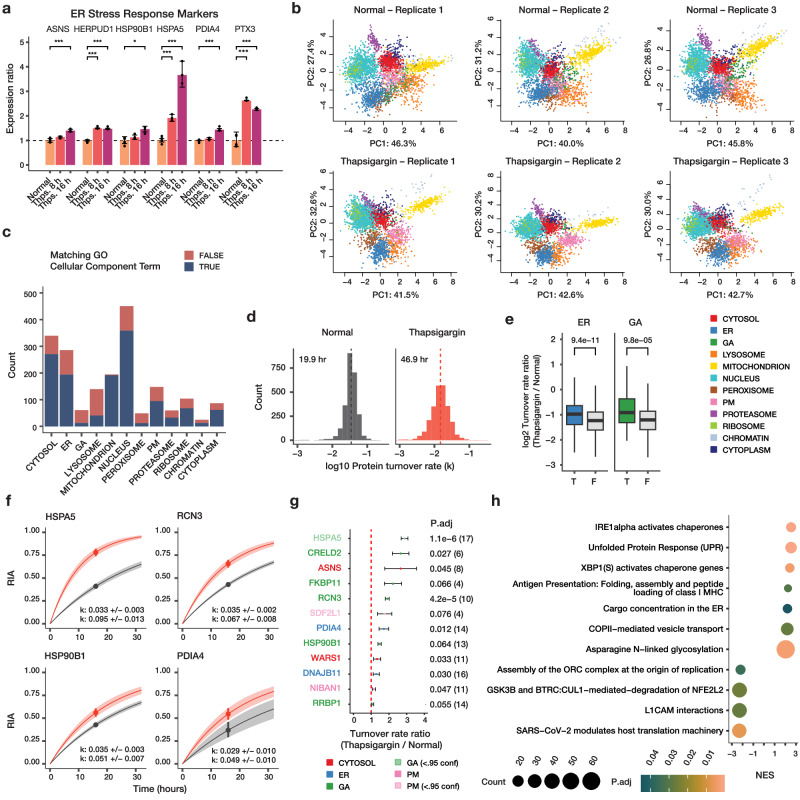
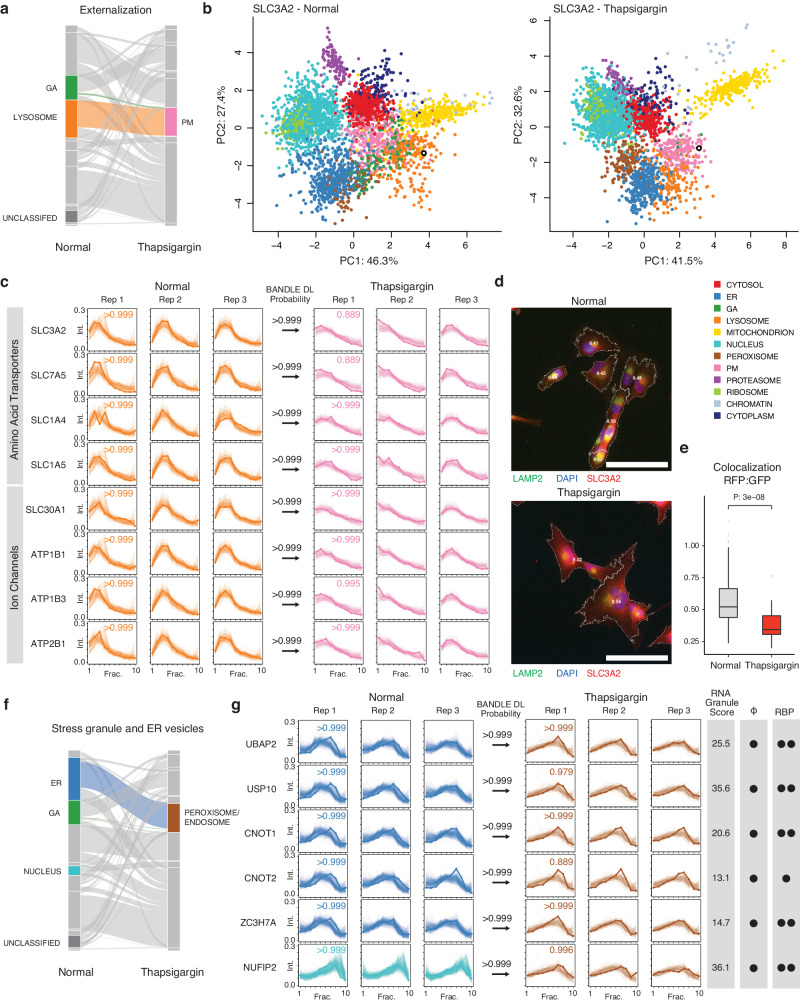
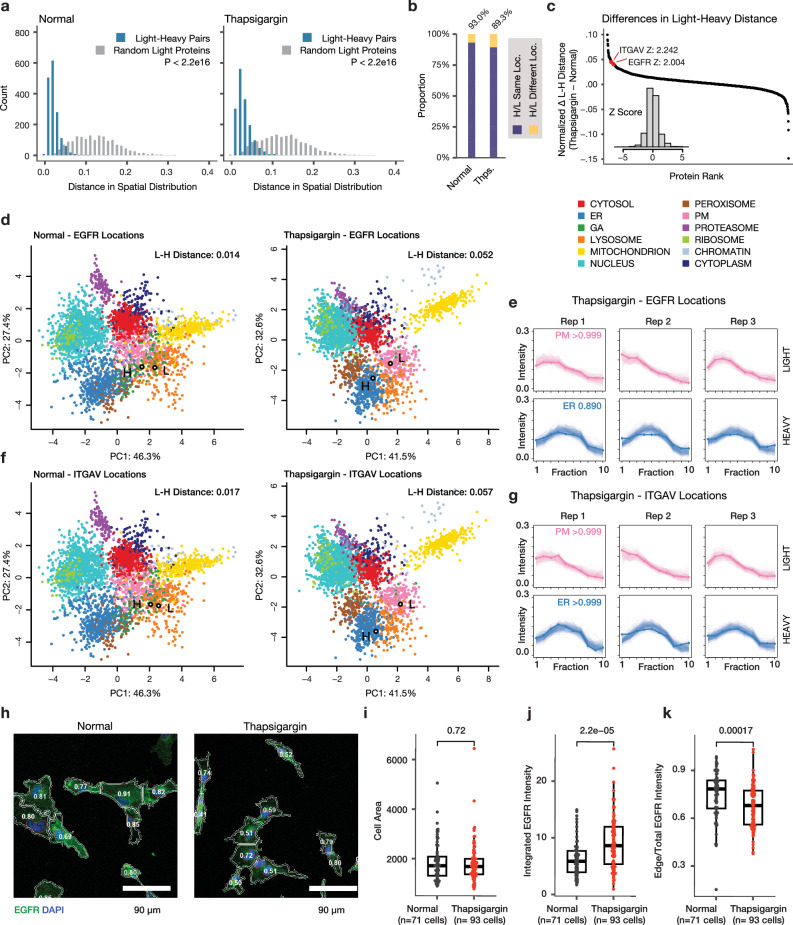
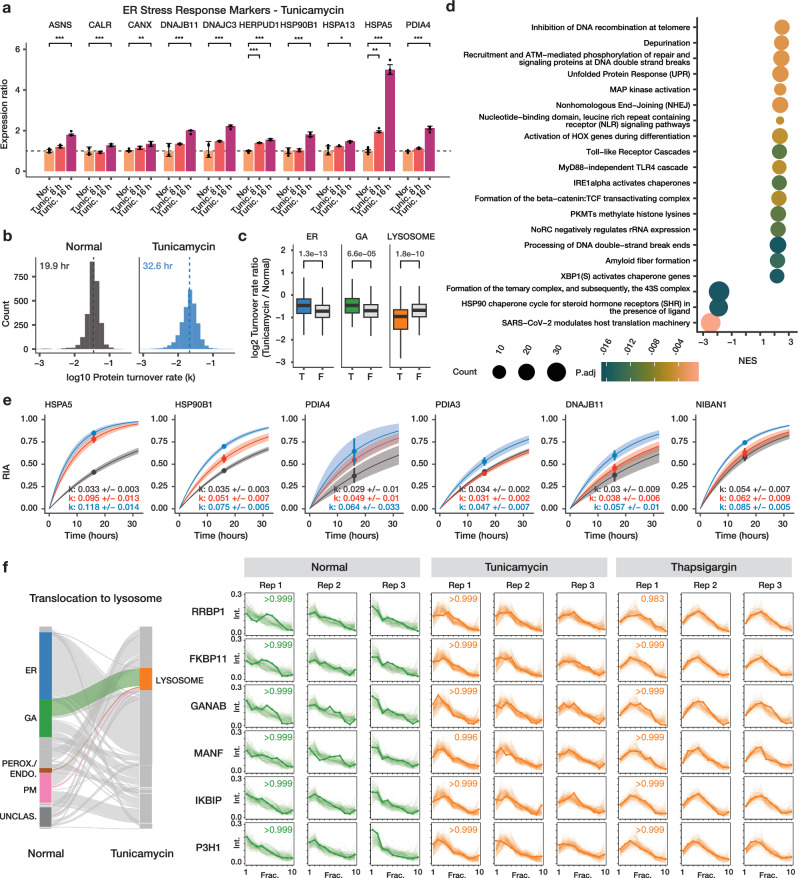
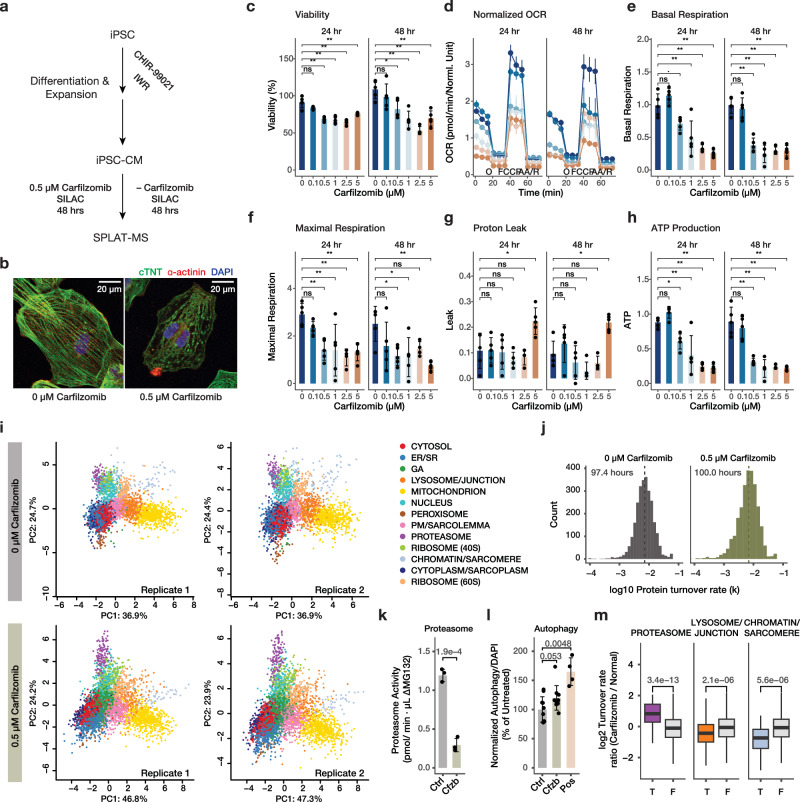
The spatial and temporal distributions of proteins are critical to protein function, but cannot be directly assessed by measuring protein bundance. Here we describe a mass spectrometry-based proteomics strategy, Simultaneous Proteome Localization and Turnover (SPLAT), to measure concurrently protein turnover rates and subcellular localization in the same experiment. Applying the method, we find that unfolded protein response (UPR) has different effects on protein turnover dependent on their subcellular location in human AC16 cells, with proteome-wide slowdown but acceleration among stress response proteins in the ER and Golgi. In parallel, UPR triggers broad differential localization of proteins including RNA-binding proteins and amino acid transporters. Moreover, we observe newly synthesized proteins including EGFR that show a differential localization under stress than the existing protein pools, reminiscent of protein trafficking disruptions. We next applied SPLAT to an induced pluripotent stem cell derived cardiomyocyte (iPSC-CM) model of cancer drug cardiotoxicity upon treatment with the proteasome inhibitor carfilzomib. Paradoxically, carfilzomib has little effect on global average protein half-life, but may instead selectively disrupt sarcomere protein homeostasis. This study provides a view into the interactions of protein spatial and temporal dynamics and demonstrates a method to examine protein homeostasis regulations in stress and drug response.
蛋白质的时空分布对其功能至关重要,但无法通过测量蛋白质丰度直接评估。在此,我们描述了一种基于质谱的蛋白质组学策略,即同时进行蛋白质定位与周转率分析(SPLAT),可在同一实验中同时测量蛋白质周转率和亚细胞定位。应用该方法,我们发现未折叠蛋白反应(UPR)对蛋白质周转率的影响因其在人AC16细胞中的亚细胞定位而异,在全蛋白质组范围内减缓,但在内质网和高尔基体中的应激反应蛋白中加速。同时,UPR引发了包括RNA结合蛋白和氨基酸转运蛋白在内的蛋白质广泛的差异定位。此外,我们观察到新合成的蛋白质,如表皮生长因子受体(EGFR),在应激条件下与现存蛋白质库相比呈现出差异定位,这让人联想到蛋白质运输的破坏。接下来,我们将SPLAT应用于用蛋白酶体抑制剂卡非佐米处理后的癌症药物心脏毒性诱导多能干细胞衍生心肌细胞(iPSC-CM)模型。矛盾的是,卡非佐米对整体平均蛋白质半衰期影响不大,但可能反而会选择性地破坏肌节蛋白稳态。本研究揭示了蛋白质时空动态的相互作用,并展示了一种在应激和药物反应中研究蛋白质稳态调节的方法。