Martínez Mayte, Babb Matthew H, Range Friederike, Brosnan Sarah F
Domestication Lab, Konrad Lorenz Institute of Ethology, University of Veterinary Medicine Vienna, Savoyenstraße 1a, 1160, Vienna, Austria.
Language Research Center, Georgia State University, Atlanta, GA, 30034, USA.
Sci Rep. 2024 Mar 11;14(1):5937. doi: 10.1038/s41598-024-55885-x.
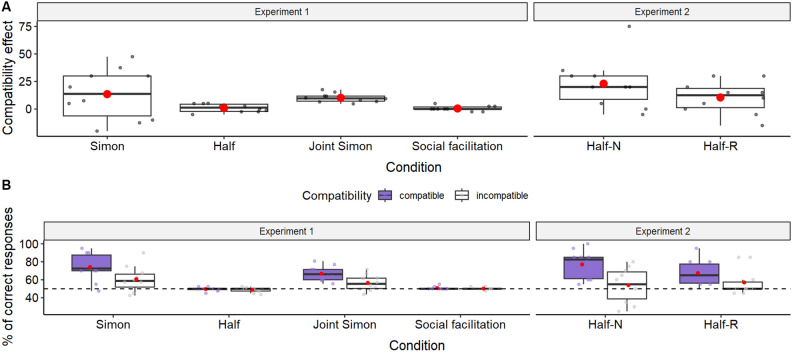
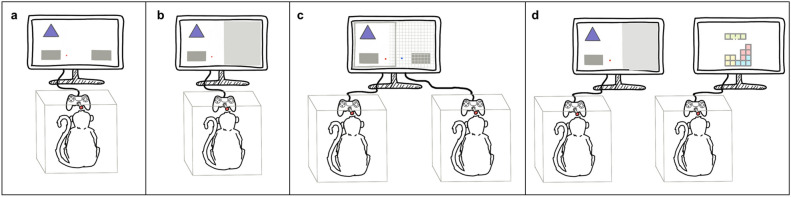
Human cooperation can be facilitated by the ability to create a mental representation of one's own actions, as well as the actions of a partner, known as action co-representation. Even though other species also cooperate extensively, it is still unclear whether they have similar capacities. The Joint Simon task is a two-player task developed to investigate this action co-representation. We tested brown capuchin monkeys (Sapajus [Cebus] apella), a highly cooperative species, on a computerized Joint Simon task and found that, in line with previous research, the capuchins' performance was compatible with co-representation. However, a deeper exploration of the monkeys' responses showed that they, and potentially monkeys in previous studies, did not understand the control conditions, which precludes the interpretation of the results as a social phenomenon. Indeed, further testing to investigate alternative explanations demonstrated that our results were due to low-level cues, rather than action co-representation. This suggests that the Joint Simon task, at least in its current form, cannot determine whether non-human species co-represent their partner's role in joint tasks.
人类合作可以通过对自己的行动以及伙伴的行动创建心理表征的能力来促进,这种能力被称为行动共同表征。尽管其他物种也广泛地进行合作,但它们是否具有类似的能力仍不清楚。联合西蒙任务是为研究这种行动共同表征而开发的两人任务。我们在计算机化的联合西蒙任务中测试了棕色卷尾猴(僧面猴属[悬猴属]阿佩拉种),这是一种高度合作的物种,发现与之前的研究一致,卷尾猴的表现与共同表征相符。然而,对猴子反应的深入探究表明,它们以及之前研究中的猴子可能并不理解控制条件,这使得无法将结果解释为一种社会现象。事实上,为调查其他解释而进行的进一步测试表明,我们的结果是由于低层次线索,而非行动共同表征。这表明联合西蒙任务,至少以其目前的形式,无法确定非人类物种是否在联合任务中共同表征其伙伴的角色。