Kim Hyun-Kyoung
Department of Nursing, Kongju National University, 56 Gongjudaehak-ro, Gongju 32588, Republic of Korea.
Healthcare (Basel). 2024 Feb 23;12(5):534. doi: 10.3390/healthcare12050534.
This systematic review and meta-analysis aimed to investigate the effects of artificial intelligence chatbot interventions on health outcomes in women.
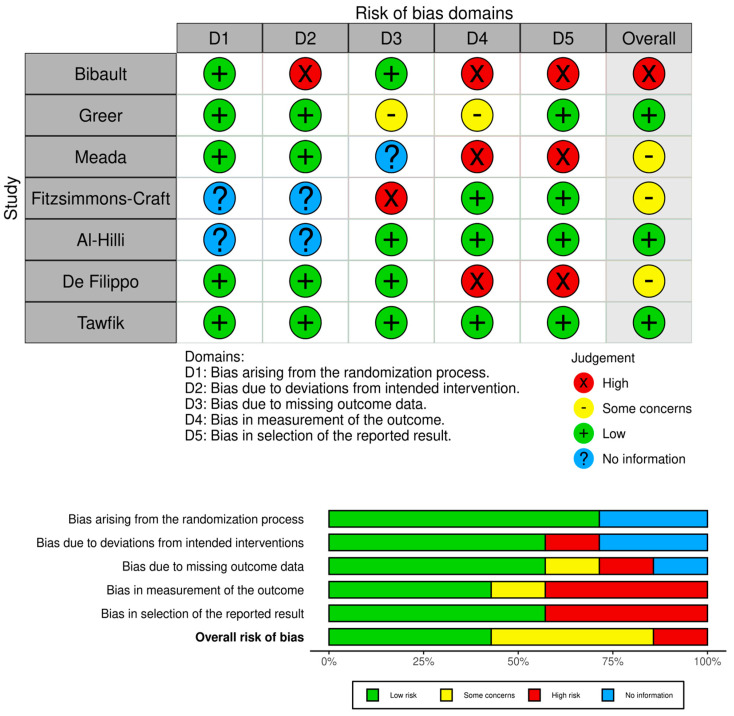
Ten relevant studies published between 2019 and 2023 were extracted from the PubMed, Cochrane Library, EMBASE, CINAHL, and RISS databases in accordance with the Preferred Reporting Items for Systematic Reviews and Meta-Analyses guidelines. This review focused on experimental studies concerning chatbot interventions in women's health. The literature was assessed using the ROB 2 quality appraisal checklist, and the results were visualized with a risk-of-bias visualization program.
This review encompassed seven randomized controlled trials and three single-group experimental studies. Chatbots were effective in addressing anxiety, depression, distress, healthy relationships, cancer self-care behavior, preconception intentions, risk perception in eating disorders, and gender attitudes. Chatbot users experienced benefits in terms of internalization, acceptability, feasibility, and interaction. A meta-analysis of three studies revealed significant effects in reducing anxiety (I = 0%, Q = 8.10, < 0.017), with an effect size of -0.30 (95% CI, -0.42 to -0.18).
Artificial intelligence chatbot interventions had positive effects on physical, physiological, and cognitive health outcomes. Using chatbots may represent pivotal nursing interventions for female populations to improve health status and support women socially as a form of digital therapy.
本系统评价和荟萃分析旨在研究人工智能聊天机器人干预对女性健康结局的影响。
根据系统评价和荟萃分析的首选报告项目指南,从PubMed、Cochrane图书馆、EMBASE、CINAHL和RISS数据库中提取了2019年至2023年发表的10项相关研究。本评价聚焦于关于聊天机器人干预女性健康的实验研究。使用ROB 2质量评估清单对文献进行评估,并使用偏倚风险可视化程序将结果可视化。
本评价纳入了7项随机对照试验和3项单组实验研究。聊天机器人在解决焦虑、抑郁、痛苦、健康关系、癌症自我护理行为、孕前意图、饮食失调中的风险认知以及性别态度方面有效。聊天机器人用户在内化、可接受性、可行性和互动方面体验到了益处。对三项研究的荟萃分析显示,在减轻焦虑方面有显著效果(I² = 0%,Q = 8.10,P < 0.017),效应大小为-0.30(95% CI,-0.42至-0.18)。
人工智能聊天机器人干预对身体、生理和认知健康结局有积极影响。使用聊天机器人可能是针对女性群体改善健康状况并在社会层面支持女性的关键护理干预措施,作为一种数字疗法形式。