Chao Shu-Mei, Pan Chao-Kuei, Wang Ming-Ling, Fang Yu-Wen, Chen Shu-Fen
Department of Nursing, Tzu Chi University of Science and Technology, Hualien 970302, Taiwan.
School of Nursing, International Ph. D Program in Gerontology and Long-Term Care, Taipei Medical University, Taipei 110301, Taiwan.
Healthcare (Basel). 2024 Mar 5;12(5):593. doi: 10.3390/healthcare12050593.
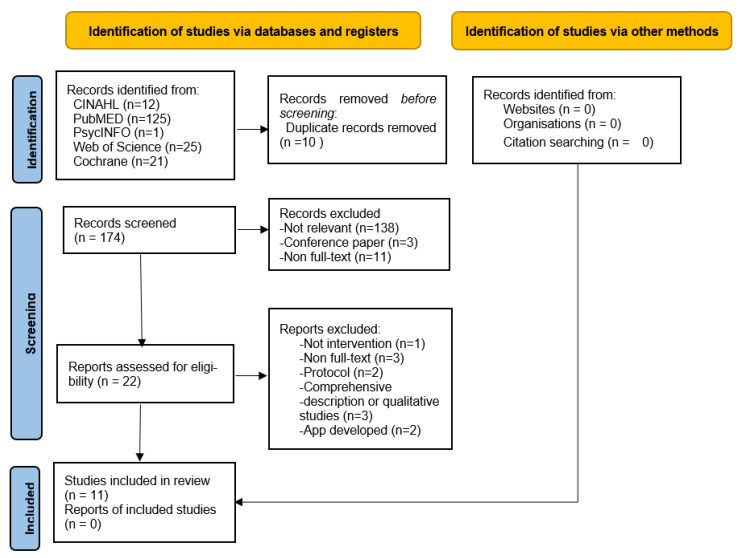
mHealth has been utilized in the care of patients with chronic kidney disease, allowing the collection of patient health-related data, offering disease-related information, enabling the tracking and recording of biochemical parameters, and enabling communication with healthcare providers in real time through applications. mHealth may improve the health outcomes in patients with peritoneal dialysis. This systematic review aimed to summarize evidence regarding the functionality and usability of mHealth apps in patients with peritoneal dialysis. We conducted a comprehensive literature review, searching in five databases, including CINAHL, Cochrane, PsycINFO, PubMed, and Web of Science, to retrieve titles and abstracts related to peritoneal dialysis and mHealth applications for PRISMA recommendations from January 2013 to December 2023. Overall, 11 studies met all the inclusion criteria. The functionality of mHealth apps included inform, instruct, record, display, guide, remind/alert, and communicate. Most of the apps have multifunctionality. The usability was categorized into three aspects: efficiency (self-efficacy and usability), satisfaction, and effectiveness (underwent kidney transplantation and switched to hemodialysis, rehospitalization, peritonitis rate, infection rates at exit sites, mortality, fluid overload, inadequate solute clearance, biochemical values, quality of life, consumer quality index, and technology readiness). Generally, outcomes in the intervention group had better effects compared to those in the control group. Multifunctional mHealth apps show a good potential in improving the efficiency, satisfaction, and effectiveness for patients compared to traditional care. Future research should include more studies and participants to explore and verify the long-term effectiveness of mHealth apps.
移动健康已被应用于慢性肾脏病患者的护理中,可收集与患者健康相关的数据,提供疾病相关信息,跟踪和记录生化参数,并通过应用程序实现与医疗服务提供者的实时沟通。移动健康可能会改善腹膜透析患者的健康结局。本系统评价旨在总结有关移动健康应用程序在腹膜透析患者中的功能和可用性的证据。我们进行了全面的文献综述,在五个数据库中进行搜索,包括护理学与健康领域数据库(CINAHL)、考科蓝图书馆(Cochrane)、心理学文摘数据库(PsycINFO)、医学期刊数据库(PubMed)和科学引文索引数据库(Web of Science),以检索2013年1月至2023年12月期间与腹膜透析和移动健康应用相关的标题和摘要,以遵循系统评价与Meta分析的首选报告项目(PRISMA)建议。总体而言,有11项研究符合所有纳入标准。移动健康应用程序的功能包括提供信息、指导、记录、显示、引导、提醒/警报和沟通。大多数应用程序具有多功能性。可用性分为三个方面:效率(自我效能和易用性)、满意度和有效性(接受肾移植并转为血液透析、再次住院、腹膜炎发生率、出口部位感染率、死亡率、液体超负荷、溶质清除不足、生化值、生活质量、消费者质量指数和技术准备情况)。一般来说,干预组的结局比对照组有更好的效果。与传统护理相比,多功能移动健康应用程序在提高患者的效率、满意度和有效性方面显示出良好的潜力。未来的研究应纳入更多的研究和参与者,以探索和验证移动健康应用程序的长期有效性。