Frankfurt Institute for Advanced Studies, Frankfurt, Germany.
Interdisciplinary Center for Scientific Computing, Heidelberg University, Heidelberg, Germany.
PLoS One. 2024 Mar 12;19(3):e0299880. doi: 10.1371/journal.pone.0299880. eCollection 2024.
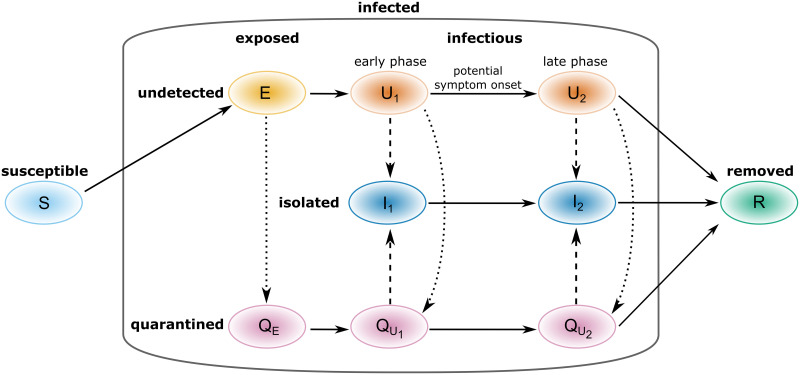
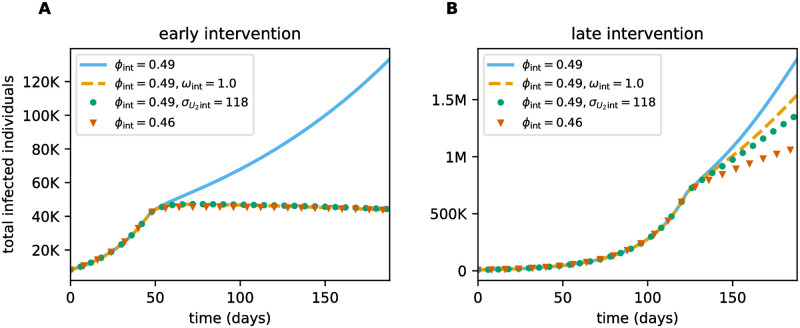
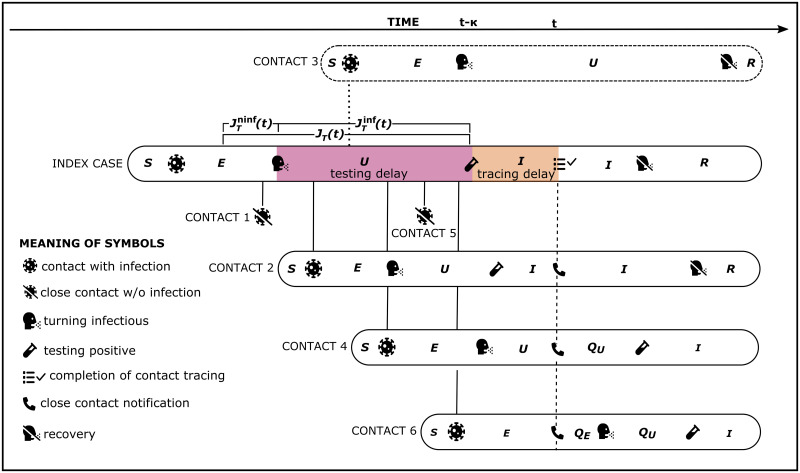
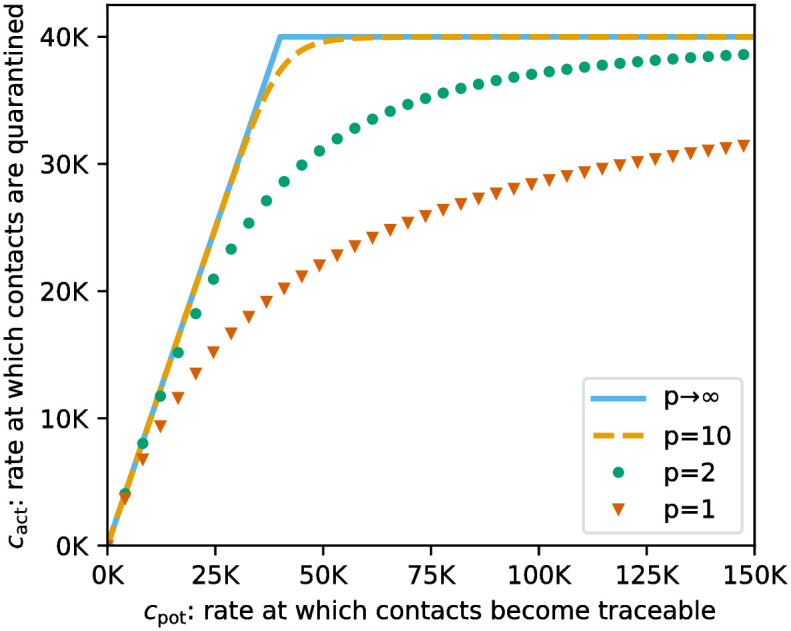
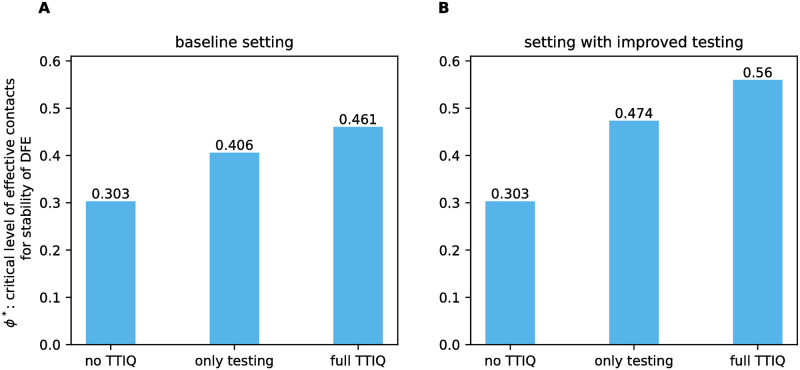
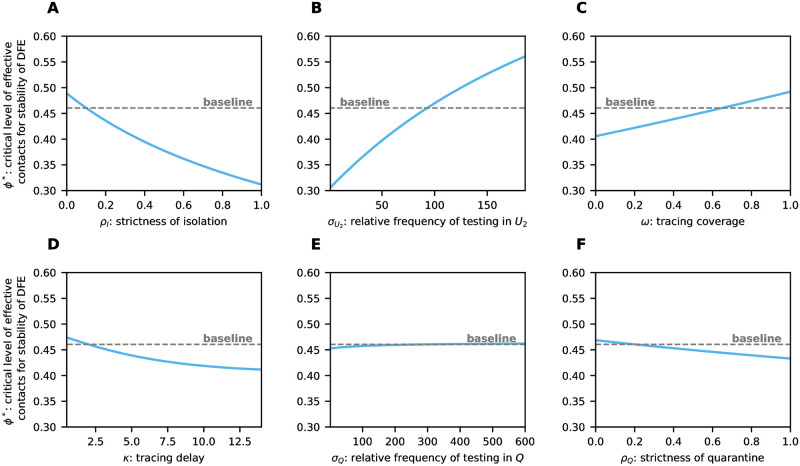
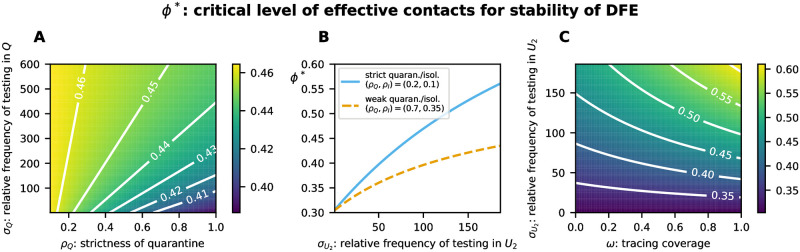
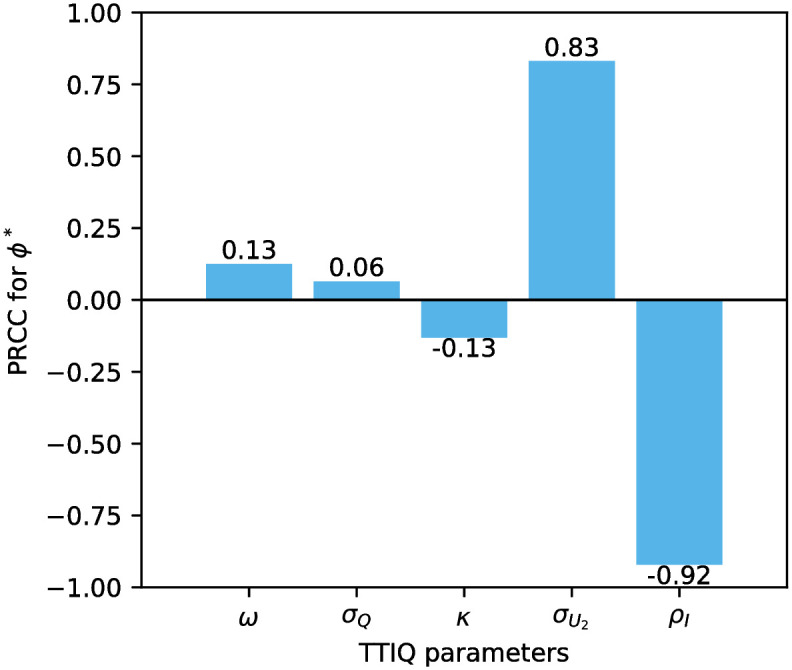
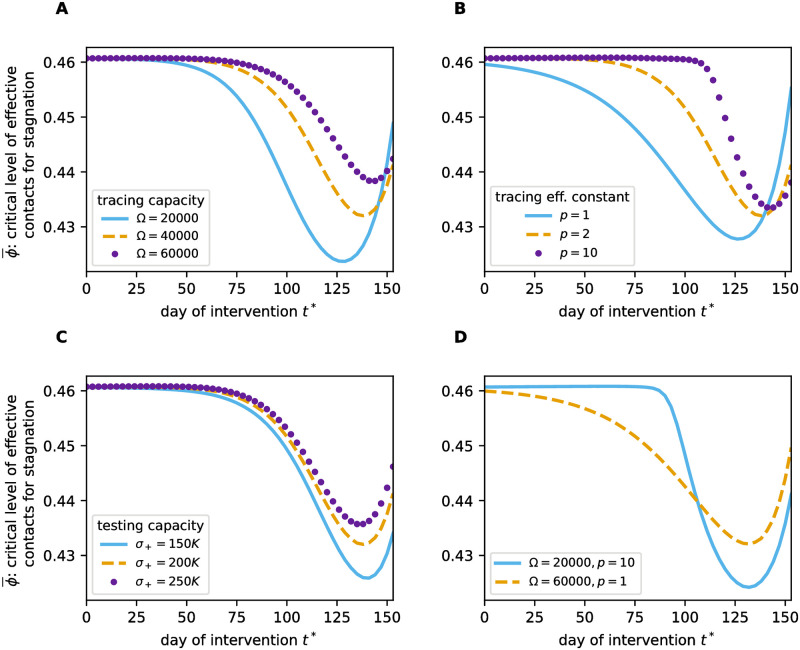
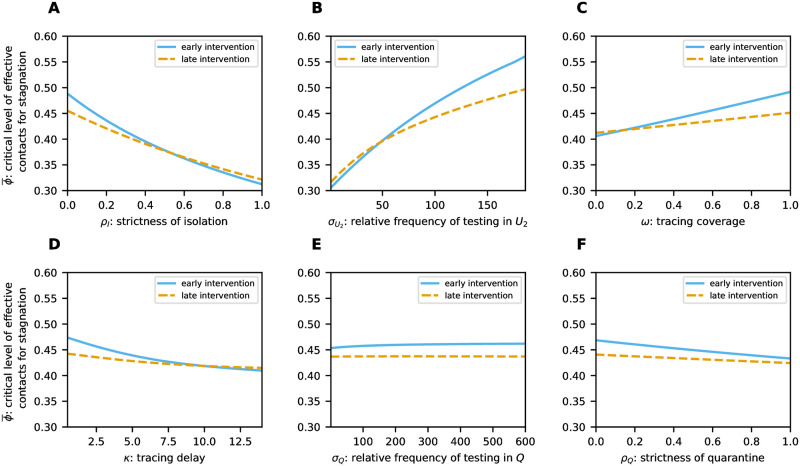
Diagnostic testing followed by isolation of identified cases with subsequent tracing and quarantine of close contacts-often referred to as test-trace-isolate-and-quarantine (TTIQ) strategy-is one of the cornerstone measures of infectious disease control. The COVID-19 pandemic has highlighted that an appropriate response to outbreaks of infectious diseases requires a firm understanding of the effectiveness of such containment strategies. To this end, mathematical models provide a promising tool. In this work, we present a delay differential equation model of TTIQ interventions for infectious disease control. Our model incorporates the assumption of limited TTIQ capacities, providing insights into the reduced effectiveness of testing and tracing in high prevalence scenarios. In addition, we account for potential transmission during the early phase of an infection, including presymptomatic transmission, which may be particularly adverse to a TTIQ based control. Our numerical experiments inspired by the early spread of COVID-19 in Germany demonstrate the effectiveness of TTIQ in a scenario where immunity within the population is low and pharmaceutical interventions are absent, which is representative of a typical situation during the (re-)emergence of infectious diseases for which therapeutic drugs or vaccines are not yet available. Stability and sensitivity analyses reveal both disease-dependent and disease-independent factors that impede or enhance the success of TTIQ. Studying the diminishing impact of TTIQ along simulations of an epidemic wave, we highlight consequences for intervention strategies.
诊断检测后对确诊病例进行隔离,然后对密切接触者进行追踪和隔离——通常称为检测-追踪-隔离-检疫(TTIQ)策略——是传染病控制的基石措施之一。COVID-19 大流行凸显了对传染病暴发的适当应对需要对这些遏制策略的有效性有坚定的认识。为此,数学模型提供了一个有前途的工具。在这项工作中,我们提出了一个用于传染病控制的 TTIQ 干预的时滞微分方程模型。我们的模型包含了 TTIQ 能力有限的假设,深入了解了在高流行率情况下测试和追踪的效果降低。此外,我们考虑了感染早期的潜在传播,包括无症状传播,这可能对基于 TTIQ 的控制特别不利。我们受 COVID-19 在德国早期传播启发的数值实验表明,在人群免疫力低且没有药物干预的情况下,TTIQ 在一种情况下是有效的,这种情况代表了传染病(重新)出现时的典型情况,此时还没有治疗药物或疫苗。稳定性和敏感性分析揭示了阻碍或增强 TTIQ 成功的既依赖于疾病又不依赖于疾病的因素。通过对传染病波的模拟研究 TTIQ 的影响逐渐减弱,我们强调了干预策略的后果。