McGurran Hugo, Kumbol Victor, Krüger Christina, Wallach Thomas, Lehnardt Seija
Charité-Universitätsmedizin Berlin, Einstein Center for Neurosciences Berlin, 10117 Berlin, Germany.
Institute of Cell Biology and Neurobiology, Charité-Universitätsmedizin Berlin, Corporate Member of Freie Universität Berlin, Humboldt-Universität zu Berlin and Berlin Institute of Health, 10117 Berlin, Germany.
Cells. 2024 Feb 26;13(5):407. doi: 10.3390/cells13050407.
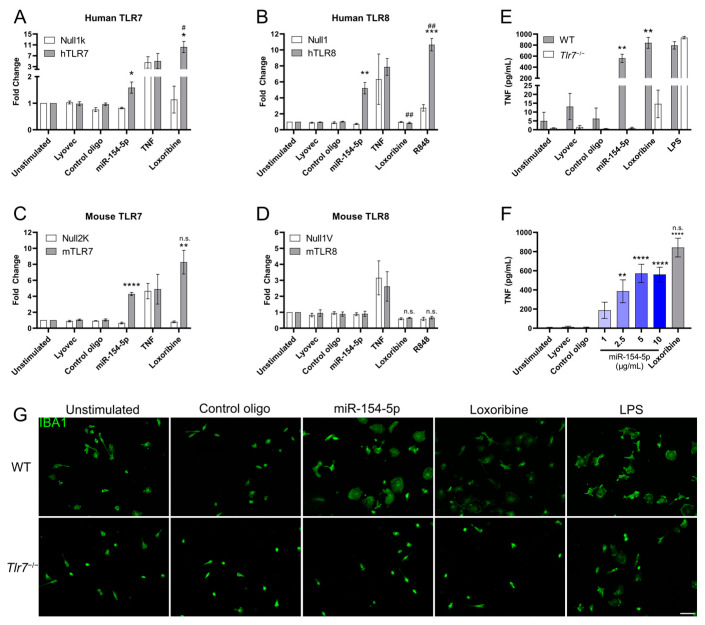
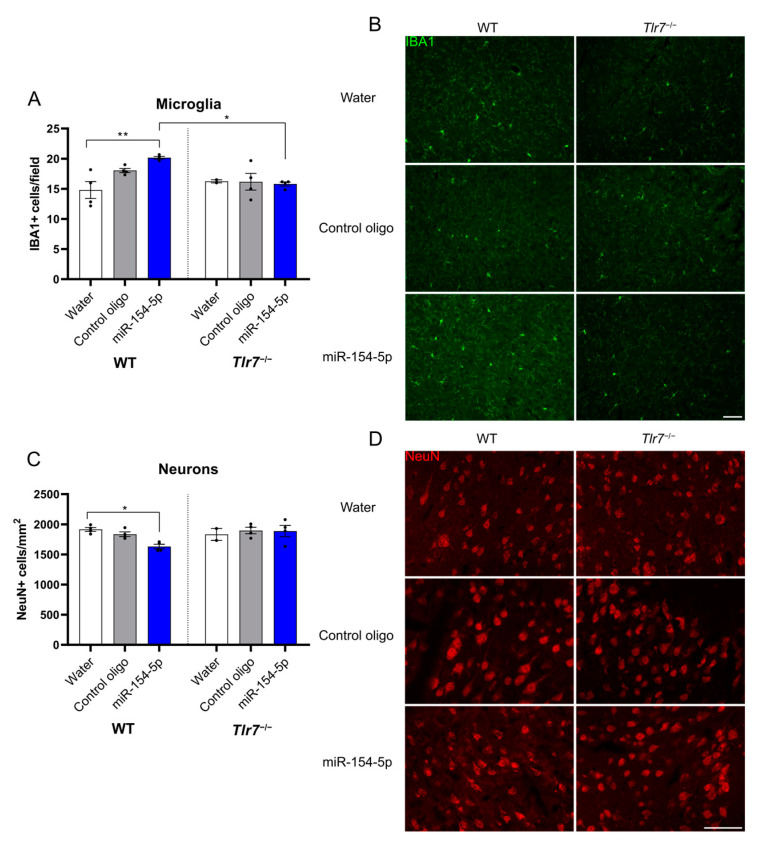
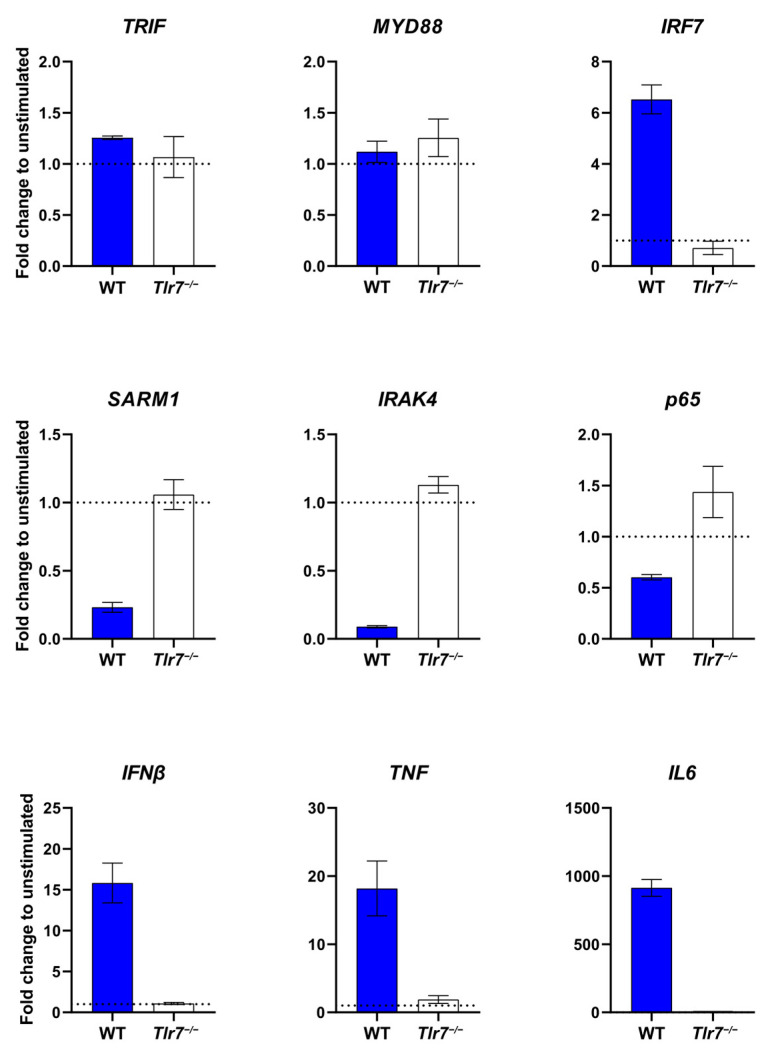
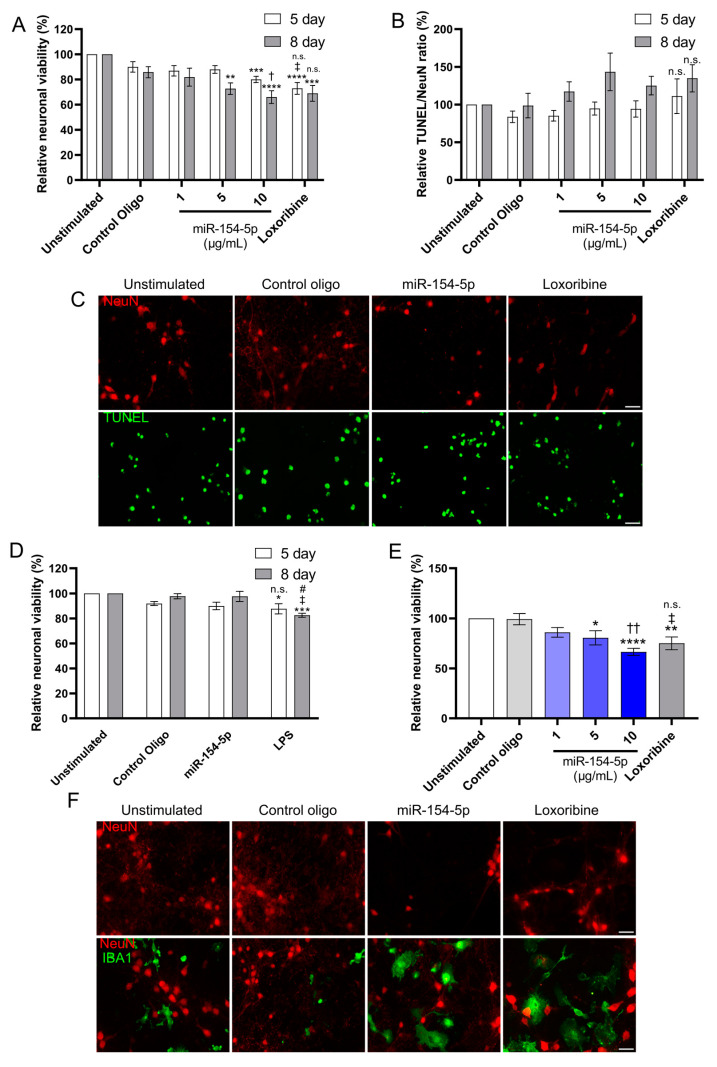
Toll-like receptors (TLRs) are a collection of pattern recognition sensors that form a first line of defence by detecting pathogen- or damage-associated molecular patterns and initiating an inflammatory response. TLR activation in microglia, the major immune cells in the brain, can trigger the release of inflammatory molecules, which may contribute to various CNS diseases including Alzheimer's disease. Recently, some microRNAs were shown to serve as signalling molecules for TLRs. Here, we present miR-154-5p as a novel TLR7 ligand. Exposing microglia to miR-154-5p results in cytokine release and alters expression of the TLR signalling pathway dependent on TLR7. Additionally, miR-154-5p causes neuronal injury in enriched cortical neuron cultures and additive toxicity in the presence of microglia. Finally, intrathecal injection of miR-154-5p into mice leads to neuronal injury and accumulation of microglia in the cerebral cortex dependent on TLR7 expression. In conclusion, this study establishes miR-154-5p as a direct activator of TLR7 that can cause neuroinflammation and neuronal injury, which may contribute to CNS disease.
Toll样受体(TLRs)是一组模式识别传感器,通过检测病原体或损伤相关分子模式并引发炎症反应,形成第一道防线。小胶质细胞是大脑中的主要免疫细胞,TLR在其中的激活可触发炎症分子的释放,这可能导致包括阿尔茨海默病在内的各种中枢神经系统疾病。最近,一些微小RNA被证明可作为TLRs的信号分子。在此,我们提出miR-154-5p是一种新型的TLR7配体。将小胶质细胞暴露于miR-154-5p会导致细胞因子释放,并改变依赖于TLR7的TLR信号通路的表达。此外,miR-154-5p在富集的皮质神经元培养物中会导致神经元损伤,在有小胶质细胞存在时会产生累加毒性。最后,向小鼠鞘内注射miR-154-5p会导致神经元损伤以及大脑皮质中小胶质细胞的积聚,这依赖于TLR7的表达。总之,本研究确定miR-154-5p是TLR7的直接激活剂,可导致神经炎症和神经元损伤,这可能与中枢神经系统疾病有关。