Wallach Thomas, Wetzel Max, Dembny Paul, Staszewski Ori, Krüger Christina, Buonfiglioli Alice, Prinz Marco, Lehnardt Seija
Institute of Cell Biology and Neurobiology, Charité-Universitätsmedizin Berlin, Corporate Member of Freie Universität Berlin, Humboldt-Universität zu Berlin and Berlin Institute of Health, 10117 Berlin, Germany.
Institute of Neuropathology, Faculty of Medicine, University of Freiburg, 79106 Freiburg, Germany.
Cells. 2020 Jan 11;9(1):186. doi: 10.3390/cells9010186.
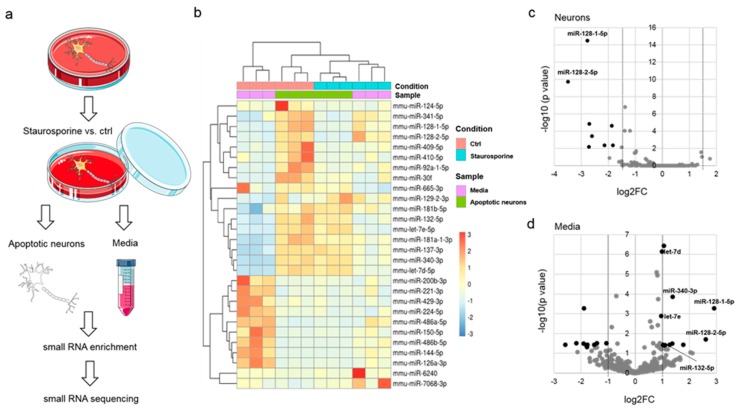
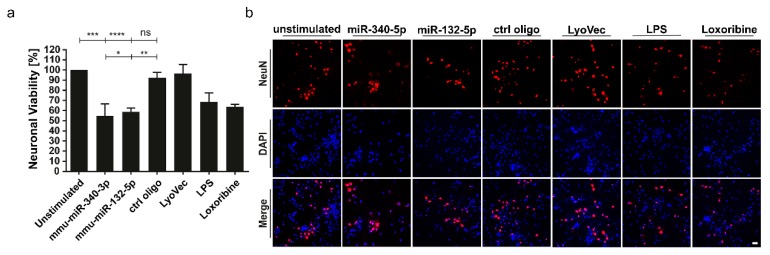
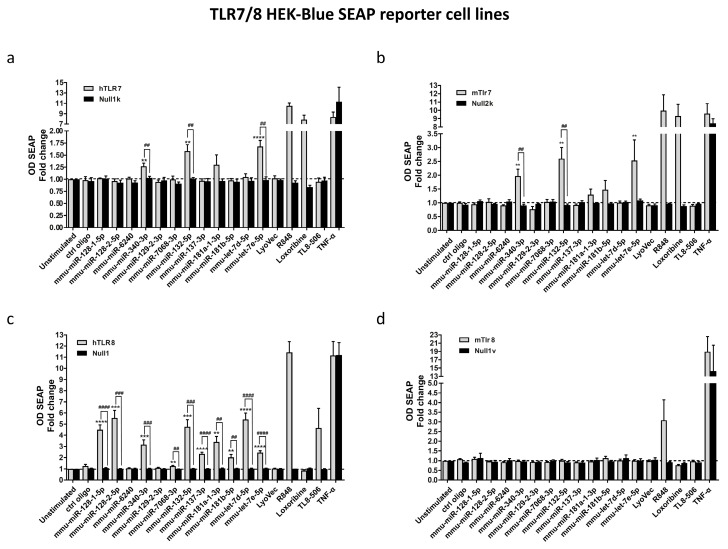
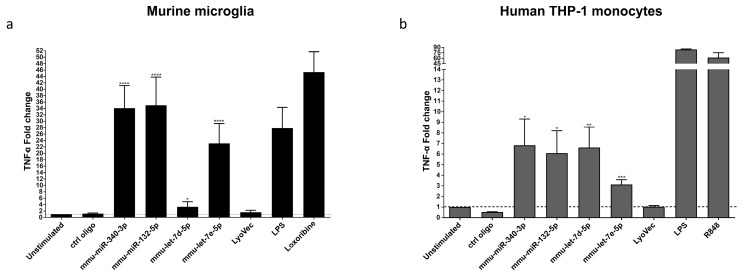
Toll-like receptors (TLRs) belong to pattern recognition receptors, which respond to danger signals such as pathogen-associated molecular patterns or damage-associated molecular patterns. Upon TLR activation in microglia, the major immune cells in the brain, distinct signaling cascades trigger the production of inflammatory molecules, being a critical feature in neuroinflammation and neurodegenerative processes. Recently, individual microRNAs (miRNAs) were shown to act as endogenous TLR ligands. Here, we conducted systematic screening for miRNAs as potential TLR7/8 ligands by small RNA sequencing of apoptotic neurons and their corresponding supernatants. Several miRNA species were identified in both supernatants and injured neurons, and 83.3% of the media-enriched miRNAs activated murine and/or human TLR7/8 expressed in HEK293-derived TLR reporter cells. Among the detected extracellular miRNAs, distinct miRNAs such as miR-340-3p and miR-132-5p induced cytokine and chemokine release from microglia and triggered neurotoxicity in vitro. Taken together, our systematic study establishes miRNAs released from injured neurons as new TLR7/8 activators, which contribute to inflammatory and neurodegenerative responses in the central nervous system (CNS).
Toll样受体(TLRs)属于模式识别受体,可对病原体相关分子模式或损伤相关分子模式等危险信号作出反应。在脑内主要免疫细胞小胶质细胞中,TLR激活后,不同的信号级联反应会触发炎症分子的产生,这是神经炎症和神经退行性变过程中的一个关键特征。最近,有研究表明个别微小RNA(miRNAs)可作为内源性TLR配体。在此,我们通过对凋亡神经元及其相应上清液进行小RNA测序,对作为潜在TLR7/8配体的miRNAs进行了系统筛选。在上清液和受损神经元中均鉴定出了几种miRNA,并且在富含培养基的miRNAs中,有83.3%激活了在人胚肾293细胞衍生的TLR报告细胞中表达的鼠源和/或人源TLR7/8。在检测到的细胞外miRNAs中,不同的miRNAs,如miR-340-3p和miR-132-5p,可诱导小胶质细胞释放细胞因子和趋化因子,并在体外引发神经毒性。综上所述,我们的系统研究确定了受损神经元释放的miRNAs为新的TLR7/8激活剂,它们在中枢神经系统(CNS)的炎症和神经退行性反应中发挥作用。