Liu Jianting, Peng Lijuan, Cao Chengjuan, Bai Changhui, Wang Yuqian, Li Zuliang, Zhu Haisheng, Wen Qingfang, He Shuilin
College of Agriculture, Fujian Agriculture and Forestry University, Fuzhou 350002, China.
Crops Research Institute, Fujian Academy of Agricultural Sciences, Fuzhou 350013, China.
Plants (Basel). 2024 Feb 28;13(5):676. doi: 10.3390/plants13050676.
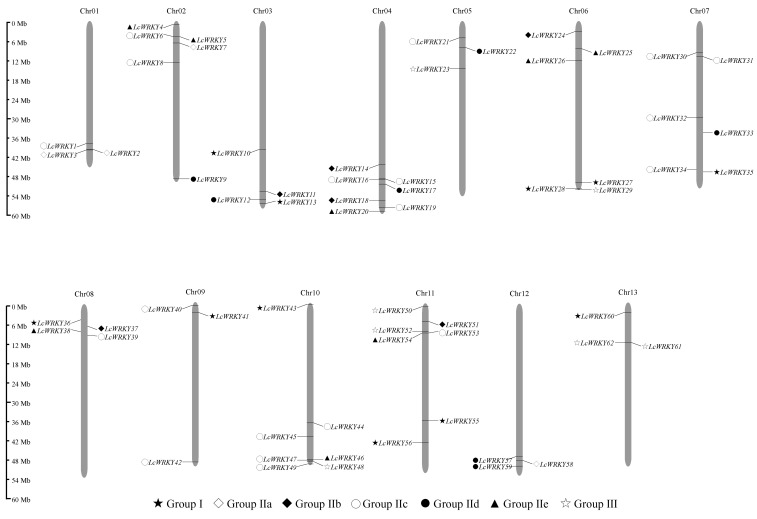
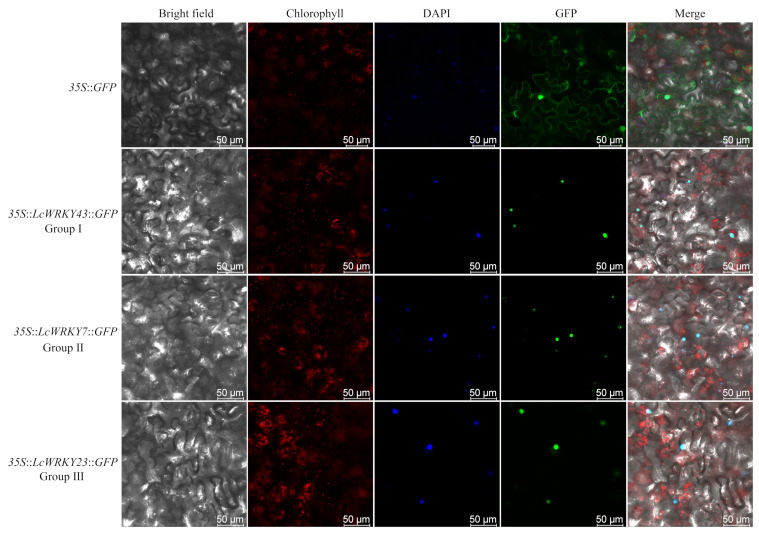
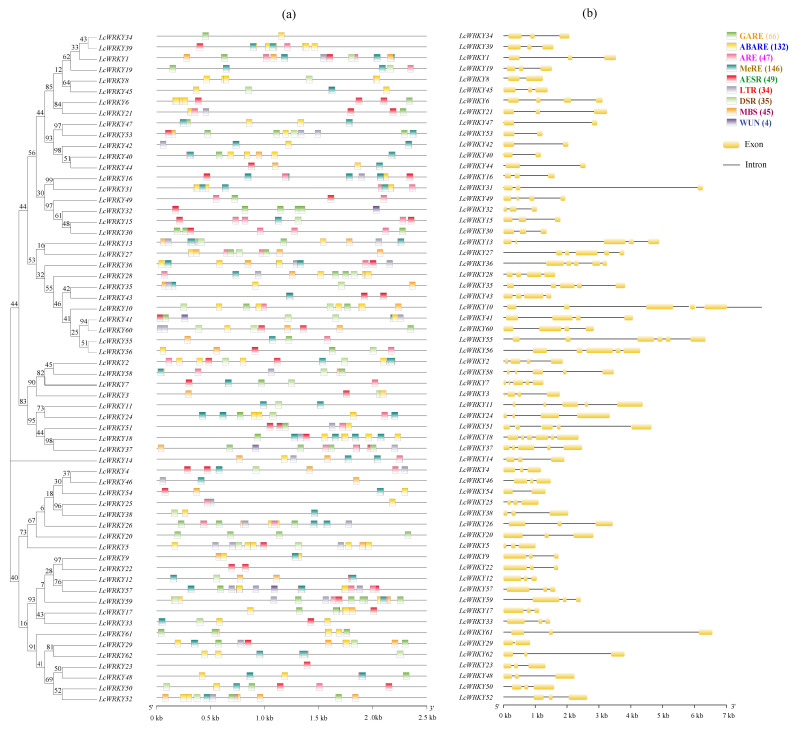
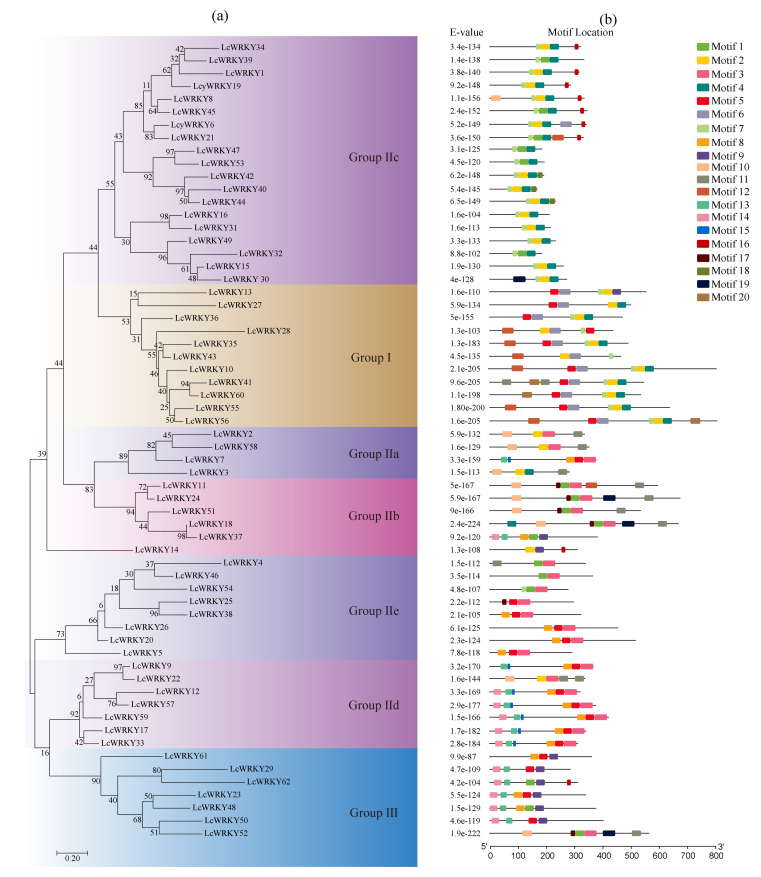
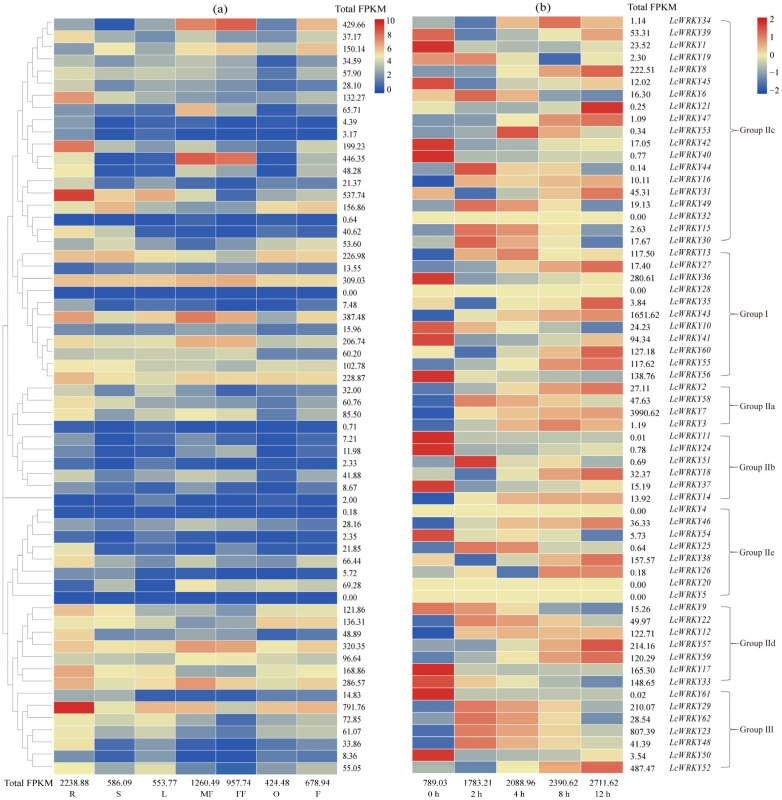
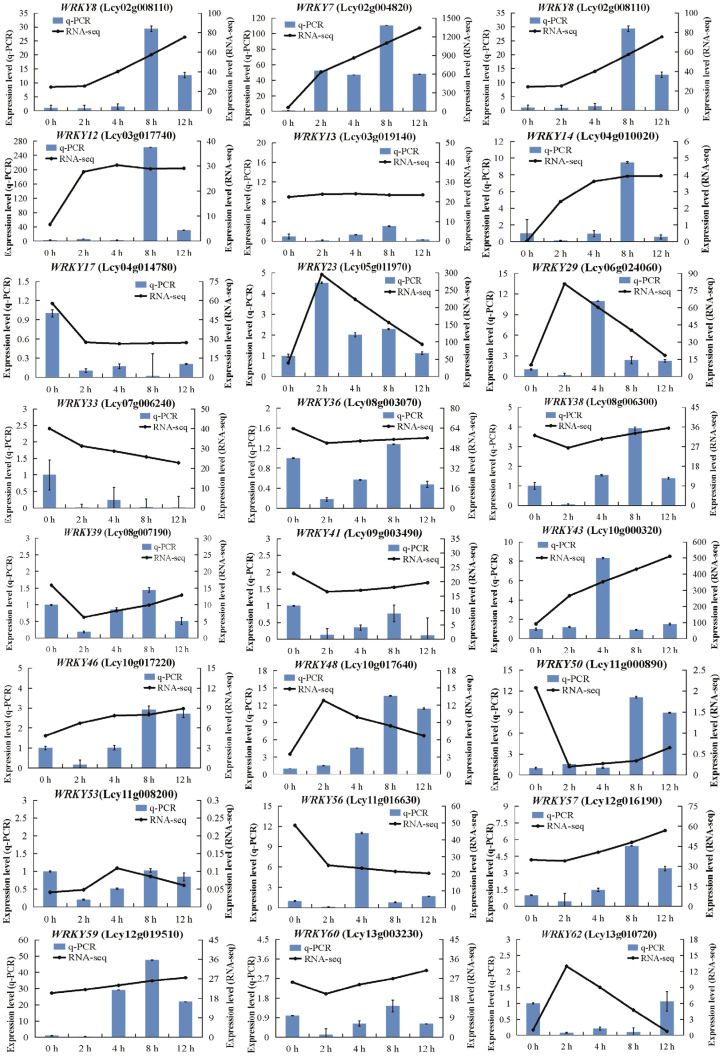
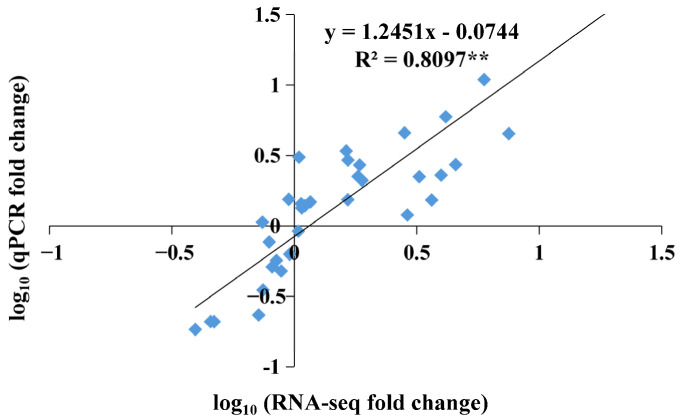
The plant-specific WRKY transcription factor family members have diverse regulatory effects on the genes associated with many plant processes. Although the WRKY proteins in and other species have been thoroughly investigated, there has been relatively little research on the WRKY family in , which is one of the most widely grown vegetables in China. In this study, we performed a genome-wide analysis to identify genes, which were subsequently classified and examined in terms of their gene structures, chromosomal locations, promoter cis-acting elements, and responses to abiotic stress. A total of 62 genes (471-2238 bp) were identified and divided into three phylogenetic groups (I, II, and III), with group II further divided into five subgroups (IIa, IIb, IIc, IId, and IIe) in accordance with the classification in other plants. The genes were unevenly distributed across 13 chromosomes. The gene structure analysis indicated that the genes contained 0-11 introns (average of 4.4). Moreover, 20 motifs were detected in the LcWRKY proteins with conserved motifs among the different phylogenetic groups. Two subgroup IIc members (LcWRKY16 and LcWRKY31) contained the WRKY sequence variant WRKYGKK. Additionally, nine cis-acting elements related to diverse responses to environmental stimuli were identified in the promoters. The subcellular localization analysis indicated that three LcWRKY proteins (LcWRKY43, LcWRKY7, and LcWRKY23) are localized in the nucleus. The tissue-specific expression profiles reflected the diversity in expression. The RNA-seq data revealed the effects of low-temperature stress on expression. The cold-induced changes in expression were verified via a qRT-PCR analysis of 24 differentially expressed genes. Both and were highly responsive to the low-temperature treatment (approximately 110-fold increase in expression). Furthermore, the , , and expression levels increased by more than 25-fold under cold conditions. Our findings will help clarify the evolution of the luffa family while also providing valuable insights for future studies on WRKY functions.
植物特有的WRKY转录因子家族成员对与许多植物生理过程相关的基因具有多种调控作用。尽管对黄瓜和其他物种中的WRKY蛋白已进行了深入研究,但对丝瓜(中国种植最广泛的蔬菜之一)中的WRKY家族研究相对较少。在本研究中,我们进行了全基因组分析以鉴定丝瓜WRKY基因,随后根据其基因结构、染色体定位、启动子顺式作用元件及对非生物胁迫的响应进行分类和研究。共鉴定出62个丝瓜WRKY基因(471 - 2238 bp),并分为三个系统发育组(I、II和III),其中II组根据其他植物中的分类进一步分为五个亚组(IIa、IIb、IIc、IId和IIe)。这些WRKY基因在13条染色体上分布不均。基因结构分析表明,丝瓜WRKY基因含有0 - 11个内含子(平均4.4个)。此外,在丝瓜WRKY蛋白中检测到20个基序,不同系统发育组之间存在保守基序。两个IIc亚组成员(LcWRKY16和LcWRKY31)含有WRKY序列变体WRKYGKK。另外,在丝瓜WRKY启动子中鉴定出9个与对环境刺激的不同响应相关的顺式作用元件。亚细胞定位分析表明,三个丝瓜WRKY蛋白(LcWRKY43、LcWRKY7和LcWRKY23)定位于细胞核。组织特异性表达谱反映了丝瓜WRKY表达的多样性。RNA测序数据揭示了低温胁迫对丝瓜WRKY表达的影响。通过对24个差异表达的丝瓜WRKY基因进行qRT-PCR分析,验证了低温诱导的表达变化。LcWRKY18和LcWRKY39对低温处理均高度响应(表达量增加约110倍)。此外,在低温条件下,LcWRKY1、LcWRKY10和LcWRKY11的表达水平增加超过25倍。我们的研究结果将有助于阐明丝瓜WRKY家族的进化,同时也为未来WRKY功能研究提供有价值的见解。