Boulton Rebecca A, Cahuana Andrea, Lahuatte Paola F, Ramírez Erika, Sevilla Christian, Causton Charlotte E
Biological and Environmental Sciences, Faculty of Natural Sciences, University of Stirling, FK9 4NF, UK.
Laboratory of Genetics, Plant Sciences Group, Wageningen University and Research, 6708 PB, The Netherlands.
Environ Entomol. 2024 Jun 13;53(3):315-325. doi: 10.1093/ee/nvae014.
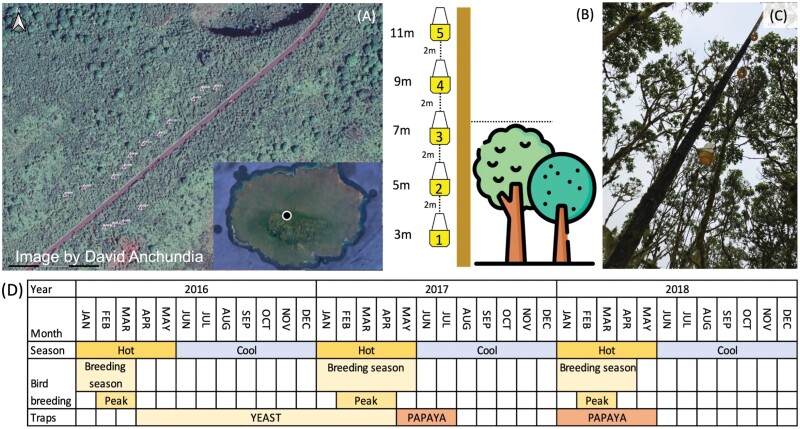
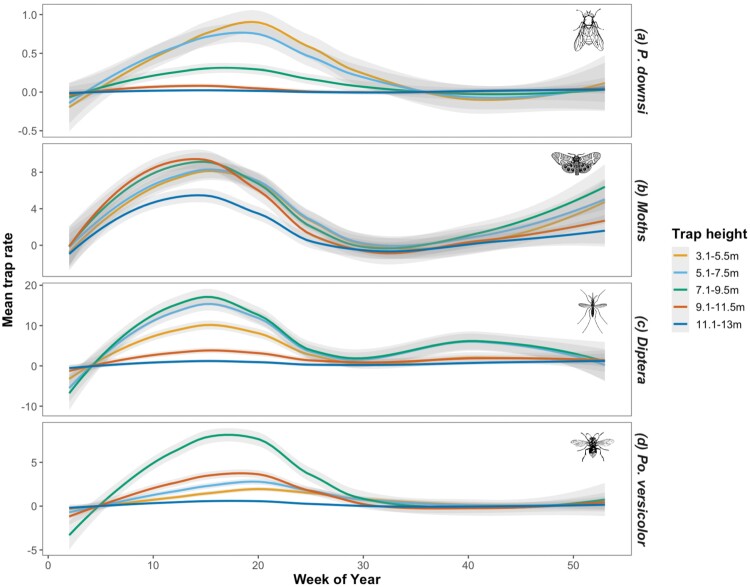
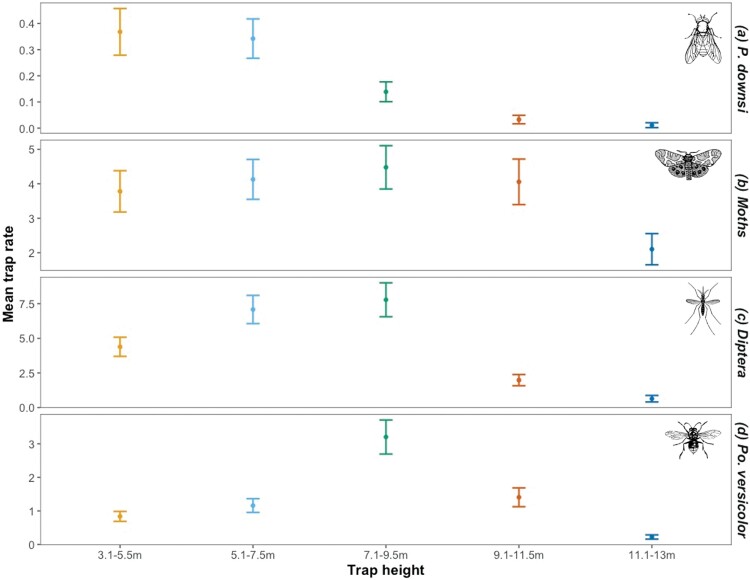
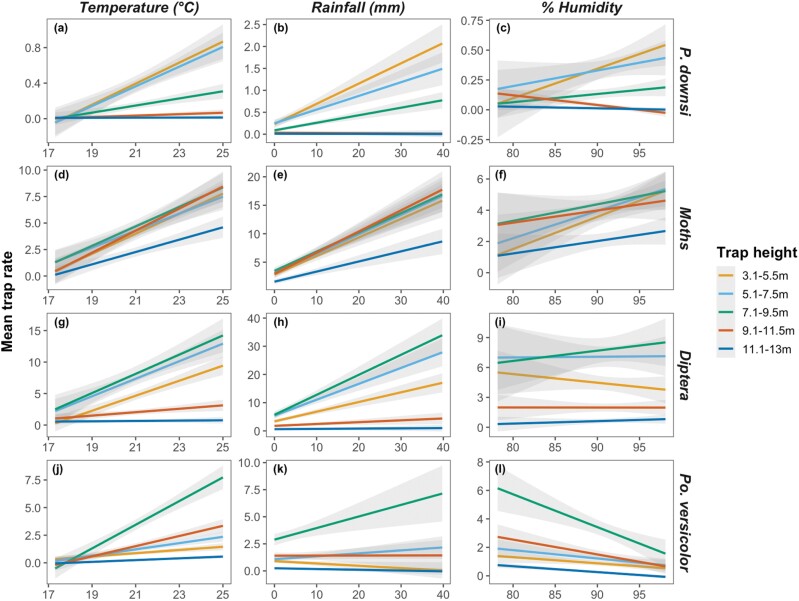
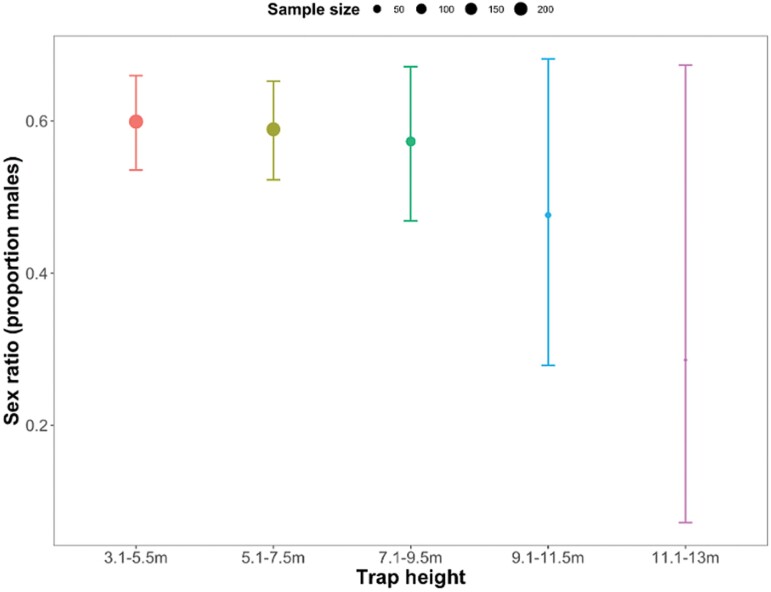
The avian vampire fly Philornis downsi (Dodge & Aitken) (Diptera: Muscidae) is native to continental South America and the Caribbean, but invasive in the Galapagos Archipelago. The larvae of P. downsi feed on the blood and tissues of the nestlings of 75% of the small land bird species that are endemic or native to Galapagos, causing high in-nest mortality and severe population declines in some species. Efficient trapping techniques are vital to safeguarding these birds in the short term as well as for monitoring fly populations, but basic information about the ecology of the fly is still needed to help develop a species-appropriate trapping method. In this study, we used a novel trapping regime with a vertical distribution to make inferences about P. downsi's behavioral and spatial ecology and to optimize trap catch. Our results showed that male and female P. downsi were trapped in greater numbers below the canopy (3.1-7.5 m), lower down than other commonly caught insect species (5.1-11.5 m). Notably, the effect of trap height remained consistent across seasons and different weather conditions. These findings suggest that P. downsi tend to move at heights where their hosts nest (at or below the canopy) and do not spend time above the canopy. This also makes it unlikely that strategies such as hill-topping or aerial swarming are being used to locate mates. As such, trapping and control efforts should be focused below the canopy in forests with similar canopy heights to effectively capture P. downsi and reduce bycatch of other insects.
食虫虻科的加拉帕戈斯吸血蝇(Philornis downsi)(道奇和艾特肯)原产于南美洲大陆和加勒比地区,但在加拉帕戈斯群岛具有入侵性。加拉帕戈斯吸血蝇的幼虫以加拉帕戈斯群岛75%的特有或本地小型陆栖鸟类雏鸟的血液和组织为食,导致巢内死亡率很高,一些物种的数量严重下降。高效的诱捕技术对于在短期内保护这些鸟类以及监测蝇类种群至关重要,但仍需要关于这种蝇类生态学的基本信息,以帮助开发适合该物种的诱捕方法。在本研究中,我们采用了一种具有垂直分布的新型诱捕方案,以推断加拉帕戈斯吸血蝇的行为和空间生态学,并优化诱捕捕获量。我们的结果表明,捕获的加拉帕戈斯吸血蝇中,雄性和雌性数量在树冠层以下(3.1 - 7.5米)更多,比其他常见捕获的昆虫物种更低(5.1 - 11.5米)。值得注意的是,诱捕高度的影响在不同季节和不同天气条件下保持一致。这些发现表明,加拉帕戈斯吸血蝇倾向于在其宿主筑巢的高度(树冠层或以下)活动,不会在树冠层以上停留。这也使得诸如山顶聚集或空中群聚等寻找配偶的策略不太可能被使用。因此,诱捕和防治工作应集中在树冠层高度相似的森林树冠层以下,以有效捕获加拉帕戈斯吸血蝇并减少其他昆虫的误捕。