Division of Hematology/Oncology, Children’s Hospital, Zhejiang University School of Medicine, National Clinical Research Centre for Child Health, Zhejiang, China
J Educ Eval Health Prof. 2024;21:6. doi: 10.3352/jeehp.2024.21.6. Epub 2024 Mar 15.
ChatGPT is a large language model (LLM) based on artificial intelligence (AI) capable of responding in multiple languages and generating nuanced and highly complex responses. While ChatGPT holds promising applications in medical education, its limitations and potential risks cannot be ignored.
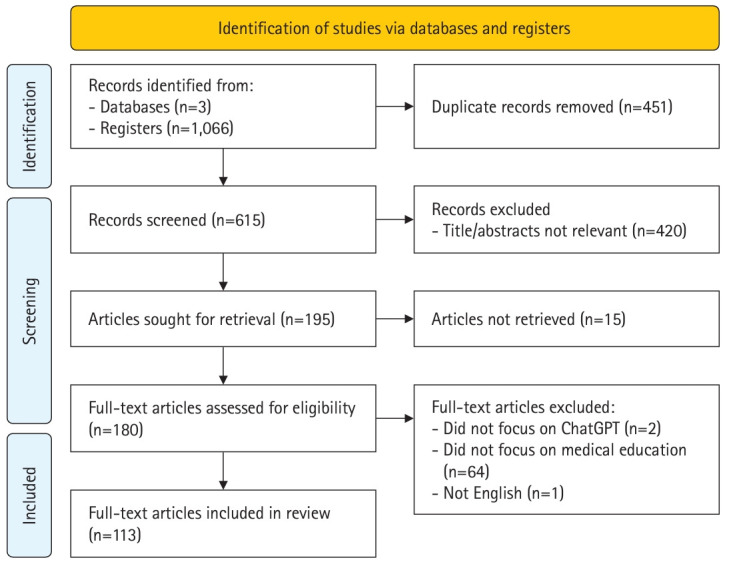
A scoping review was conducted for English articles discussing ChatGPT in the context of medical education published after 2022. A literature search was performed using PubMed/MEDLINE, Embase, and Web of Science databases, and information was extracted from the relevant studies that were ultimately included.
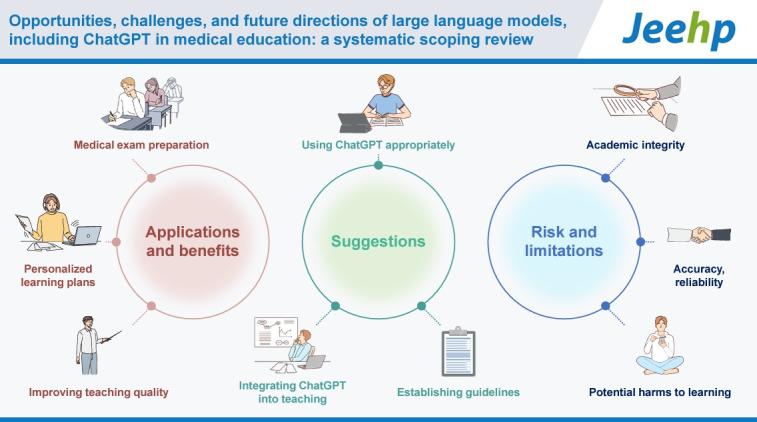
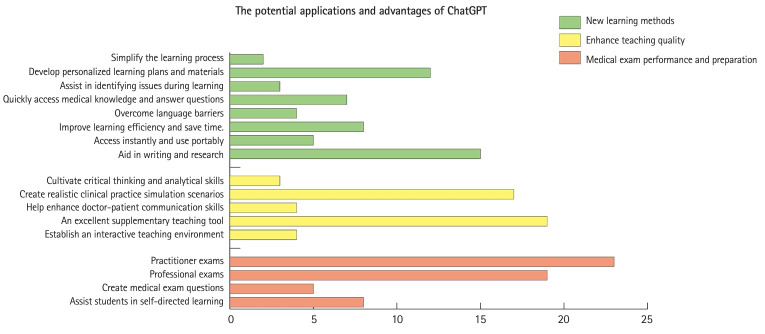
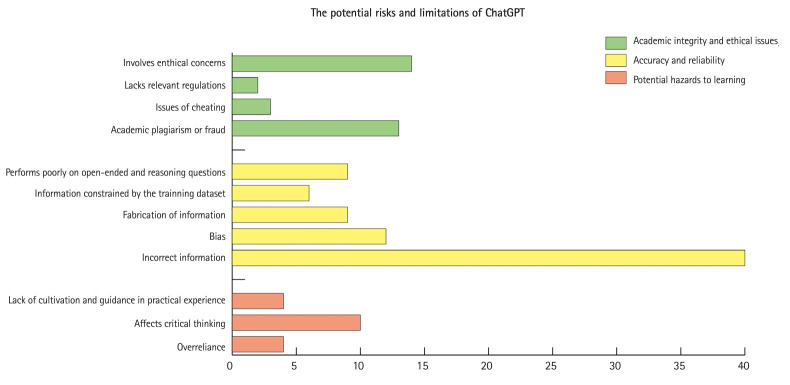
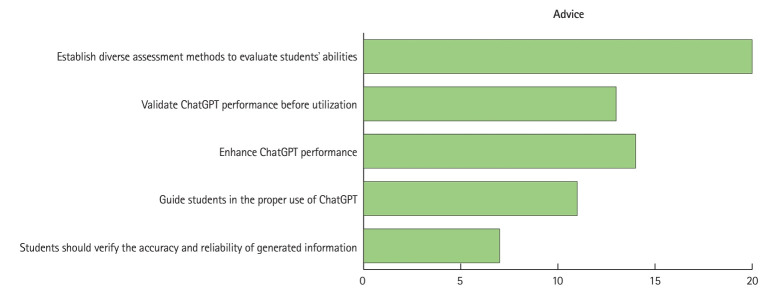
ChatGPT exhibits various potential applications in medical education, such as providing personalized learning plans and materials, creating clinical practice simulation scenarios, and assisting in writing articles. However, challenges associated with academic integrity, data accuracy, and potential harm to learning were also highlighted in the literature. The paper emphasizes certain recommendations for using ChatGPT, including the establishment of guidelines. Based on the review, 3 key research areas were proposed: cultivating the ability of medical students to use ChatGPT correctly, integrating ChatGPT into teaching activities and processes, and proposing standards for the use of AI by medical students.
ChatGPT has the potential to transform medical education, but careful consideration is required for its full integration. To harness the full potential of ChatGPT in medical education, attention should not only be given to the capabilities of AI but also to its impact on students and teachers.
ChatGPT 是一种基于人工智能(AI)的大型语言模型(LLM),能够用多种语言进行响应,并生成细致入微、高度复杂的响应。虽然 ChatGPT 在医学教育中有很有前景的应用,但不能忽视其局限性和潜在风险。
对 2022 年后发表的讨论 ChatGPT 在医学教育背景下的英文文章进行了范围综述。使用 PubMed/MEDLINE、Embase 和 Web of Science 数据库进行了文献检索,并从最终纳入的相关研究中提取信息。
ChatGPT 在医学教育中有多种潜在应用,如提供个性化学习计划和材料、创建临床实践模拟场景和辅助撰写文章。然而,文献中也强调了与学术诚信、数据准确性和潜在学习伤害相关的挑战。本文提出了使用 ChatGPT 的一些建议,包括制定指南。基于该综述,提出了 3 个关键研究领域:培养医学生正确使用 ChatGPT 的能力、将 ChatGPT 融入教学活动和流程、以及为医学生使用人工智能制定标准。
ChatGPT 有可能改变医学教育,但在全面整合时需要谨慎考虑。为了充分发挥 ChatGPT 在医学教育中的潜力,不仅要关注 AI 的能力,还要关注其对学生和教师的影响。