Geriatric Department, Affiliated Hospital of Chengdu University of Traditional Chinese Medicine, Chengdu, Sichuan, People's Republic of China.
Clin Interv Aging. 2024 Mar 9;19:421-437. doi: 10.2147/CIA.S449338. eCollection 2024.
Building and validating a clinical prediction model for novel coronavirus (COVID-19) re-positive cases in malnourished older adults.
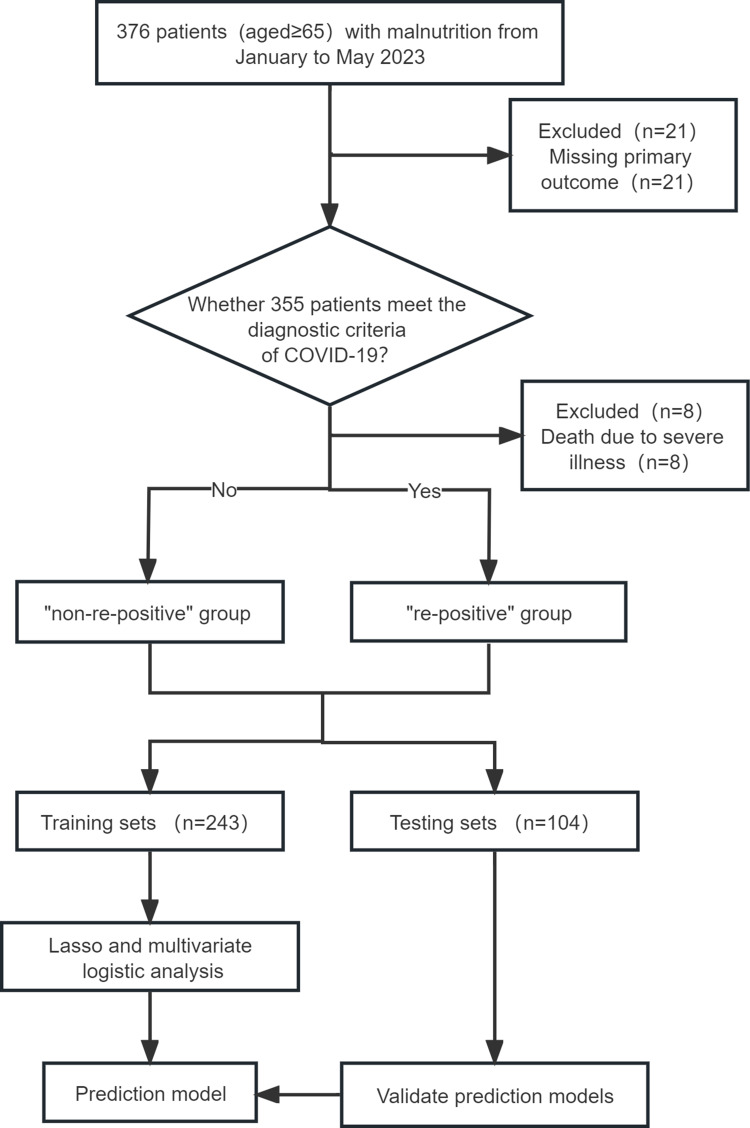
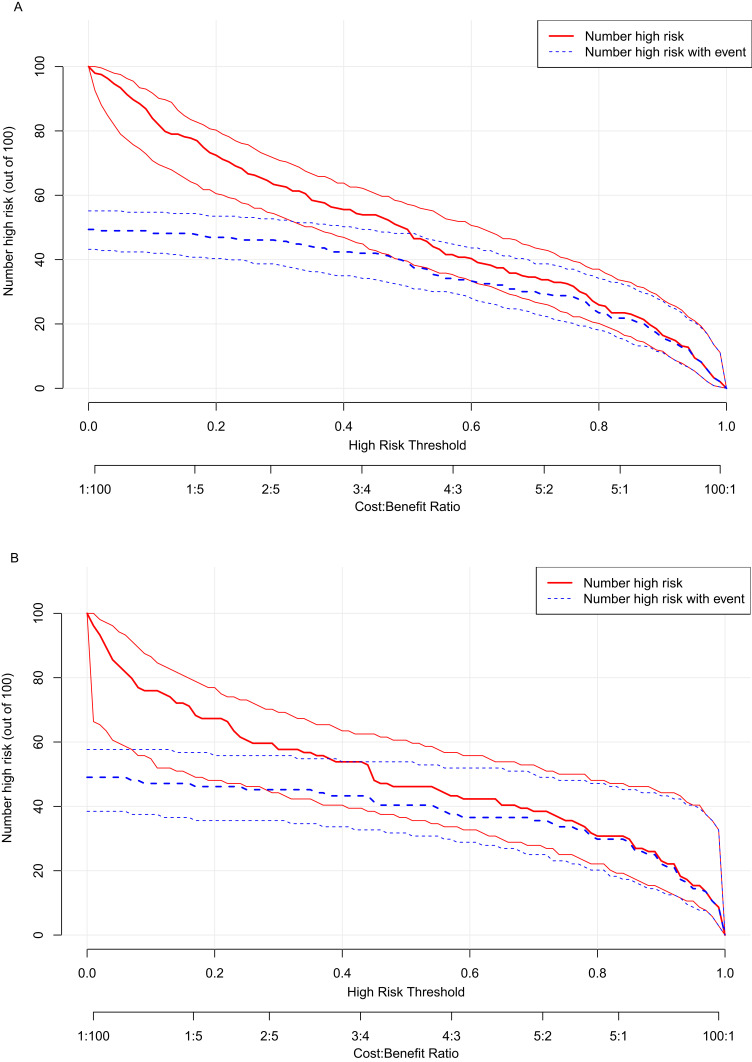
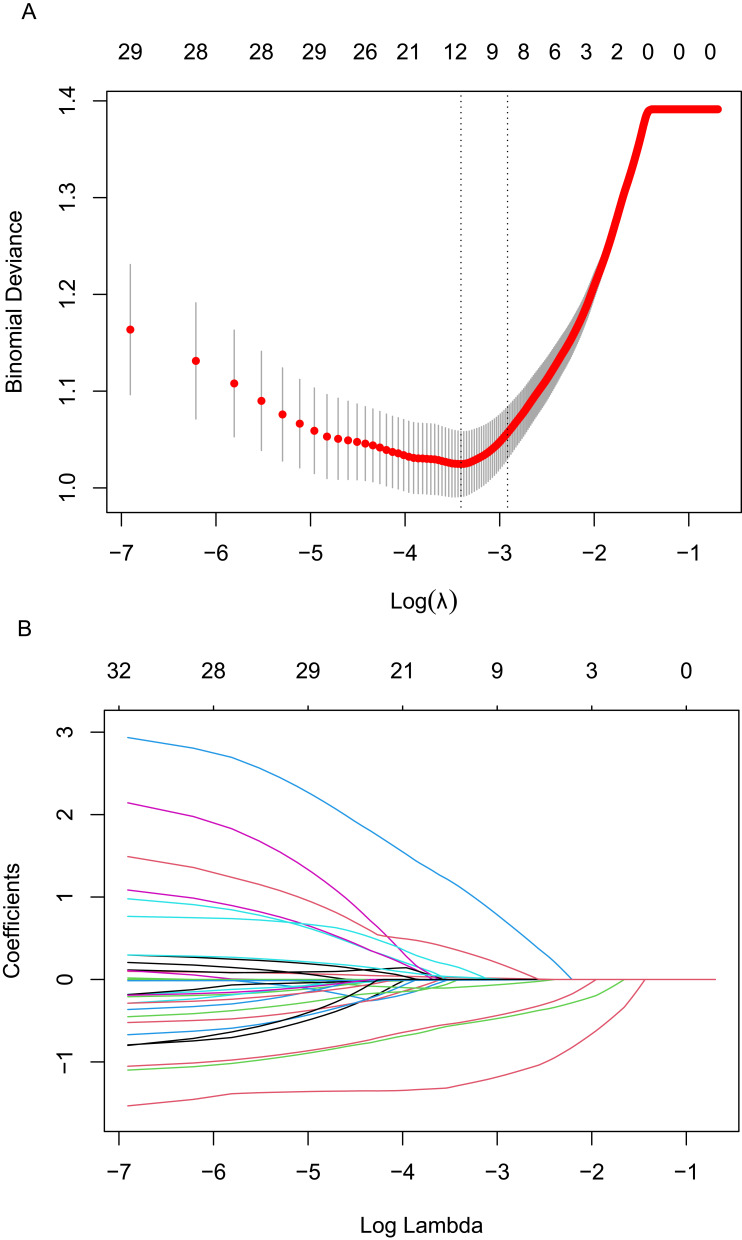
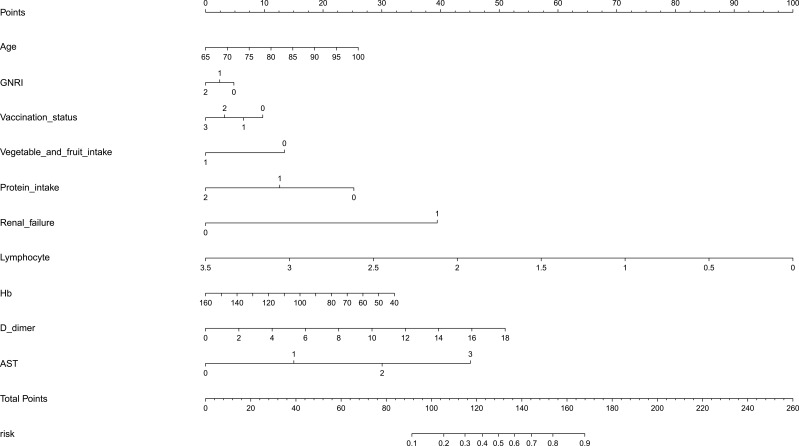
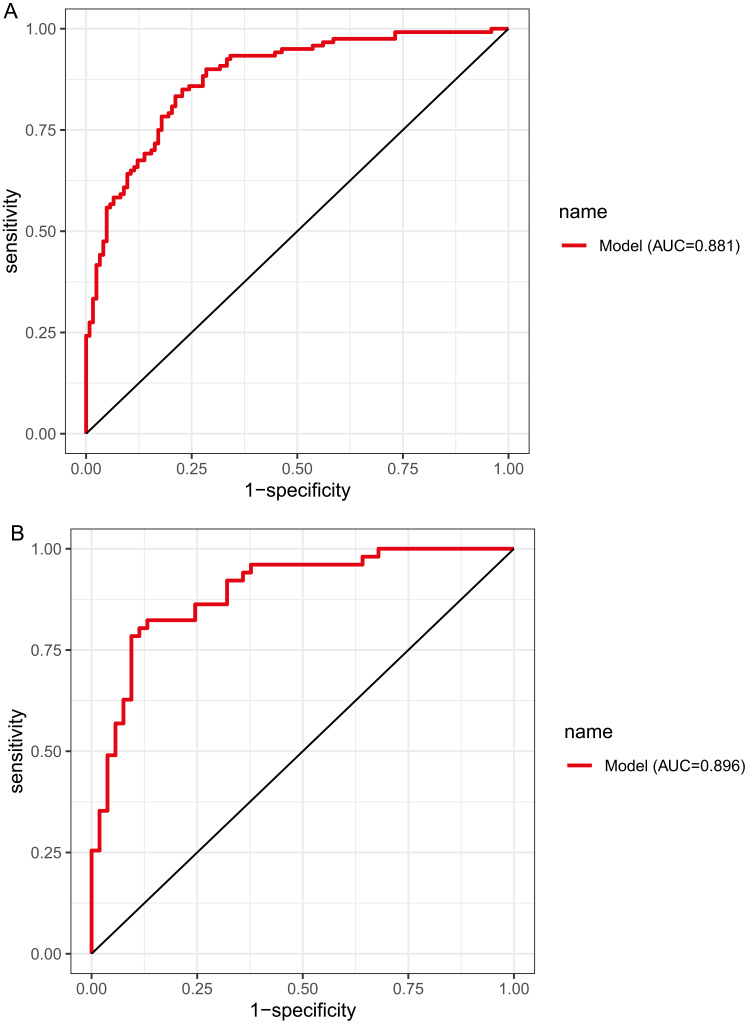
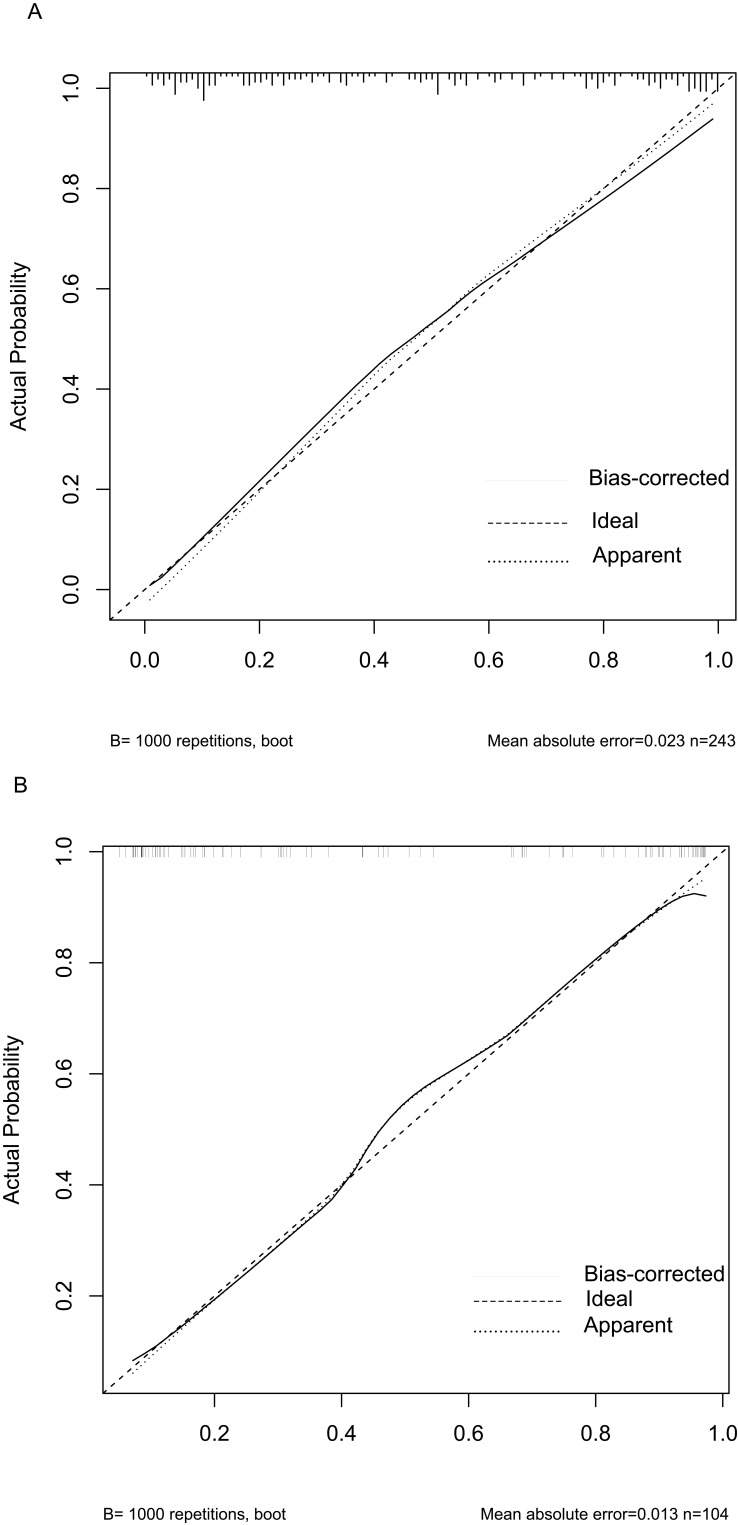
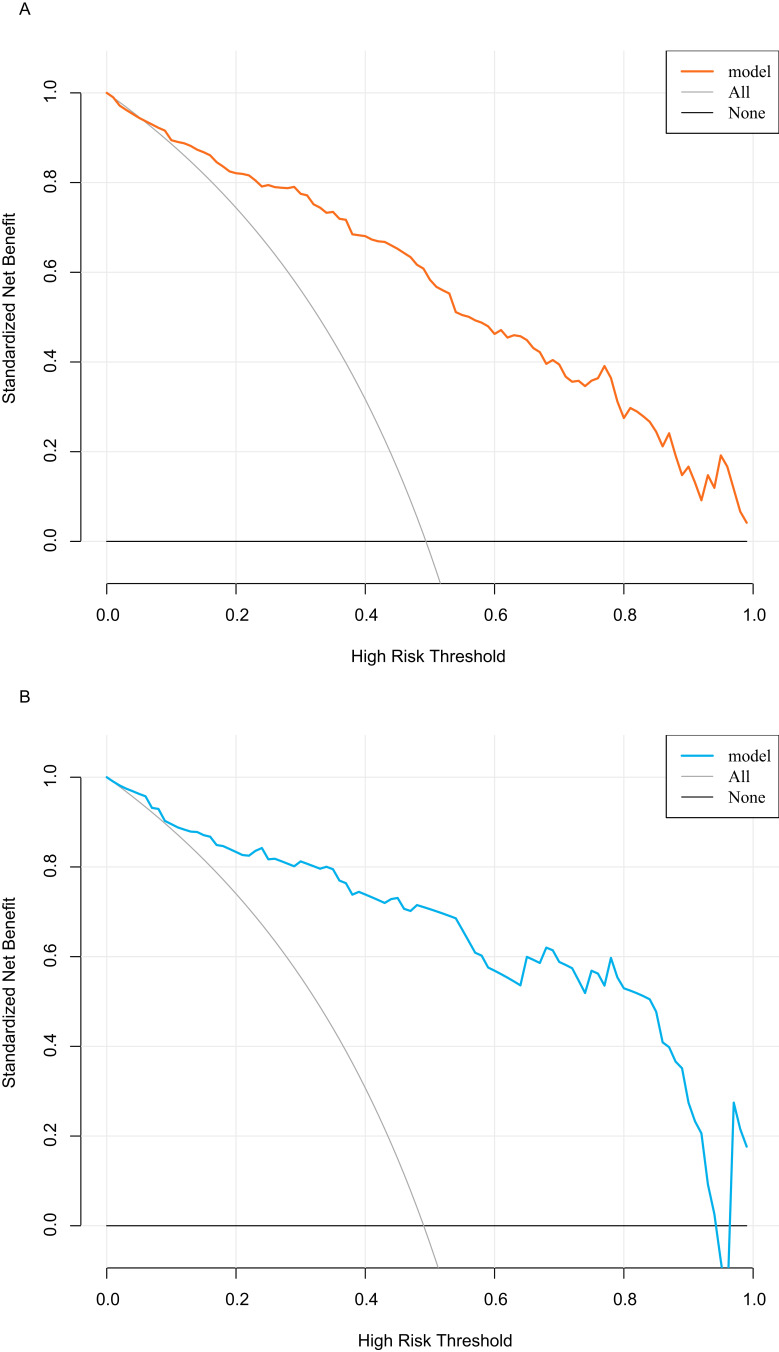
Malnourished older adults from January to May 2023 were retrospectively collected from the Department of Geriatrics of the Affiliated Hospital of Chengdu University of Traditional Chinese Medicine. They were divided into a "non-re-positive" group and a "re-positive" group based on the number of COVID-19 infections, and into a training set and a validation set at a 7:3 ratio. The least absolute shrinkage and selection operator (LASSO) regression analysis was used to identify predictive factors for COVID-19 re-positivity in malnourished older adults, and a nomogram was constructed. Independent influencing factors were screened by multivariate logistic regression. The model's goodness-of-fit, discrimination, calibration, and clinical impact were assessed by Hosmer-Lemeshow test, area under the curve (AUC), calibration curve, decision curve analysis (DCA), and clinical impact curve analysis (CIC), respectively.
We included 347 cases, 243 in the training set, and 104 in the validation set. We screened 10 variables as factors influencing the outcome. By multivariate logistic regression analysis, preliminary identified protective factors, risk factors, and independent influencing factors that affect the re-positive outcome. We constructed a clinical prediction model for COVID-19 re-positivity in malnourished older adults. The Hosmer-Lemeshow test yielded χ =5.916, =0.657; the AUC was 0.881; when the threshold probability was >8%, using this model to predict whether malnourished older adults were re-positive for COVID-19 was more beneficial than implementing intervention programs for all patients; when the threshold was >80%, the positive estimated value was closer to the actual number of cases.
This model can help identify the risk of COVID-19 re-positivity in malnourished older adults early, facilitate early clinical decision-making and intervention, and have important implications for improving patient outcomes. We also expect more large-scale, multicenter studies to further validate, refine, and update this model.
建立和验证营养不良老年人中新型冠状病毒(COVID-19)再阳性病例的临床预测模型。
回顾性收集 2023 年 1 月至 5 月成都中医药大学附属医院老年科的营养不良老年人。根据 COVID-19 感染次数,将其分为“非再阳性”组和“再阳性”组,并按 7:3 的比例分为训练集和验证集。采用最小绝对收缩和选择算子(LASSO)回归分析筛选预测营养不良老年人 COVID-19 再阳性的预测因素,并构建列线图。采用多因素 logistic 回归筛选独立影响因素。采用 Hosmer-Lemeshow 检验、曲线下面积(AUC)、校准曲线、决策曲线分析(DCA)和临床影响曲线分析(CIC)评估模型的拟合优度、区分度、校准度和临床影响。
共纳入 347 例患者,其中训练集 243 例,验证集 104 例。筛选出 10 个影响结局的变量作为影响因素。经多因素 logistic 回归分析,初步确定了影响再阳性结局的保护因素、危险因素和独立影响因素。构建了营养不良老年人 COVID-19 再阳性的临床预测模型。Hosmer-Lemeshow 检验 χ=5.916, =0.657;AUC 为 0.881;当阈值概率>8%时,使用该模型预测营养不良老年人 COVID-19 是否再阳性比对所有患者实施干预方案更有益;当阈值>80%时,阳性预测值更接近实际病例数。
该模型可帮助早期识别营养不良老年人 COVID-19 再阳性的风险,促进早期临床决策和干预,对改善患者结局具有重要意义。我们还期望更多的大样本、多中心研究进一步验证、改进和更新该模型。