Department of Paediatric Dentistry, Medical Centre for Dentistry, University Medical Centre Giessen and Marburg (Campus Giessen), Justus-Liebig-University Giessen, Schlangenzahl 14, 35392, Giessen, Germany.
Department of Operative Dentistry, Endodontics and Paediatric Dentistry, Medical Centre for Dentistry, University Medical Centre Giessen and Marburg (Campus Marburg), Philipps-University Marburg, Georg-Voigt-Str. 3, 35039, Marburg, Germany.
Eur Arch Paediatr Dent. 2024 Jun;25(3):289-315. doi: 10.1007/s40368-024-00876-9. Epub 2024 Mar 15.
This umbrella review aimed to critically appraise the evidence published in systematic reviews (SRs) on the clinical effectiveness of sealants compared with each other/the non-use in primary/permanent teeth of children and adolescents with at least 12-month follow-up.
A systematic literature search on 4 electronic databases was conducted up to January 18th, 2023. Following handsearching, two review authors independently screened retrieved articles, extracted data, and assessed the risk of bias (RoB) using the risk of bias in systematic reviews (ROBIS) tool. Based on a citation matrix, the overlap was interpreted by the corrected covered area (CCA).
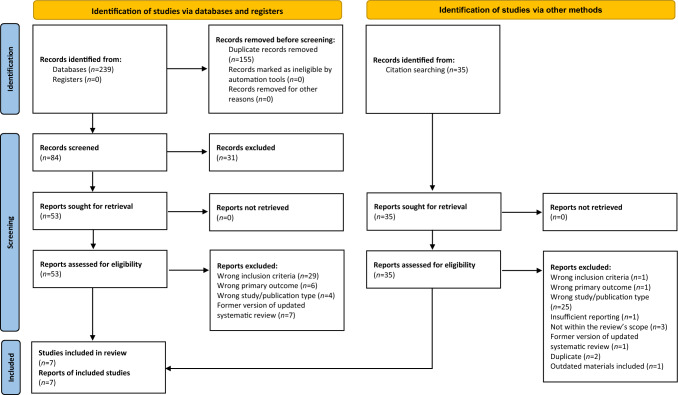
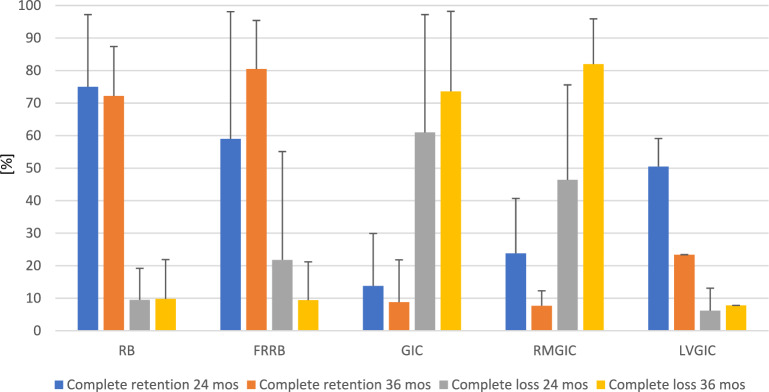
Of 239 retrieved records, 7 SRs met the eligibility criteria with a moderate overlap among them (CCA = 7.4%). For primary molars, in 1120 1.5- to 8-year-old children, data on the clinical effectiveness of sealants were inconclusive. For permanent molars, 3 SRs found a significant caries risk reduction for sealants versus non-use (≤ 36-month follow-up). There was insufficient evidence to proof superiority of sealants over fluoride varnish for caries prevention (3 SRs), and to rank sealant materials according to the best clinical effectiveness in permanent molars. One study was rated at low and 6 at high RoB, which did not allow for a valid quantitative synthesis.
Considering the limitations of this umbrella review, sealants are more effective for caries prevention in children's permanent molars compared to no treatment. Future well-implemented RCTs are needed to draw reliable conclusions on the clinical effectiveness of sealants in primary and permanent teeth of children and adolescents.
本伞式评价旨在批判性地评估已发表的系统评价(SRs)中关于密封剂与其他治疗方法相比在儿童和青少年的恒牙和乳牙中应用的临床效果的证据,这些系统评价的随访时间至少为 12 个月。
对 4 个电子数据库进行了系统文献检索,检索时间截至 2023 年 1 月 18 日。在进行手检后,两名综述作者独立筛选检索到的文章、提取数据,并使用系统评价中的偏倚风险(ROBIS)工具评估偏倚风险。基于引文矩阵,通过校正涵盖面积(CCA)解释重叠程度。
在检索到的 239 篇记录中,有 7 篇 SR 符合纳入标准,且这些 SR 之间的重叠度中等(CCA=7.4%)。对于乳磨牙,在 1120 名 1.5 至 8 岁的儿童中,关于密封剂临床效果的数据尚无定论。对于恒磨牙,3 项 SR 发现密封剂与不使用相比(≤36 个月随访)可显著降低龋齿风险。目前没有足够的证据证明密封剂在预防龋齿方面优于氟化物涂料(3 项 SR),也无法根据在恒磨牙中的最佳临床效果对密封剂材料进行排名。有 1 项研究被评为低度偏倚,6 项研究被评为高度偏倚,这使得无法进行有效的定量综合。
考虑到本伞式评价的局限性,密封剂在预防儿童恒磨牙龋齿方面比不治疗更有效。需要未来实施良好的 RCT 来得出关于密封剂在儿童和青少年的乳牙和恒牙中临床效果的可靠结论。