Centre de recherche de l'institut Universitaire de gériatrie de Montréal (CRIUGM), Montréal, Québec, Canada.
Program in Speech and Hearing Bioscience and Technology, Harvard University, Massachusetts, United States of America.
PLoS Comput Biol. 2024 Mar 18;20(3):e1011942. doi: 10.1371/journal.pcbi.1011942. eCollection 2024 Mar.
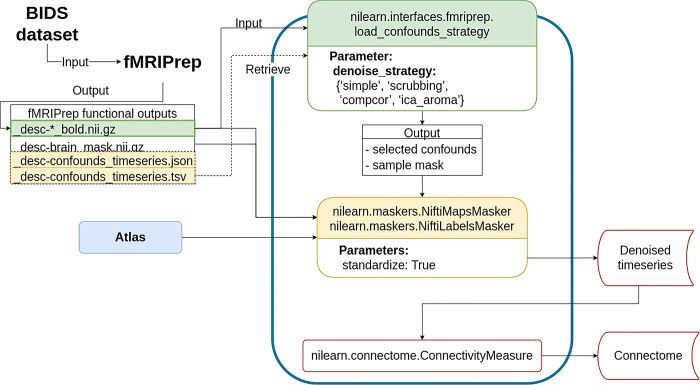
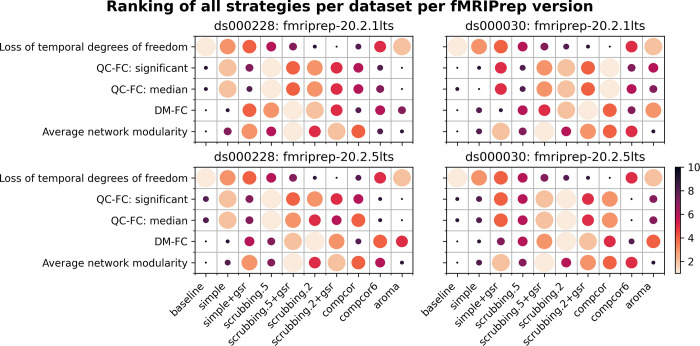
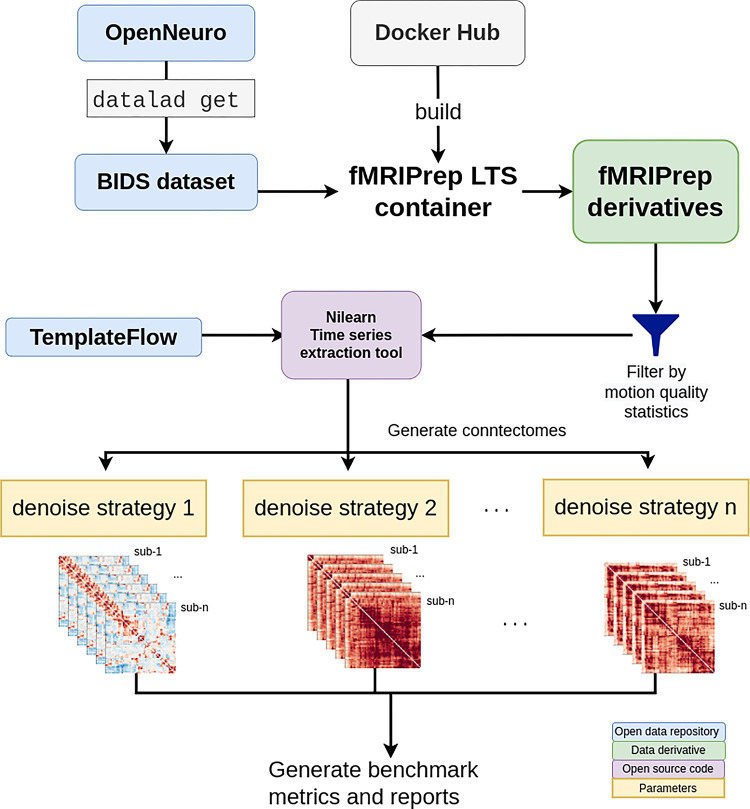
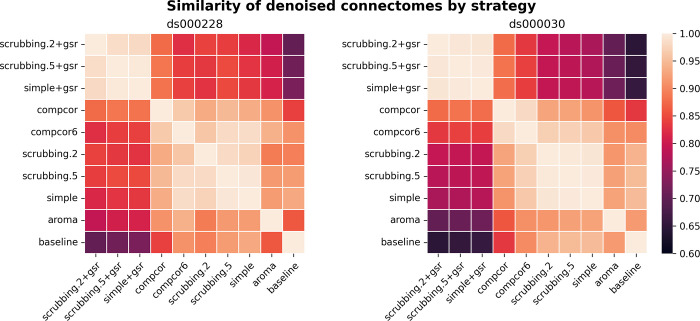
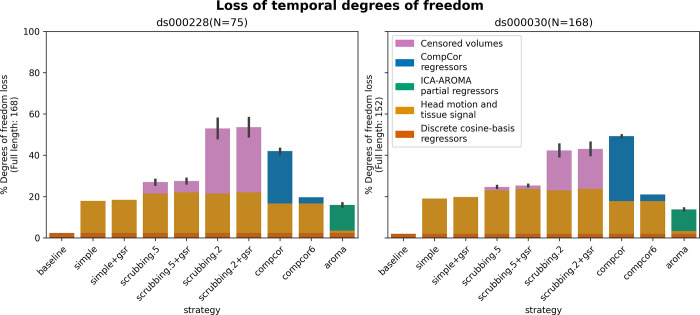
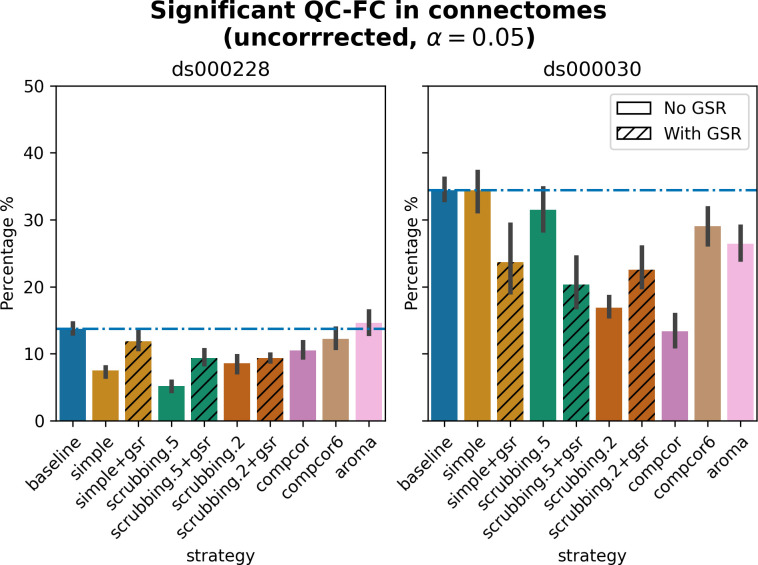
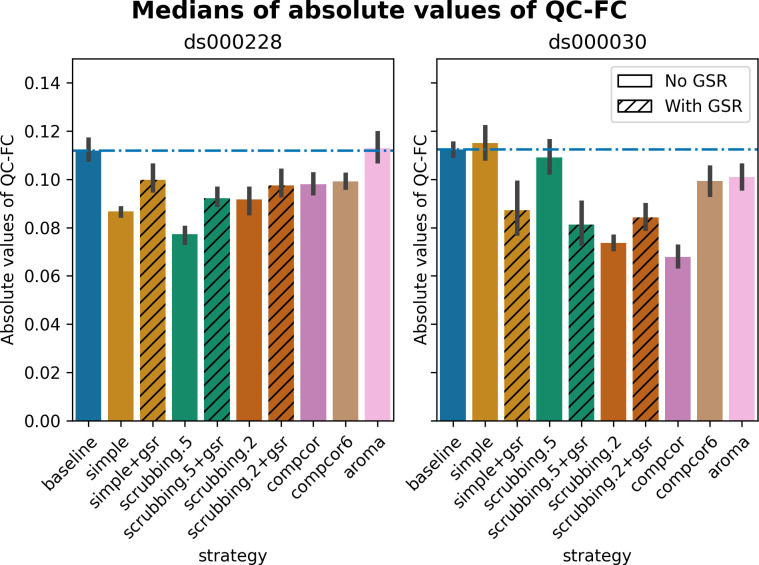
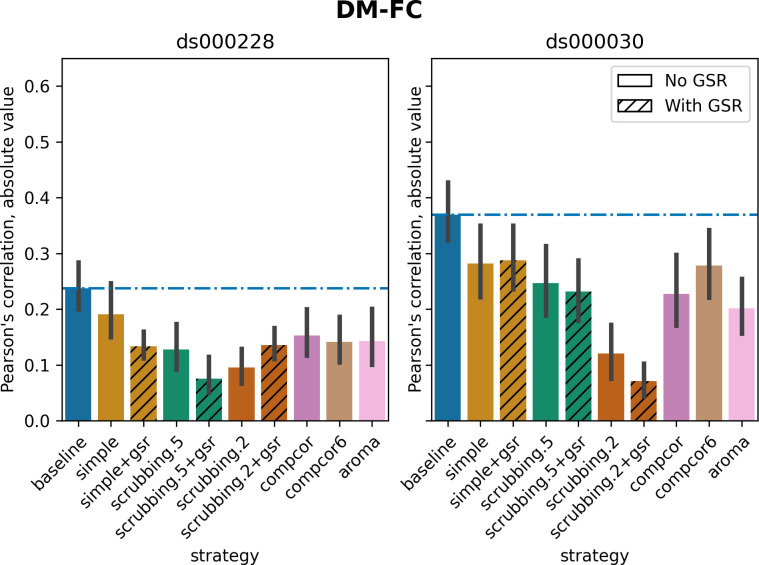
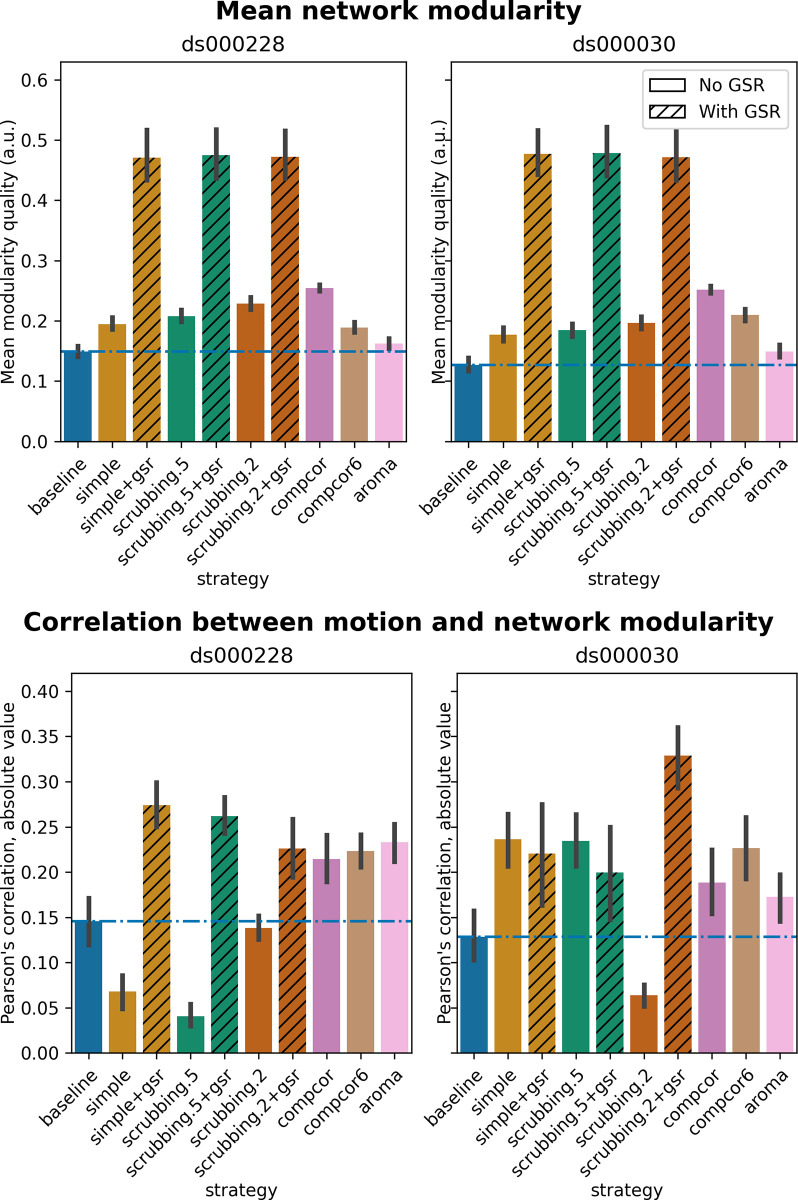
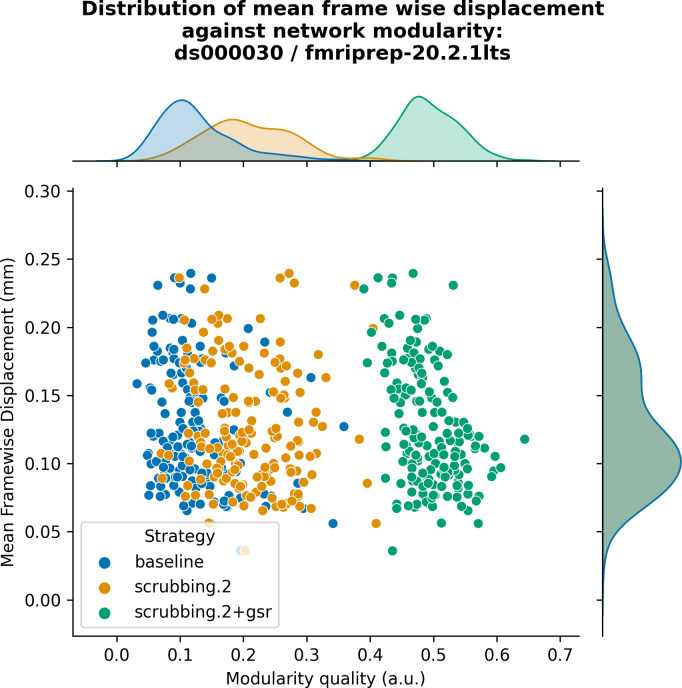
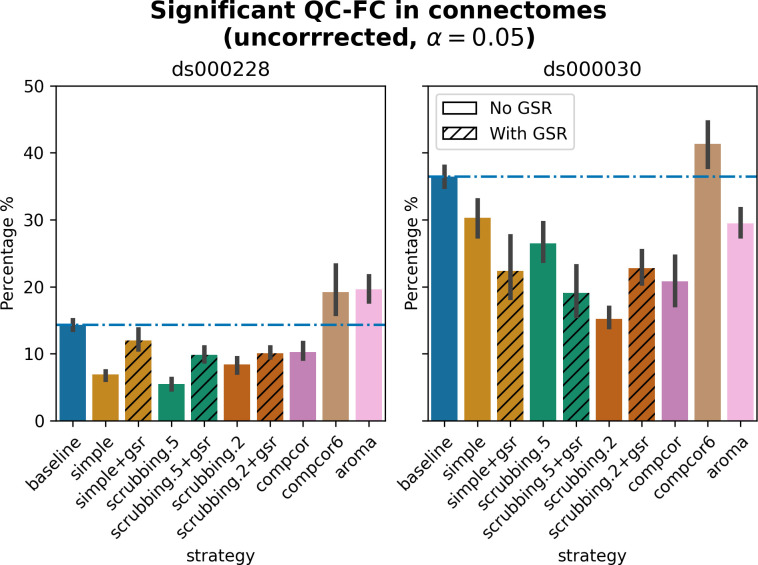
Reducing contributions from non-neuronal sources is a crucial step in functional magnetic resonance imaging (fMRI) connectivity analyses. Many viable strategies for denoising fMRI are used in the literature, and practitioners rely on denoising benchmarks for guidance in the selection of an appropriate choice for their study. However, fMRI denoising software is an ever-evolving field, and the benchmarks can quickly become obsolete as the techniques or implementations change. In this work, we present a denoising benchmark featuring a range of denoising strategies, datasets and evaluation metrics for connectivity analyses, based on the popular fMRIprep software. The benchmark prototypes an implementation of a reproducible framework, where the provided Jupyter Book enables readers to reproduce or modify the figures on the Neurolibre reproducible preprint server (https://neurolibre.org/). We demonstrate how such a reproducible benchmark can be used for continuous evaluation of research software, by comparing two versions of the fMRIprep. Most of the benchmark results were consistent with prior literature. Scrubbing, a technique which excludes time points with excessive motion, combined with global signal regression, is generally effective at noise removal. Scrubbing was generally effective, but is incompatible with statistical analyses requiring the continuous sampling of brain signal, for which a simpler strategy, using motion parameters, average activity in select brain compartments, and global signal regression, is preferred. Importantly, we found that certain denoising strategies behave inconsistently across datasets and/or versions of fMRIPrep, or had a different behavior than in previously published benchmarks. This work will hopefully provide useful guidelines for the fMRIprep users community, and highlight the importance of continuous evaluation of research methods.
减少非神经元来源的贡献是功能磁共振成像 (fMRI) 连接分析的关键步骤。文献中有许多可行的 fMRI 去噪策略,研究人员依赖于去噪基准来指导他们在研究中选择合适的策略。然而,fMRI 去噪软件是一个不断发展的领域,随着技术或实现的变化,基准很快就会过时。在这项工作中,我们提出了一个基于流行的 fMRIprep 软件的去噪基准,该基准具有一系列去噪策略、数据集和连接分析评估指标。基准原型实现了一个可重复的框架,提供的 Jupyter Book 使读者能够在 Neurolibre 可重复预印本服务器 (https://neurolibre.org/) 上重现或修改图。我们通过比较 fMRIprep 的两个版本,展示了这种可重复基准如何用于研究软件的持续评估。基准的大部分结果与先前的文献一致。 排除有过多运动的时间点的 scrubbing 技术与全局信号回归相结合,通常可以有效地去除噪声。 scrubbing 通常是有效的,但与需要连续采样脑信号的统计分析不兼容,对于这种情况,更简单的策略是使用运动参数、选择脑区的平均活动和全局信号回归。重要的是,我们发现某些去噪策略在数据集和/或 fMRIprep 版本之间表现不一致,或者行为与之前发表的基准不同。这项工作有望为 fMRIprep 用户社区提供有用的指导,并强调研究方法持续评估的重要性。