Gao Yu, Fan Min, Li Yu, Zhao Shaochen, Chen Wei, Zhang Donghuan, Zheng Xifu
School of Psychology, South China Normal University, Guangzhou, 510663, People's Republic of China.
Guangdong-Hongkong-Macao Policing Model Innovation Research Center, China People's Police University, Guangzhou, 510663, People's Republic of China.
Psychol Res Behav Manag. 2024 Mar 12;17:1007-1020. doi: 10.2147/PRBM.S447426. eCollection 2024.
The study aimed to examine the roles of anxiety and intolerance of uncertainty (IU) in conditioned fear learning under an uncertain context induced by the contingency reversal of the association between the conditioned stimulus and the unconditioned stimulus (CS-US).
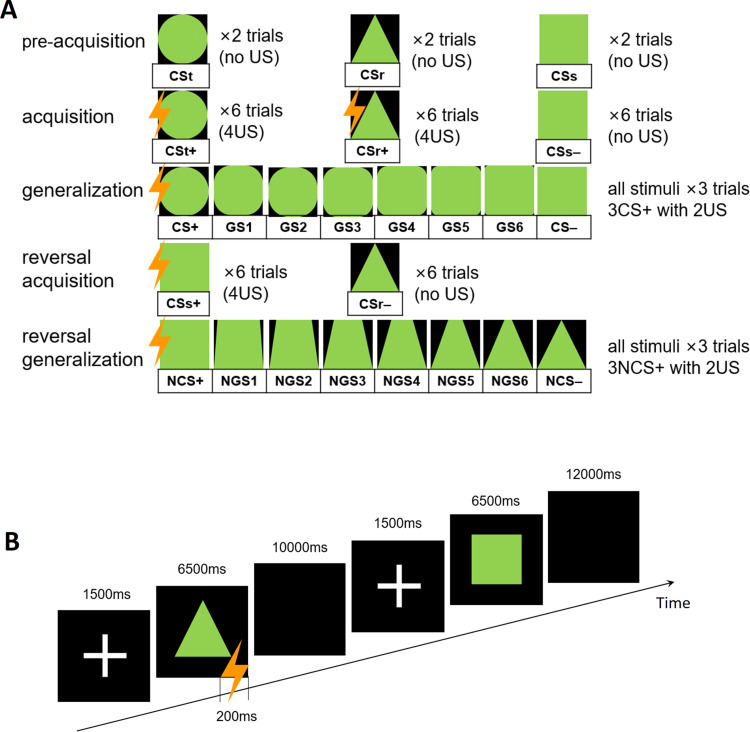
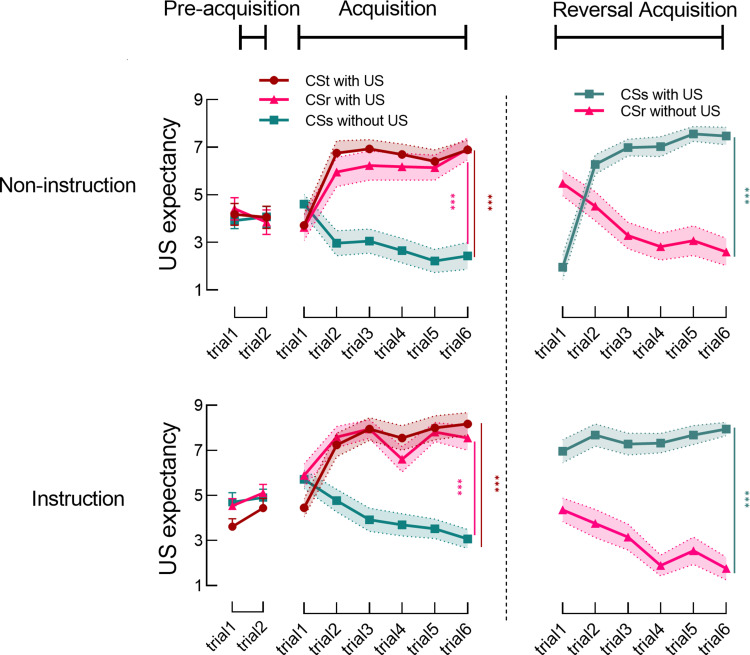
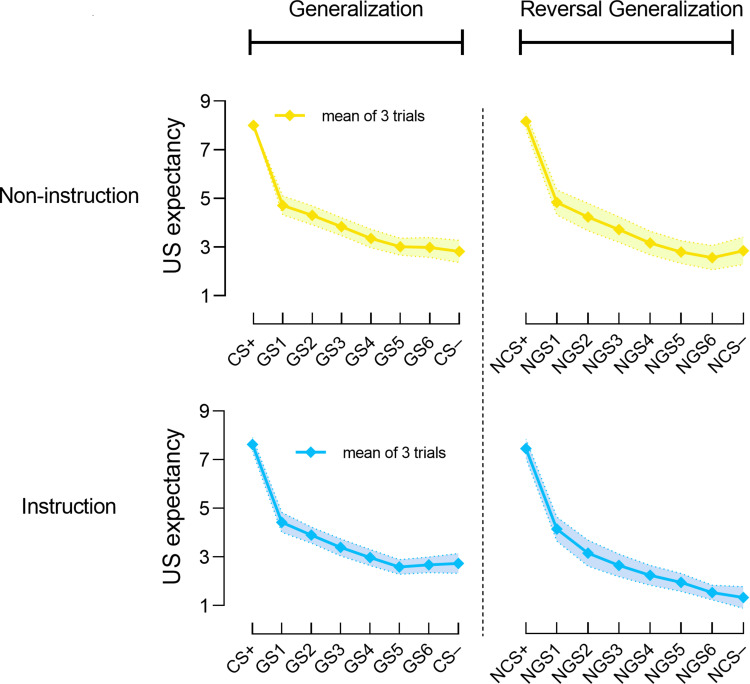
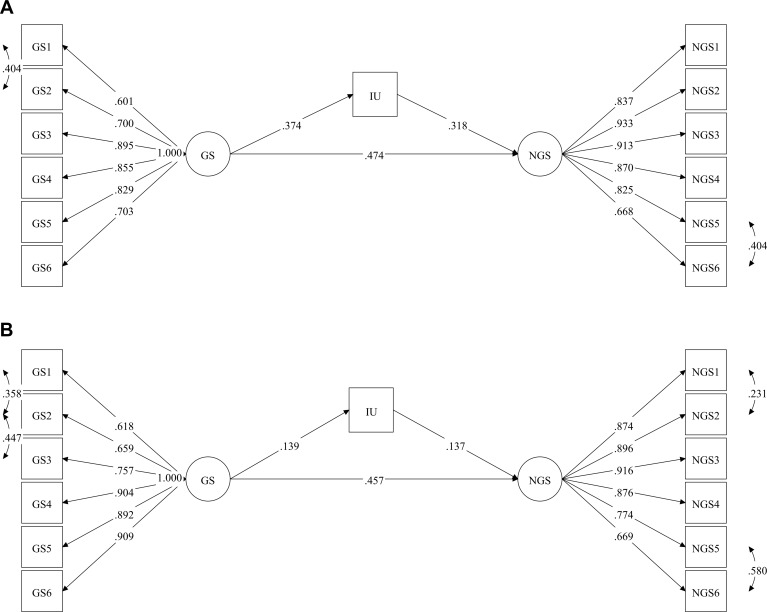
The study sample comprised 53 participants, randomly divided into two groups: a non-instruction group and an instruction group. The experimental procedure encompassed five stages: pre-acquisition, acquisition, generalization, reversal acquisition, and reversal generalization. Our study primarily focused on analyzing a moderated mediation model.
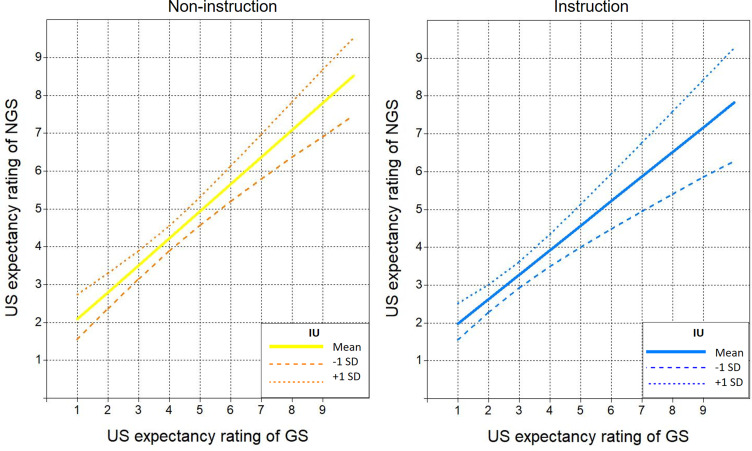
In the instructed group, we observed that the reversed fear generalization response was directly influenced by the pre-reversal fear generalization response, while also being indirectly mediated by the IU factor. However, in the non-instructed group, we did not find a significant mediating effect of IU. Moreover, we noted that the mediation of IU was contingent on the instructional information. It is noteworthy that anxiety did not exhibit a discernible role in conditioned fear within the uncertainty condition in our study.
The findings provide novel insights into fear-related phenomena, emphasizing the intricate interplay between individual traits and fear generalization under conditions of uncertainty. They contribute to understanding the mechanisms of emotional and cognitive interactions in uncertain conditions.
本研究旨在探讨焦虑和不确定性不耐受(IU)在条件刺激与无条件刺激(CS-US)关联的意外逆转所引发的不确定情境下的条件恐惧学习中的作用。
研究样本包括53名参与者,随机分为两组:非指导组和指导组。实验程序包括五个阶段:预习得、习得、泛化、逆转习得和逆转泛化。我们的研究主要集中在分析一个有调节的中介模型。
在指导组中,我们观察到逆转后的恐惧泛化反应直接受到逆转前恐惧泛化反应的影响,同时也受到IU因素的间接中介作用。然而,在非指导组中,我们没有发现IU的显著中介作用。此外,我们注意到IU的中介作用取决于指导信息。值得注意的是,在我们的研究中,焦虑在不确定条件下的条件恐惧中未表现出明显作用。
这些发现为恐惧相关现象提供了新的见解,强调了个体特质与不确定条件下恐惧泛化之间的复杂相互作用。它们有助于理解不确定条件下情绪和认知相互作用的机制。