Cancer Research UK Beatson Institute, Garscube Estate, Switchback Road, Glasgow, G61 1BD, UK.
MRC Toxicology Unit, Lancaster Road, Leicester, LE1 9HN, UK.
Genome Biol. 2021 Oct 6;22(1):284. doi: 10.1186/s13059-021-02494-w.
Regulation of protein output at the level of translation allows for a rapid adaptation to dynamic changes to the cell's requirements. This precise control of gene expression is achieved by complex and interlinked biochemical processes that modulate both the protein synthesis rate and stability of each individual mRNA. A major factor coordinating this regulation is the Ccr4-Not complex. Despite playing a role in most stages of the mRNA life cycle, no attempt has been made to take a global integrated view of how the Ccr4-Not complex affects gene expression.
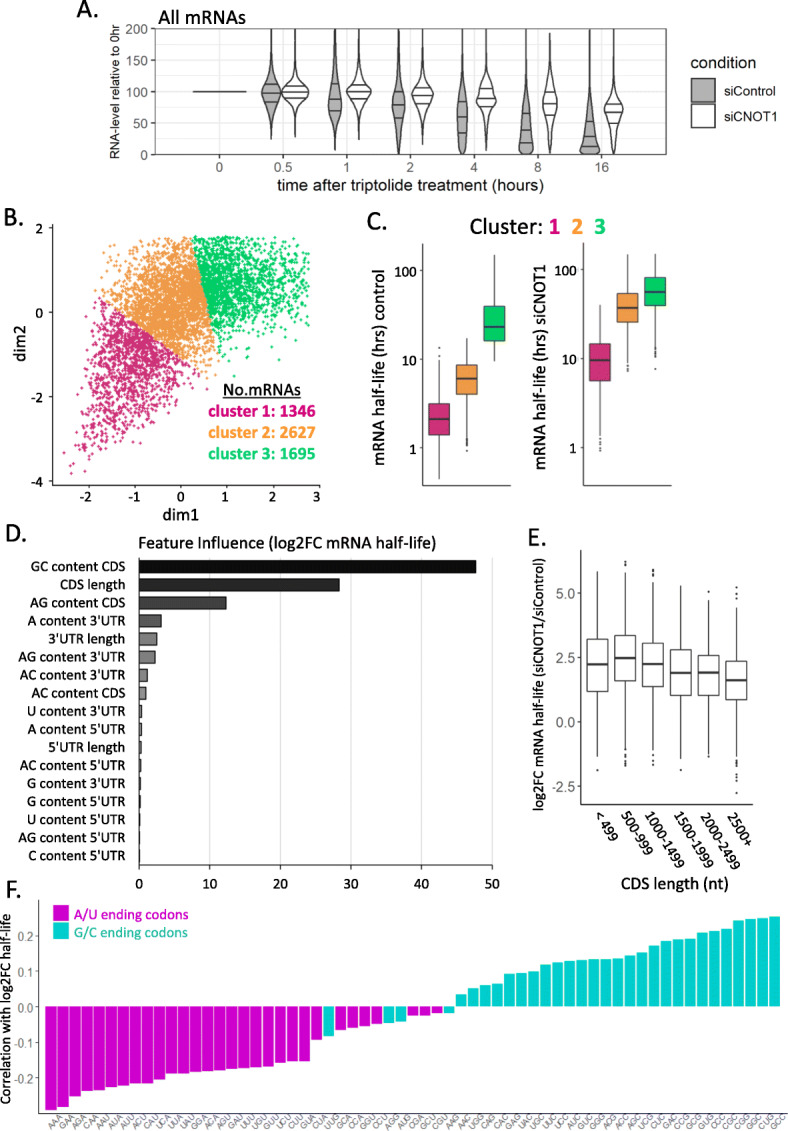
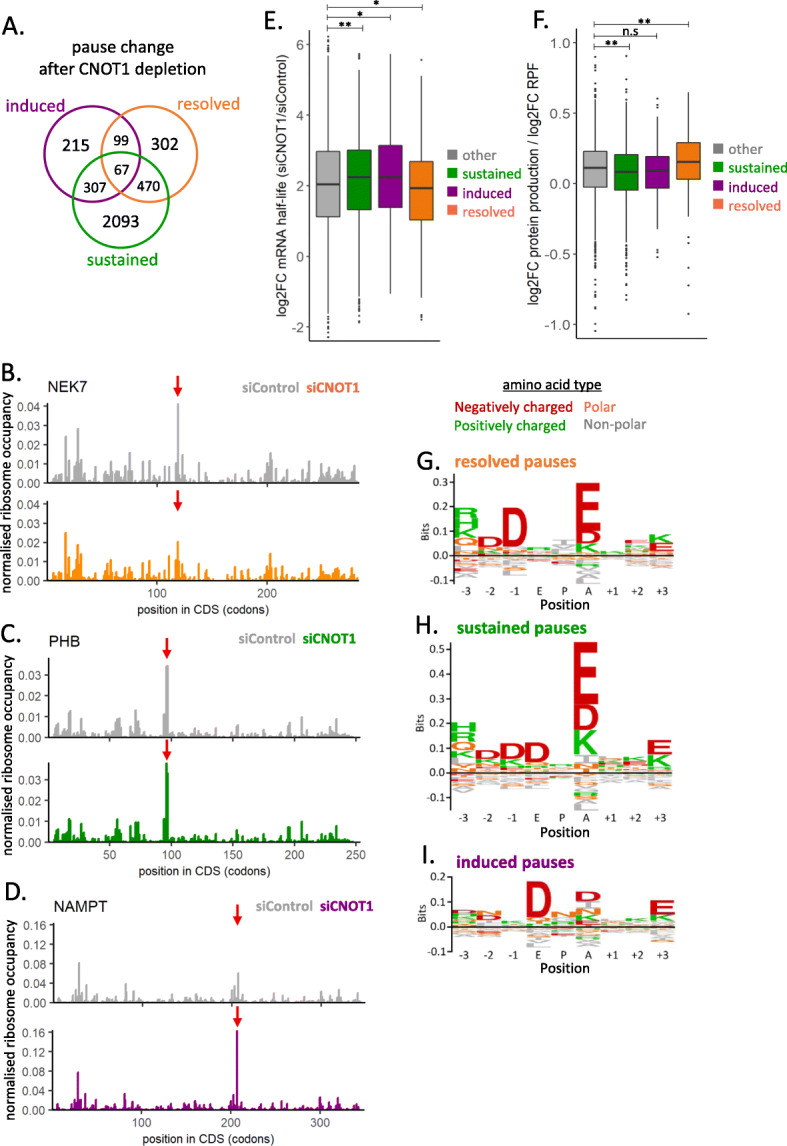
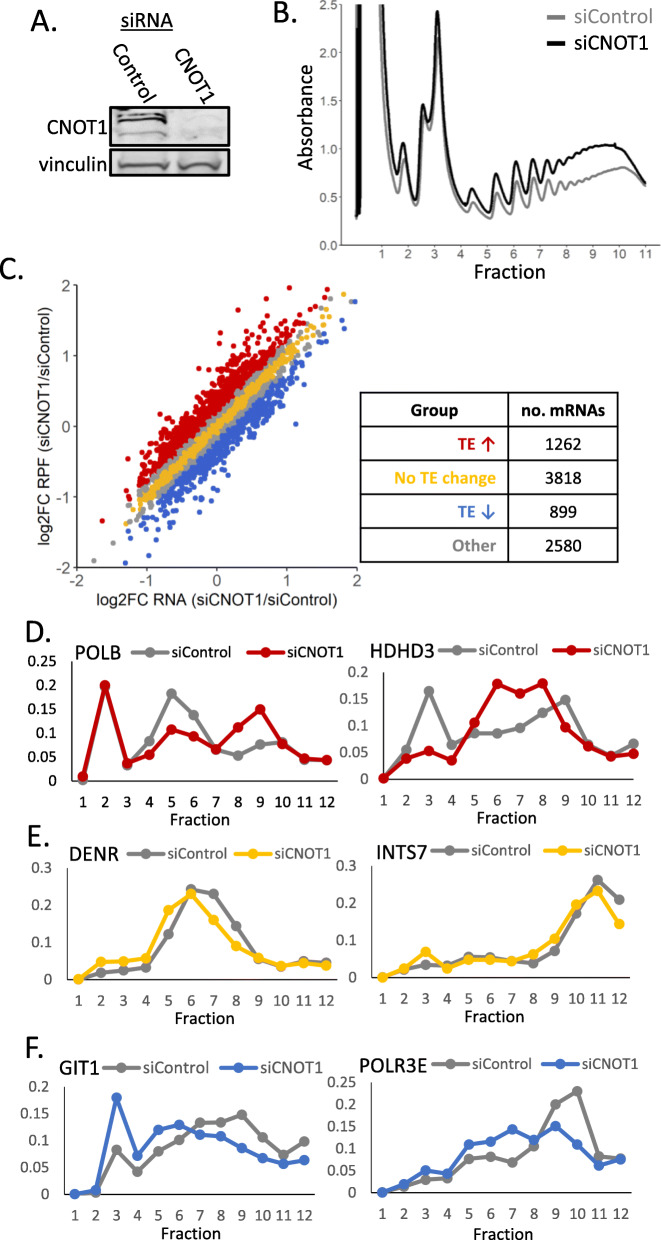
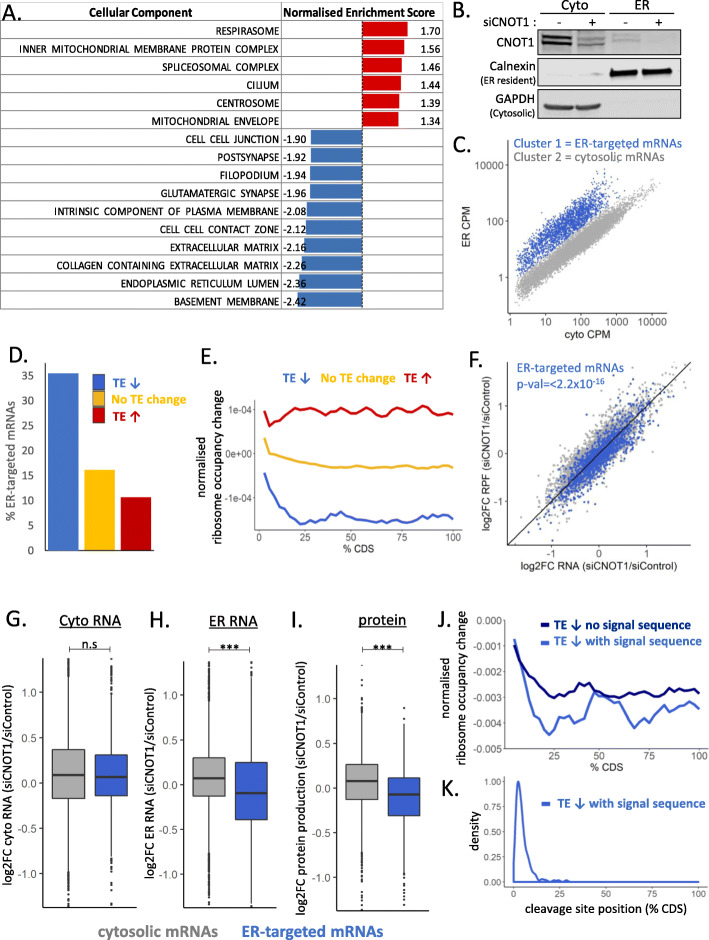
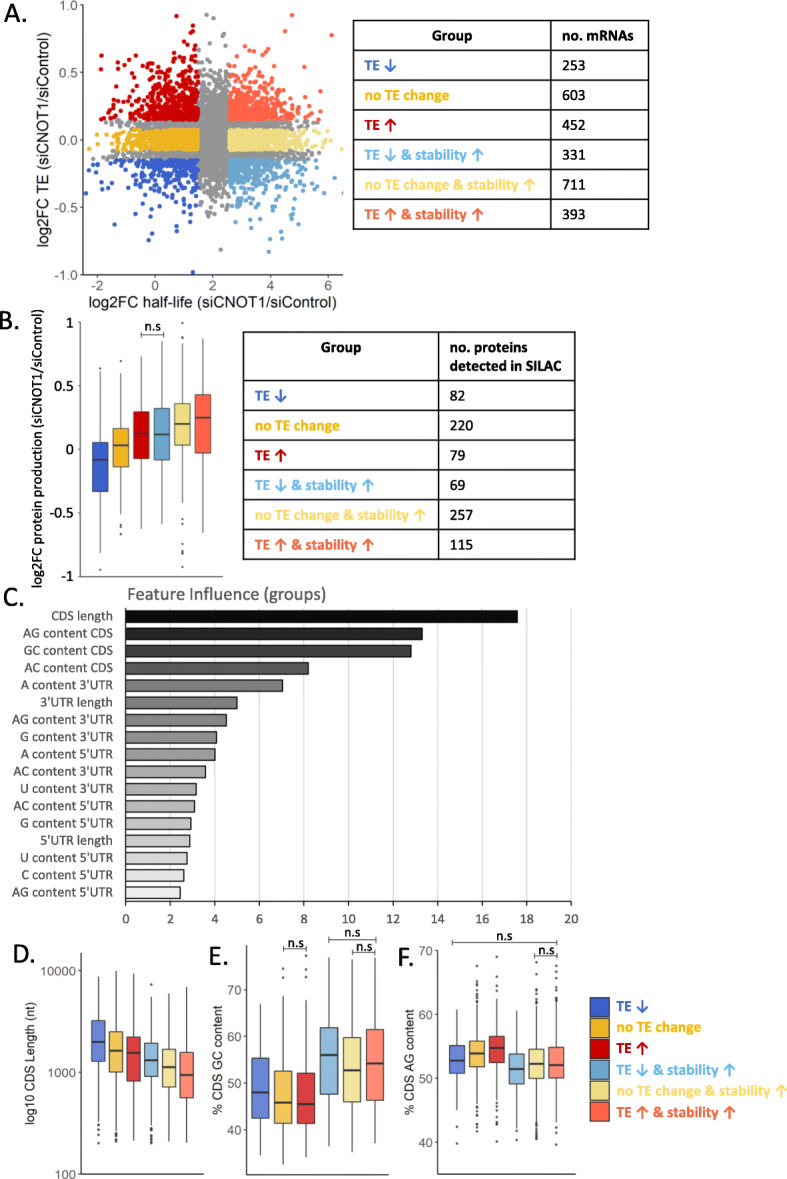
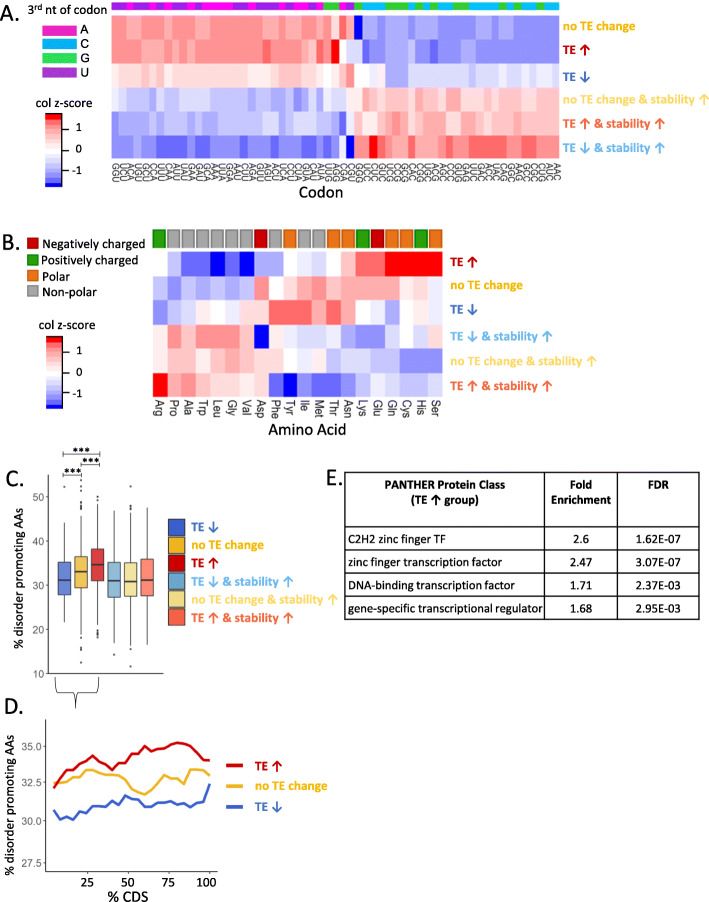
This study has taken a comprehensive approach to investigate post-transcriptional regulation mediated by the Ccr4-Not complex assessing steady-state mRNA levels, ribosome position, mRNA stability, and protein production transcriptome-wide. Depletion of the scaffold protein CNOT1 results in a global upregulation of mRNA stability and the preferential stabilization of mRNAs enriched for G/C-ending codons. We also uncover that mRNAs targeted to the ER for their translation have reduced translational efficiency when CNOT1 is depleted, specifically downstream of the signal sequence cleavage site. In contrast, translationally upregulated mRNAs are normally localized in p-bodies, contain disorder-promoting amino acids, and encode nuclear localized proteins. Finally, we identify ribosome pause sites that are resolved or induced by the depletion of CNOT1.
We define the key mRNA features that determine how the human Ccr4-Not complex differentially regulates mRNA fate and protein synthesis through a mechanism linked to codon composition, amino acid usage, and mRNA localization.
在翻译水平上对蛋白质输出的调节允许细胞快速适应其需求的动态变化。这种对基因表达的精确控制是通过复杂的、相互关联的生化过程来实现的,这些过程调节了每个 mRNA 的蛋白质合成速率和稳定性。协调这种调节的一个主要因素是 Ccr4-Not 复合物。尽管 Ccr4-Not 复合物在 mRNA 生命周期的大多数阶段都发挥作用,但人们尚未尝试从全局综合的角度来了解 Ccr4-Not 复合物如何影响基因表达。
本研究采用全面的方法来研究 Ccr4-Not 复合物介导的转录后调节,评估了稳态 mRNA 水平、核糖体位置、mRNA 稳定性和转录组范围内的蛋白质产生。支架蛋白 CNOT1 的耗竭导致 mRNA 稳定性的全局上调,并且富含 G/C 结尾密码子的 mRNA 优先稳定。我们还发现,当 CNOT1 耗尽时,靶向 ER 翻译的 mRNA 的翻译效率降低,特别是在信号序列切割位点的下游。相比之下,翻译上调的 mRNA 通常位于 p 体中,含有促进无序的氨基酸,并且编码核定位蛋白。最后,我们确定了核糖体暂停位点,这些位点可以通过 CNOT1 的耗竭来解决或诱导。
我们定义了关键的 mRNA 特征,这些特征通过与密码子组成、氨基酸使用和 mRNA 定位相关的机制,决定了人类 Ccr4-Not 复合物如何差异调节 mRNA 命运和蛋白质合成。