Lee Lena J, Son Elisa H, Farmer Nicole, Gerrard Chantal, Tuason Ralph Thadeus, Yang Li, Kohn-Godbout Julie, Stephens Cory, Nahm Eun-Shim, Smith Leslie, Risch Steve, Wallen Gwenyth R
National Institutes of Health, Clinical Center, Translational Biobehavioral and Health Disparities (TBHD), Bethesda, MD, United States.
University of Maryland Baltimore, School of Nursing, Baltimore, MD, United States.
Front Psychiatry. 2024 Mar 7;15:1295097. doi: 10.3389/fpsyt.2024.1295097. eCollection 2024.
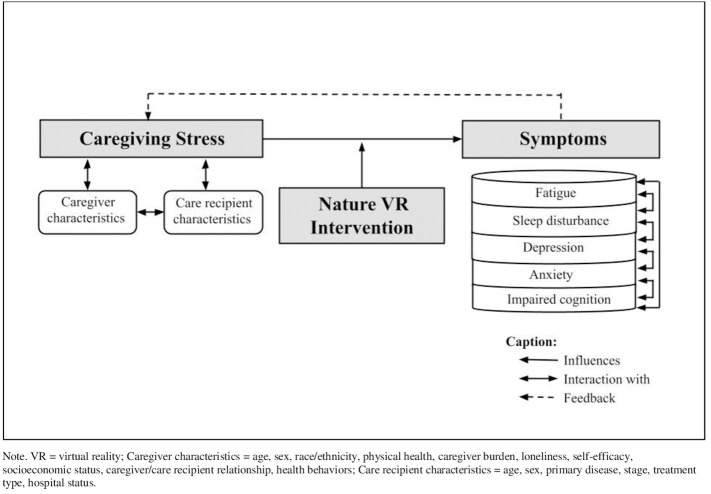
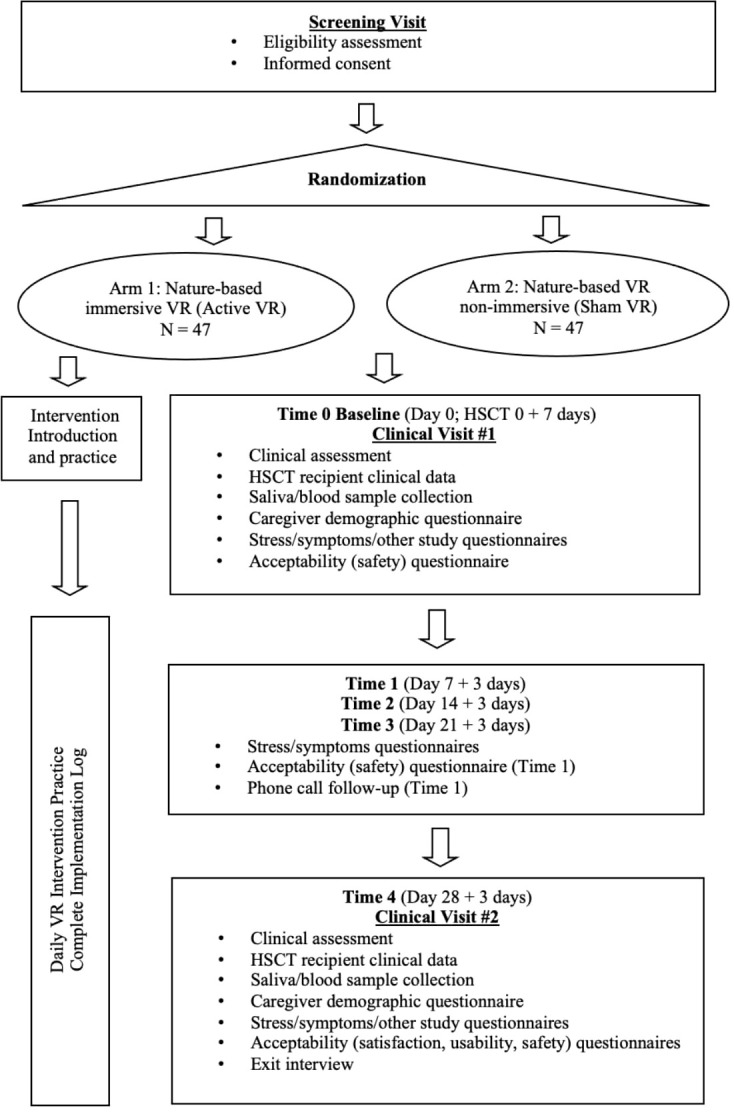
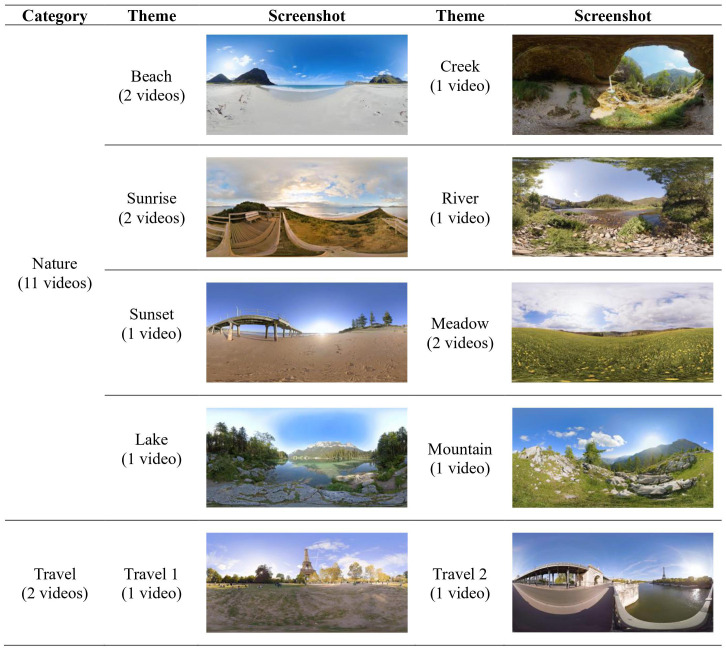
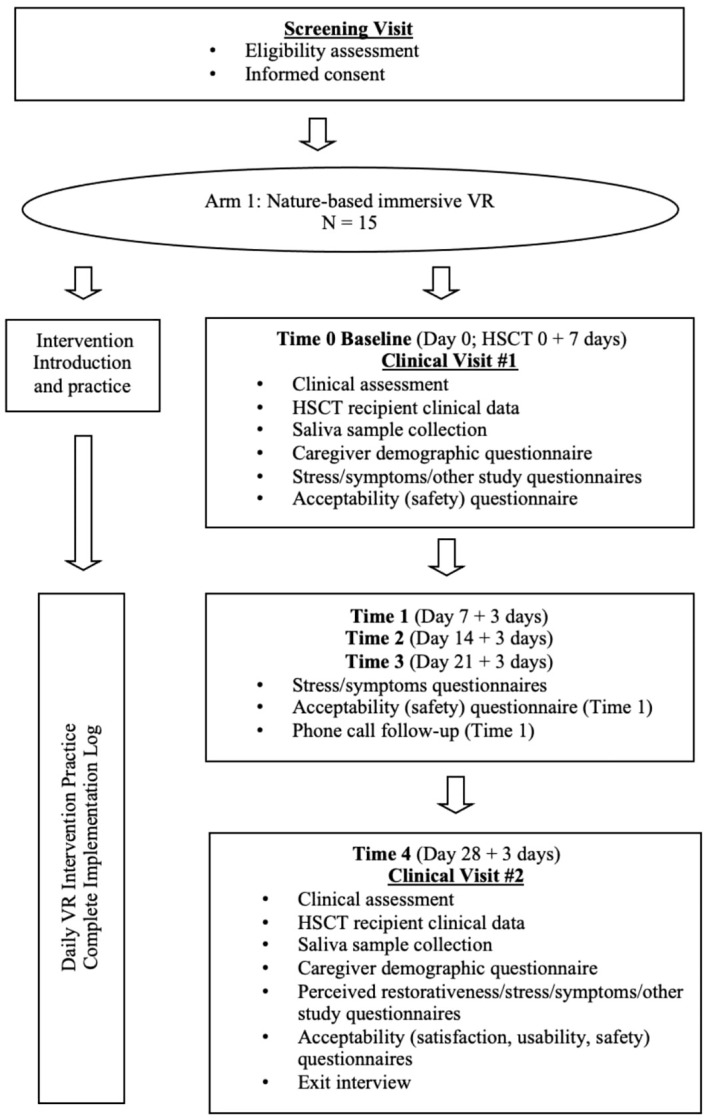
Millions of family members and/or friends in the U.S. serve as unpaid caregivers for individuals with chronic conditions, such as cancer. Caregiving for someone undergoing an intense allogeneic hematopoietic stem cell transplant (HSCT) is particularly demanding, with accompanying physical and psychological stress. Increased stress and stress-related symptoms could make it difficult for caregivers to fulfill their roles and could negatively impact the health status and quality of life of themselves and the recipients. Virtual reality (VR) is a promising technology increasingly used for treatment and wellness in various medical settings. There is growing evidence that studies have reported the positive effects of the VR intervention in managing and reducing stress among diverse populations in various clinical scenarios; however, no published studies have focused on family caregivers of patients with cancer. The study aims to assess the feasibility and acceptability of a four-week nature-based VR intervention and to examine the effectiveness of the VR intervention on stress in HSCT caregivers. This study comprises two phases. Phase I of the study will be a single-arm pre-post design focused on assessing the feasibility and acceptability of the VR intervention. Phase II of the study will be a prospective randomized controlled group design to examine the effectiveness of the VR intervention on perceived stress. Adults (≥ 18 years) who serve as primary caregivers for a person who will undergo an allogeneic HSCT will be recruited. Fifteen participants will be enrolled for Phase I and 94 participants for Phase II (Active VR arm N=47; Sham VR arm N=47). The nature-based immersive VR program contains 360° high-definition videos of nature scenes along with nature sounds through a head-mounted display (HMD) for 20 minutes every day for four weeks. Primary outcome is perceived stress measured by the Perceived Stress Scale. Secondary/exploratory outcomes are stress-related symptoms (e.g., fatigue, sleep disturbance) and physiological biomarkers (e.g., cortisol, alpha-amylase). The importance and innovativeness of this study consist of using a first-of-its-kind, immersive VR technology to target stress and investigating the health outcomes assessed by validated objective biomarkers as well as self-report measures of the nature-based intervention in the caregiver population.
ClinicalTrials.gov, identifier NCT05909202.
在美国,数以百万计的家庭成员和/或朋友为患有慢性病(如癌症)的个人提供无偿护理。为接受强化异基因造血干细胞移植(HSCT)的患者提供护理的要求尤其苛刻,同时伴随着身体和心理压力。压力增加及与压力相关的症状可能使护理人员难以履行其职责,并可能对他们自身以及接受护理者的健康状况和生活质量产生负面影响。虚拟现实(VR)是一种很有前景的技术,越来越多地用于各种医疗环境中的治疗和健康促进。越来越多的证据表明,研究报告了VR干预在各种临床场景中对不同人群管理和减轻压力的积极作用;然而,尚无已发表的研究关注癌症患者的家庭护理人员。本研究旨在评估为期四周的基于自然的VR干预的可行性和可接受性,并检验VR干预对HSCT护理人员压力的有效性。本研究包括两个阶段。研究的第一阶段将采用单臂前后设计,重点评估VR干预的可行性和可接受性。研究的第二阶段将采用前瞻性随机对照分组设计,以检验VR干预对感知压力的有效性。将招募为即将接受异基因HSCT的患者担任主要护理人员的成年人(≥18岁)。第一阶段将招募15名参与者,第二阶段将招募94名参与者(主动VR组N = 47; sham VR组N = 47)。基于自然的沉浸式VR程序包含360°高清自然场景视频以及自然声音,通过头戴式显示器(HMD)每天播放20分钟,持续四周。主要结局是用感知压力量表测量的感知压力。次要/探索性结局是与压力相关的症状(如疲劳、睡眠障碍)和生理生物标志物(如皮质醇、α-淀粉酶)。本研究的重要性和创新性在于使用首创的沉浸式VR技术来针对压力,并调查通过经过验证的客观生物标志物以及基于自然的干预措施在护理人员群体中的自我报告测量所评估的健康结局。
ClinicalTrials.gov,标识符NCT05909202。