Department of Applied Chemistry, National Yang Ming Chiao Tung University, Hsinchu 300, Taiwan.
Department of Biological Science and Technology, National Yang Ming Chiao Tung University, Hsinchu 300, Taiwan.
Anal Chem. 2024 Apr 9;96(14):5669-5676. doi: 10.1021/acs.analchem.4c00655. Epub 2024 Mar 25.
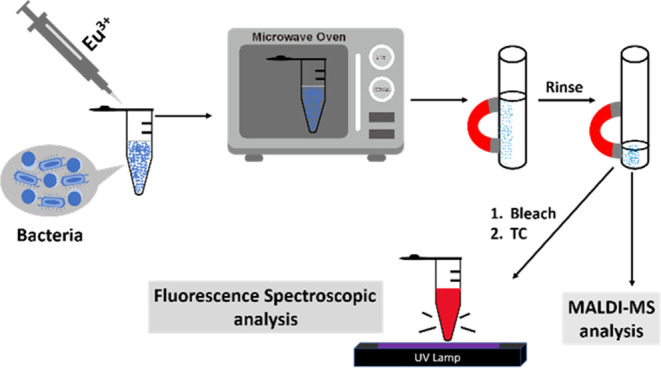
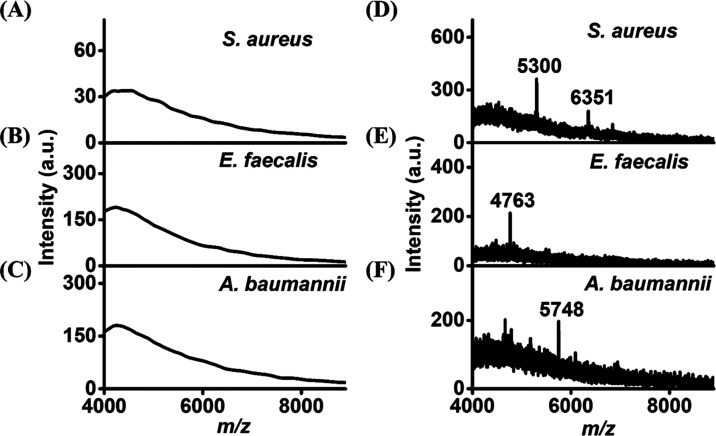
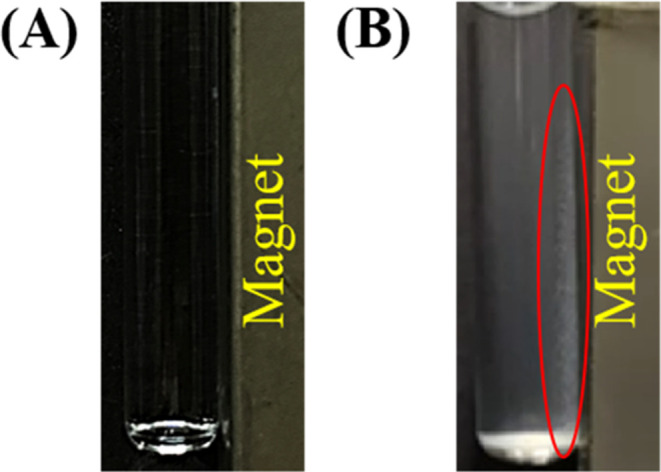
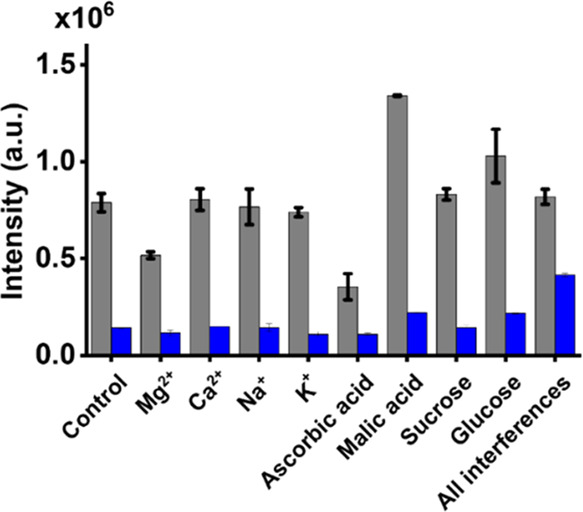
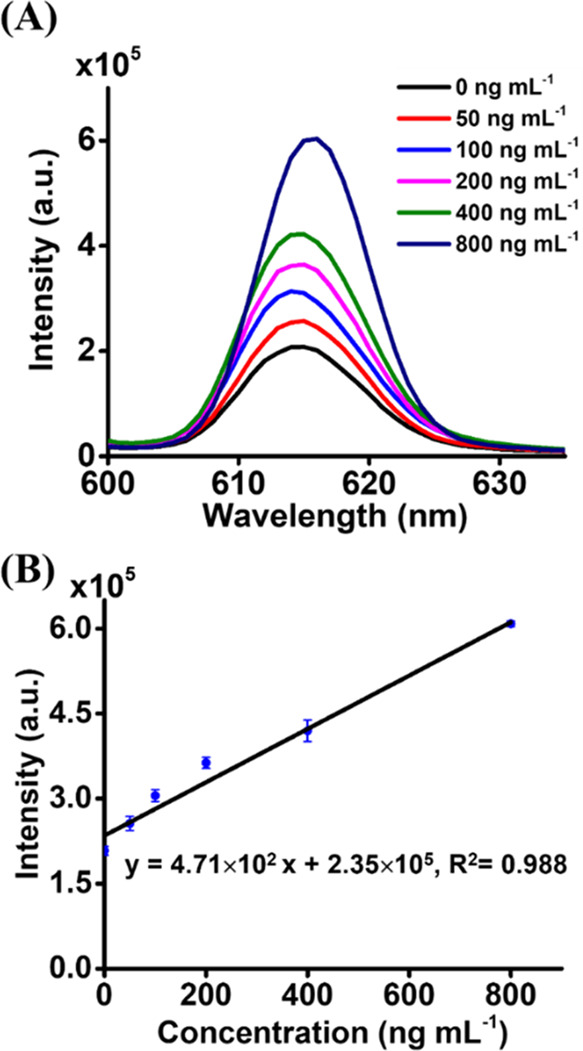
Europium ions (Eu) have been utilized as a fluorescence-sensing probe for a variety of analytes, including tetracycline (TC). When Eu is chelated with TC, its fluorescence can be greatly enhanced. Moreover, Eu possesses 6 unpaired electrons in its f orbital, which makes it paramagnetic. Being a hard acid, Eu can chelate with hard bases, such as oxygen-containing functional groups (e.g., phosphates and carboxylates), present on the cell surface of pathogenic bacteria. Due to these properties, in this study, Eu was explored as a magnetic-trapping and sensing probe against pathogenic bacteria present in complex samples. Eu was used as a magnetic probe to trap bacteria such as , , , , , and . The addition of TC facilitated the easy detection of magnetic Eu-bacterium conjugates through fluorescence spectroscopy, with a detection limit of approximately ∼10 CFU mL. Additionally, matrix-assisted laser desorption/ionization mass spectrometry was employed to differentiate bacteria tapped by our magnetic probes.
铕离子(Eu)已被用作各种分析物的荧光传感探针,包括四环素(TC)。当 Eu 与 TC 螯合时,其荧光可以大大增强。此外,Eu 在其 f 轨道上有 6 个未配对的电子,使其具有顺磁性。作为硬酸,Eu 可以与硬碱(例如,存在于致病菌表面的含氧官能团,如磷酸盐和羧酸盐)螯合。由于这些特性,在这项研究中,Eu 被探索作为一种针对复杂样品中存在的致病菌的磁性捕获和传感探针。Eu 被用作磁性探针来捕获细菌,如 、 、 、 、 和 。加入 TC 后,通过荧光光谱法很容易检测到磁性 Eu-细菌缀合物,检测限约为 ∼10 CFU mL。此外,基质辅助激光解吸/电离质谱法被用于区分我们的磁性探针捕获的细菌。