Chongqing Key Laboratory of Molecular Oncology and Epigenetics, The First Affiliated Hospital of Chongqing Medical University, Chongqing, China.
Department of Pharmacy, Chongqing Medical University, Chongqing, China.
Front Immunol. 2024 Mar 11;15:1372113. doi: 10.3389/fimmu.2024.1372113. eCollection 2024.
Glioma, an aggressive brain tumor, poses a challenge in understanding the mechanisms of treatment resistance, despite promising results from immunotherapy.
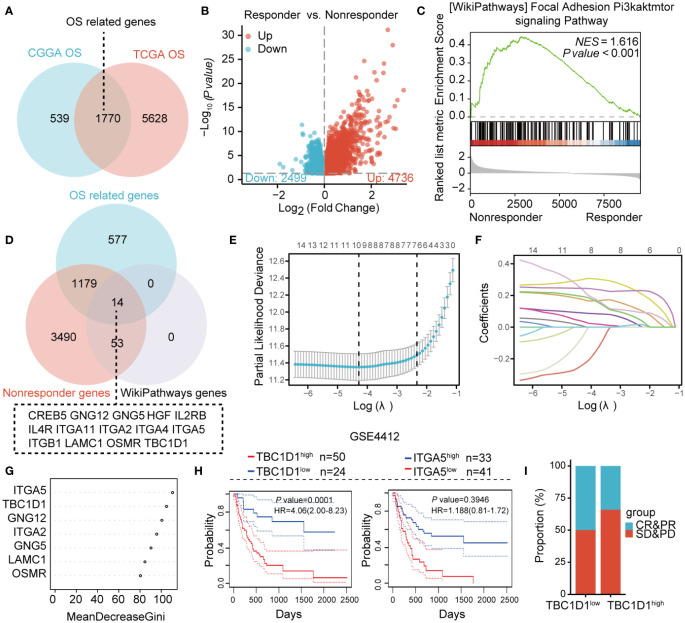
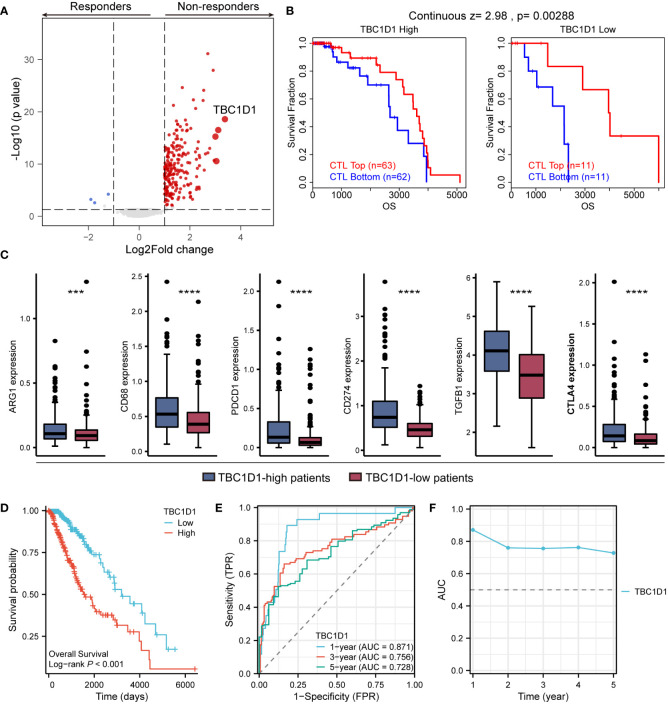
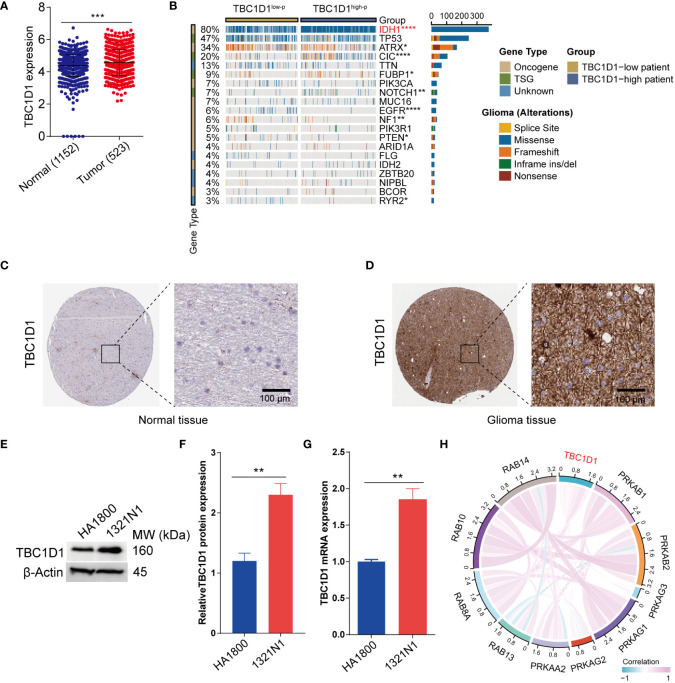
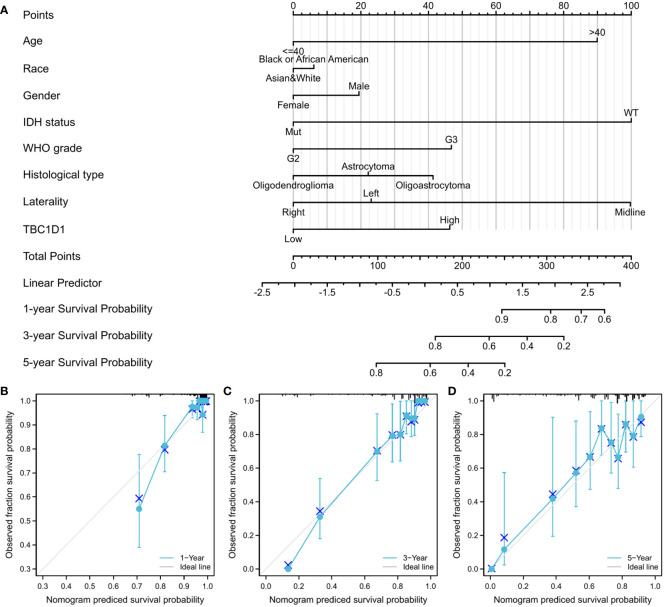
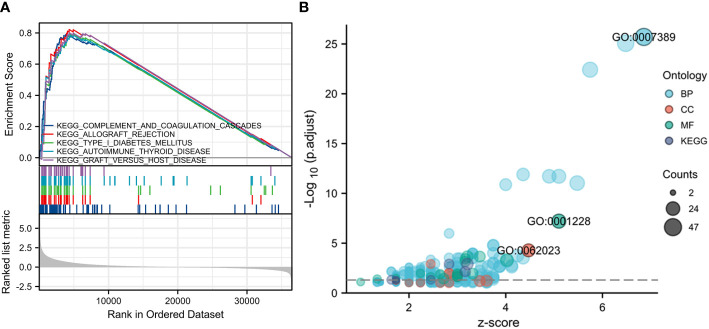
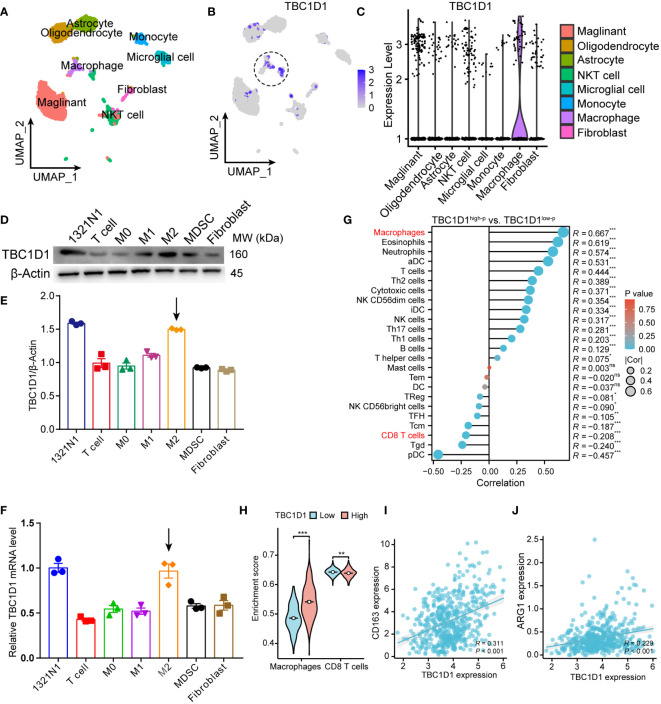
We identified genes associated with immunotherapy resistance through an analysis of The Cancer Genome Atlas (TCGA), Chinese Glioma Genome Atlas (CGGA), and Gene Expression Omnibus (GEO) databases. Subsequently, qRT-PCR and western blot analyses were conducted to measure the mRNA and protein levels of TBC1 Domain Family Member 1 (TBC1D1), respectively. Additionally, Gene Set Enrichment Analysis (GSEA) was employed to reveal relevant signaling pathways, and the expression of TBC1D1 in immune cells was analyzed using single-cell RNA sequencing (scRNA-seq) data from GEO database. Tumor Immune Dysfunction and Exclusion (TIDE) database was utilized to assess T-cell function, while Tumor Immunotherapy Gene Expression Resource (TIGER) database was employed to evaluate immunotherapy resistance in relation to TBC1D1. Furthermore, the predictive performance of molecules on prognosis was assessed using Kaplan-Meier plots, nomograms, and ROC curves.
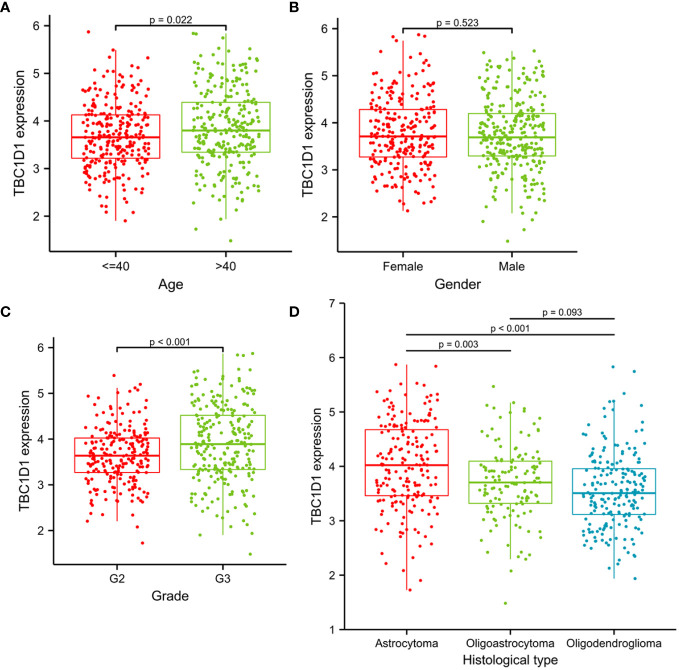
The levels of TBC1D1 were significantly elevated in tumor tissue from glioma patients. Furthermore, high TBC1D1 expression was observed in macrophages compared to other cells, which negatively impacted T cell function, impaired immunotherapy response, promoted treatment tolerance, and led to poor prognosis. Inhibition of TBC1D1 was found to potentially synergistically enhance the efficacy of immunotherapy and prolong the survival of cancer patients with gliomas.
Heightened expression of TBC1D1 may facilitate an immunosuppressive microenvironment and predict a poor prognosis. Blocking TBC1D1 could minimize immunotherapy resistance in cancer patients with gliomas.
尽管免疫疗法取得了可喜的成果,但胶质瘤作为一种侵袭性脑肿瘤,其治疗耐药机制仍难以理解。
我们通过分析癌症基因组图谱(TCGA)、中国脑胶质瘤基因组图谱(CGGA)和基因表达综合数据库(GEO),鉴定出与免疫治疗耐药相关的基因。随后,通过 qRT-PCR 和 Western blot 分析分别测量 TBC1 结构域家族成员 1(TBC1D1)的 mRNA 和蛋白水平。此外,采用基因集富集分析(GSEA)揭示相关信号通路,利用 GEO 数据库中的单细胞 RNA 测序(scRNA-seq)数据分析 TBC1D1 在免疫细胞中的表达。利用肿瘤免疫功能障碍和排斥(TIDE)数据库评估 T 细胞功能,利用肿瘤免疫治疗基因表达资源(TIGER)数据库评估 TBC1D1 与免疫治疗耐药的关系。此外,还通过 Kaplan-Meier 图、列线图和 ROC 曲线评估分子对预后的预测性能。
胶质瘤患者肿瘤组织中 TBC1D1 水平显著升高。此外,与其他细胞相比,巨噬细胞中 TBC1D1 表达较高,这会影响 T 细胞功能,削弱免疫治疗反应,促进治疗耐受,并导致预后不良。抑制 TBC1D1 可能会协同增强免疫疗法的疗效,并延长患有胶质瘤的癌症患者的生存时间。
TBC1D1 的高表达可能有助于形成免疫抑制微环境,并预测预后不良。阻断 TBC1D1 可能会最小化患有胶质瘤的癌症患者的免疫治疗耐药性。