Cancer Prevention and Screening Innovation, Provincial Population and Public Health, Alberta Health Services, Calgary, AB, Canada.
Communicable Disease Control, Provincial Population and Public Health, Alberta Health Services, Edmonton, AB, Canada.
JMIR Public Health Surveill. 2024 Mar 27;10:e45508. doi: 10.2196/45508.
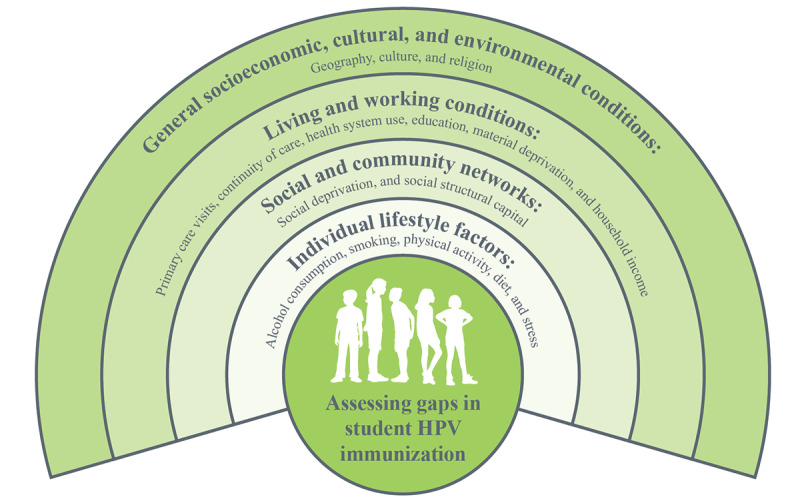
Human papillomavirus (HPV) infection causes nearly all cervical cancer cases and is a cause of anogenital and oropharyngeal cancers. The incidence of HPV-associated cancers is inequitable, with an increased burden on marginalized groups in high-income countries. Understanding how immunization status varies by material and social deprivation, health system, and geospatial factors is valuable for prioritizing and planning HPV immunization interventions.
The objective of this study was to describe school-based HPV immunization rates by individual and geospatial determinants of health in Alberta, Canada.
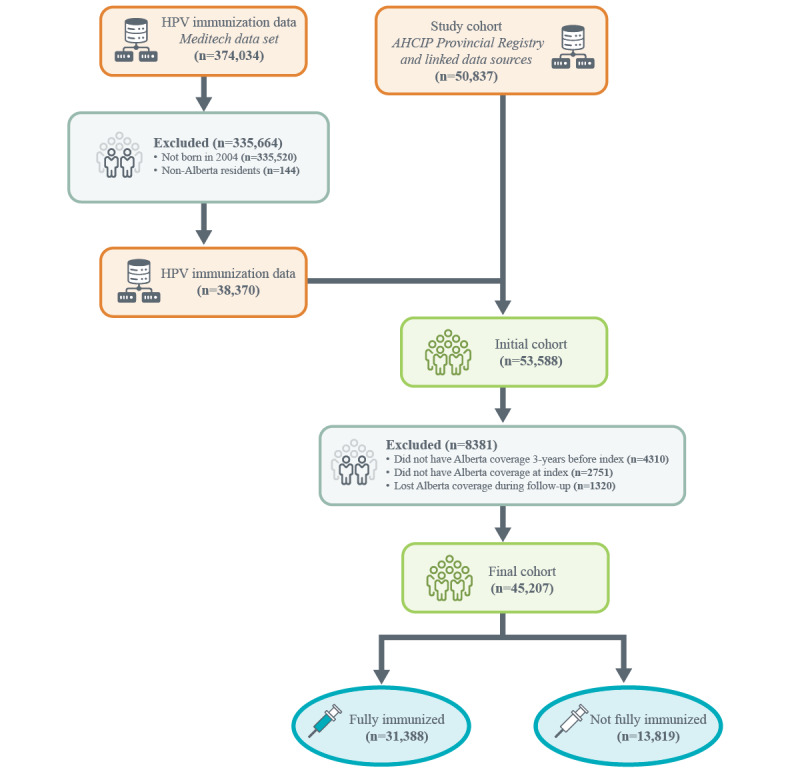
Health administrative data for male and female individuals born in 2004 in Alberta were used to determine HPV immunization status based on age and the number of doses administered in schools during the 2014/2015-2018/2019 school years. Immunization status and its relationship with material and social deprivation and health system factors were assessed by a logistic regression model. Geospatial clustering was assessed using Getis-Ord Gi* hot spot analysis. Mean scores of material and social deprivation and health system factors were compared between hot and cold spots without full HPV immunization using independent samples t tests. A multidisciplinary team comprising researchers and knowledge users formed a co-design team to design the study protocol and review the study results.
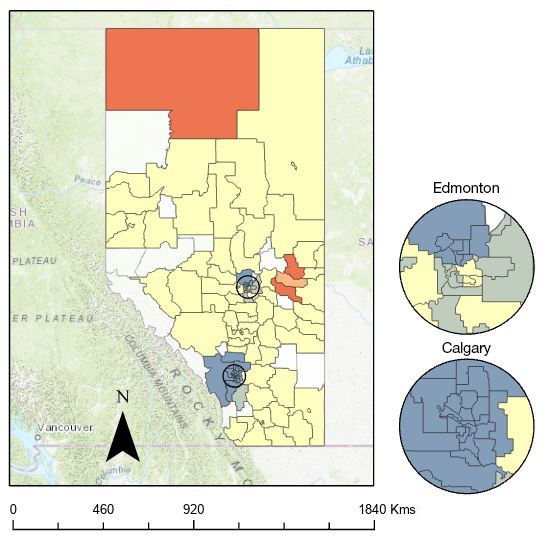
The cohort consisted of 45,207 youths. In the adjusted model, the odds of those who did not see their general practitioner (GP) within 3 years before turning 10 years old and not being fully immunized were 1.965 times higher (95% CI 1.855-2.080) than those who did see their GP. The odds of health system users with health conditions and health system nonusers not being fully immunized were 1.092 (95% CI 1.006-1.185) and 1.831 (95% CI 1.678-1.998) times higher, respectively, than health system users without health conditions. The odds of those who lived in areas with the most material and social deprivation not being fully immunized were 1.287 (95% CI 1.200-1.381) and 1.099 (95% CI 1.029-1.174) times higher, respectively, than those who lived in areas with the least deprivation. The odds of those who lived in rural areas not being fully immunized were 1.428 times higher (95% CI 1.359-1.501) than those who lived in urban areas. Significant hot spot clusters of individuals without full HPV immunization exist in rural locations on the northern and eastern regions of Alberta. Hot spots had significantly worse mean material deprivation scores (P=.008) and fewer GP visits (P=.001) than cold spots.
Findings suggest that material and social deprivation, health system access, and rural residency impact HPV immunization. Such factors should be considered by public health professionals in other jurisdictions and will be used by the Alberta co-design team when tailoring programs to increase HPV vaccine uptake in priority populations and regions.
人乳头瘤病毒(HPV)感染几乎可导致所有宫颈癌病例,也是肛门生殖器和口咽癌的病因。HPV 相关癌症的发病率存在不平等现象,在高收入国家,边缘化群体的负担更重。了解免疫接种状况如何因物质和社会剥夺、卫生系统以及地理空间因素而有所不同,对于优先考虑和规划 HPV 免疫接种干预措施具有重要意义。
本研究旨在描述加拿大艾伯塔省基于个体和地理空间健康决定因素的学校 HPV 免疫接种率。
使用卫生行政数据,确定了 2004 年在艾伯塔省出生的男性和女性个体的 HPV 免疫接种状况,根据年龄和 2014/2015 学年至 2018/2019 学年期间在学校接种的疫苗剂量进行判断。使用 logistic 回归模型评估免疫接种状况及其与物质和社会剥夺以及卫生系统因素的关系。使用 Getis-Ord Gi*热点分析评估地理空间聚类。使用独立样本 t 检验比较未完全接种 HPV 疫苗的热点和冷点之间物质和社会剥夺以及卫生系统因素的平均得分。一个由研究人员和知识用户组成的多学科团队组成了一个共同设计团队,以设计研究方案并审查研究结果。
该队列包括 45207 名青少年。在调整后的模型中,与在 10 岁之前的 3 年内看过全科医生的个体相比,未看过全科医生的个体未完全接种疫苗的几率高 1.965 倍(95%CI 1.855-2.080)。有健康状况的卫生系统使用者和无健康状况的卫生系统非使用者未完全接种疫苗的几率分别高 1.092(95%CI 1.006-1.185)和 1.831(95%CI 1.678-1.998)倍。与物质和社会剥夺最少的地区相比,生活在物质和社会剥夺最严重地区的个体未完全接种疫苗的几率分别高 1.287(95%CI 1.200-1.381)和 1.099(95%CI 1.029-1.174)倍。与生活在城市地区的个体相比,生活在农村地区的个体未完全接种疫苗的几率高 1.428 倍(95%CI 1.359-1.501)。在艾伯塔省北部和东部农村地区存在个体未完全接种 HPV 疫苗的显著热点群。热点地区的平均物质剥夺评分明显更差(P=.008),全科医生就诊次数也明显较少(P=.001)。
研究结果表明,物质和社会剥夺、卫生系统的可及性以及农村居住环境会影响 HPV 免疫接种。这些因素应引起其他司法管辖区的公共卫生专业人员的重视,艾伯塔省共同设计团队也将在制定计划时加以考虑,以便在优先人群和地区增加 HPV 疫苗的接种率。