Department of Chemistry, KAIST, 291 Daehak-ro, Yuseong-gu, Daejeon, 34141, Republic of Korea.
AI Institute, KAIST, 291 Daehak-ro, Yuseong-gu, Daejeon, 34141, Republic of Korea.
Nat Commun. 2024 Mar 27;15(1):2688. doi: 10.1038/s41467-024-47011-2.
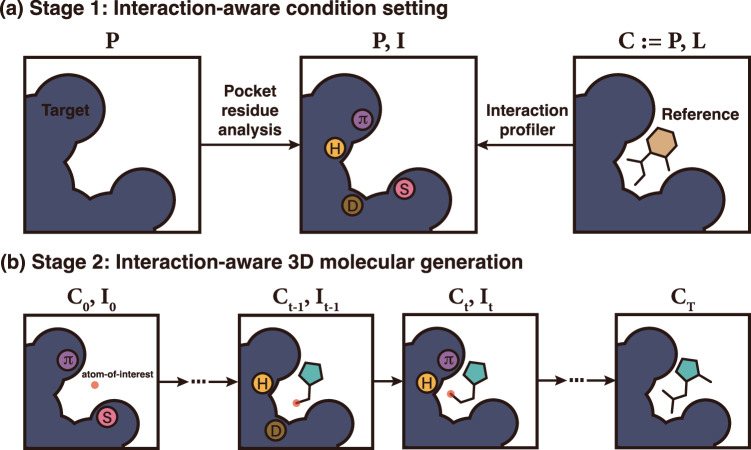
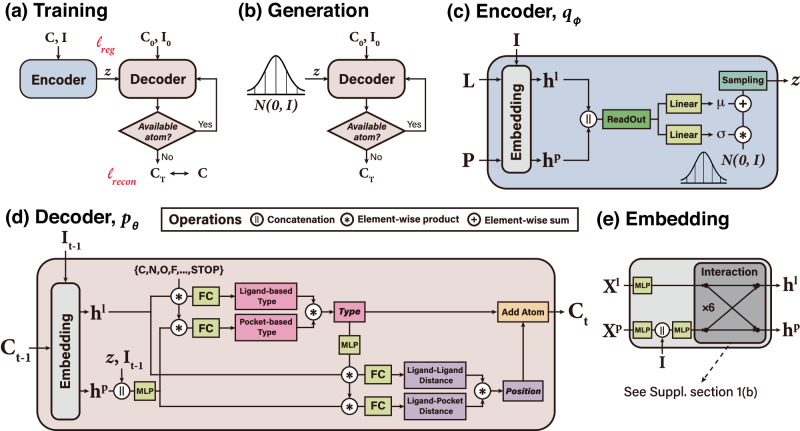
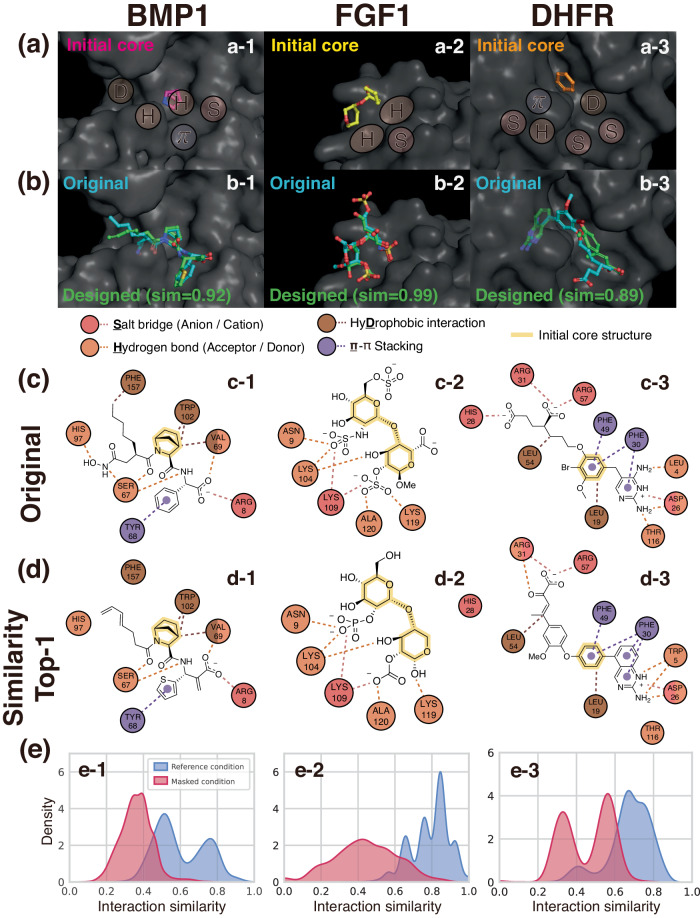
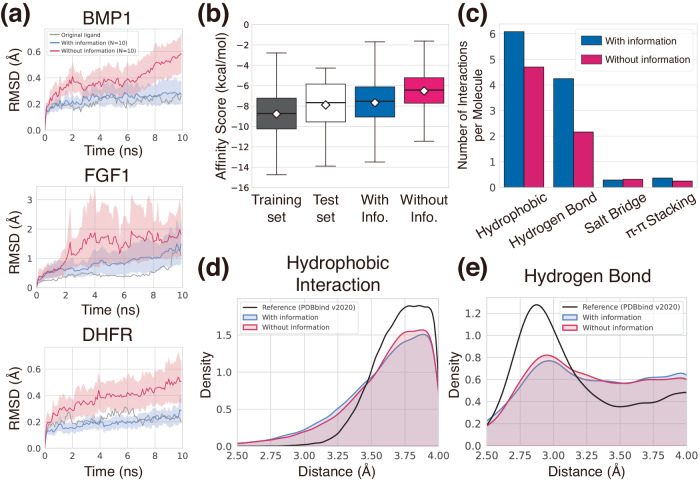
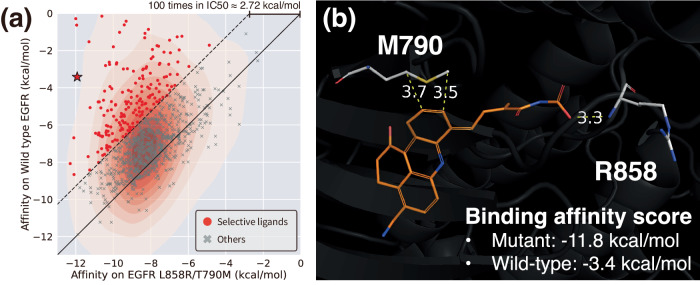
Deep generative modeling has a strong potential to accelerate drug design. However, existing generative models often face challenges in generalization due to limited data, leading to less innovative designs with often unfavorable interactions for unseen target proteins. To address these issues, we propose an interaction-aware 3D molecular generative framework that enables interaction-guided drug design inside target binding pockets. By leveraging universal patterns of protein-ligand interactions as prior knowledge, our model can achieve high generalizability with limited experimental data. Its performance has been comprehensively assessed by analyzing generated ligands for unseen targets in terms of binding pose stability, affinity, geometric patterns, diversity, and novelty. Moreover, the effective design of potential mutant-selective inhibitors demonstrates the applicability of our approach to structure-based drug design.
深度生成模型在加速药物设计方面具有巨大的潜力。然而,由于数据有限,现有的生成模型通常在泛化方面面临挑战,导致设计缺乏创新性,而且往往与未见的靶蛋白相互作用不佳。为了解决这些问题,我们提出了一种基于相互作用感知的 3D 分子生成框架,该框架能够在靶标结合口袋内进行基于相互作用的药物设计。通过利用蛋白质-配体相互作用的通用模式作为先验知识,我们的模型可以在有限的实验数据下实现高度的泛化能力。我们通过分析针对未见靶标的生成配体的结合构象稳定性、亲和力、几何模式、多样性和新颖性,对其性能进行了全面评估。此外,潜在的突变体选择性抑制剂的有效设计证明了我们的方法在基于结构的药物设计中的适用性。