Cai Long, Ming Dongxu, Chen Wenning, Zhao Ying, Li Yanpin, Sun Wenjuan, Pi Yu, Jiang Xianren, Li Xilong
Key Laboratory of Feed Biotechnology of the Ministry of Agriculture and Rural Affairs, Institute of Feed Research, Chinese Academy of Agricultural Sciences, Beijing 100081, China.
Precision Livestock and Nutrition Unit, TERRA Teaching and Research Centre, Gembloux Agro-Bio Tech University of Liege, 5030 Gembloux, Belgium.
Antioxidants (Basel). 2024 Mar 6;13(3):324. doi: 10.3390/antiox13030324.
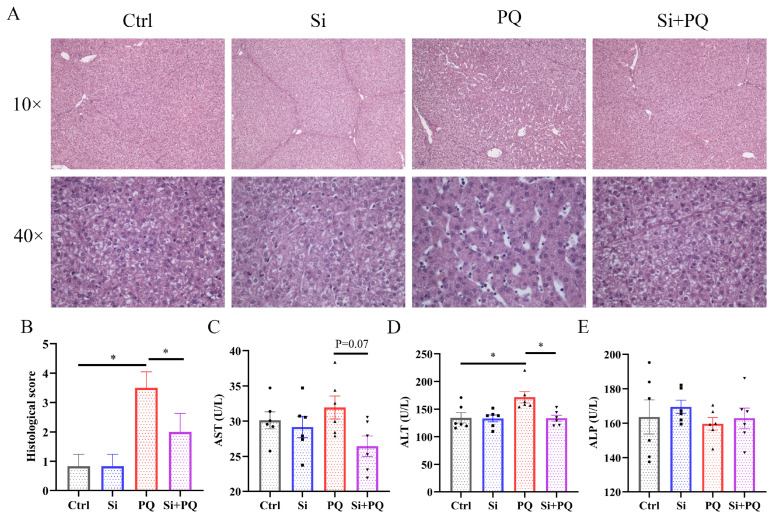
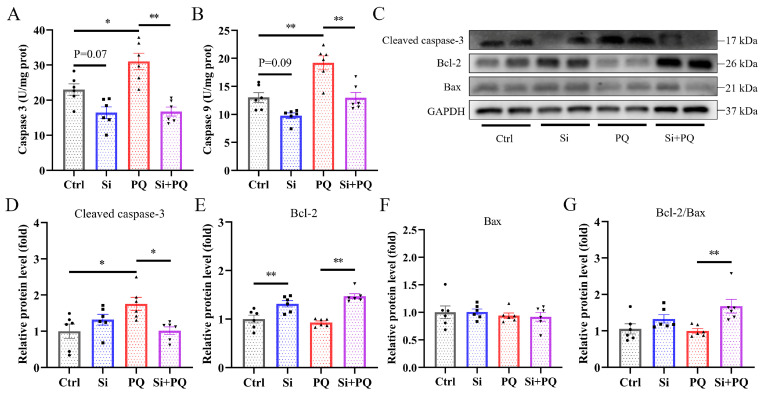
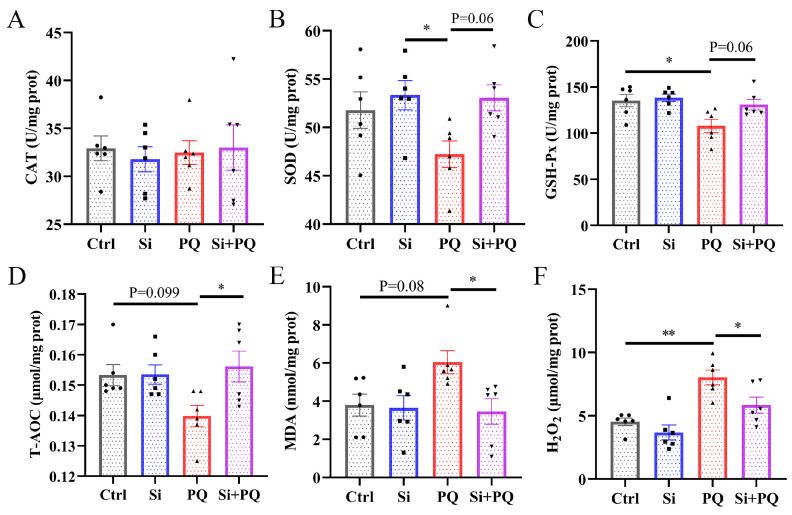
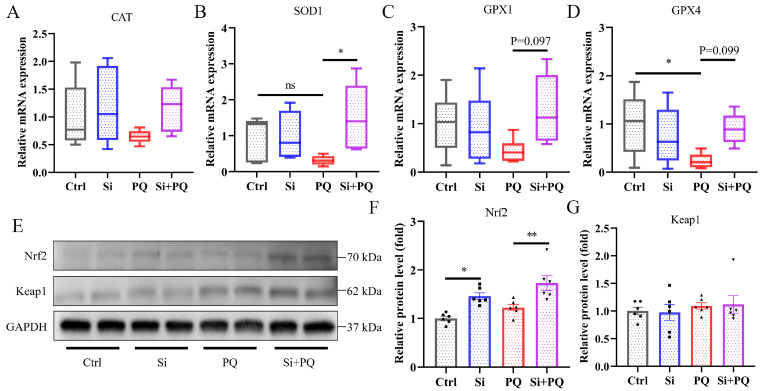
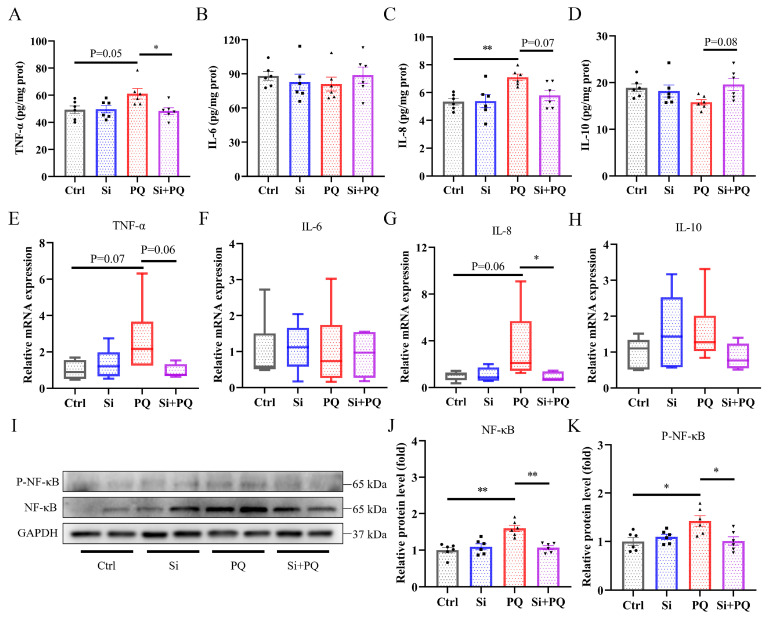
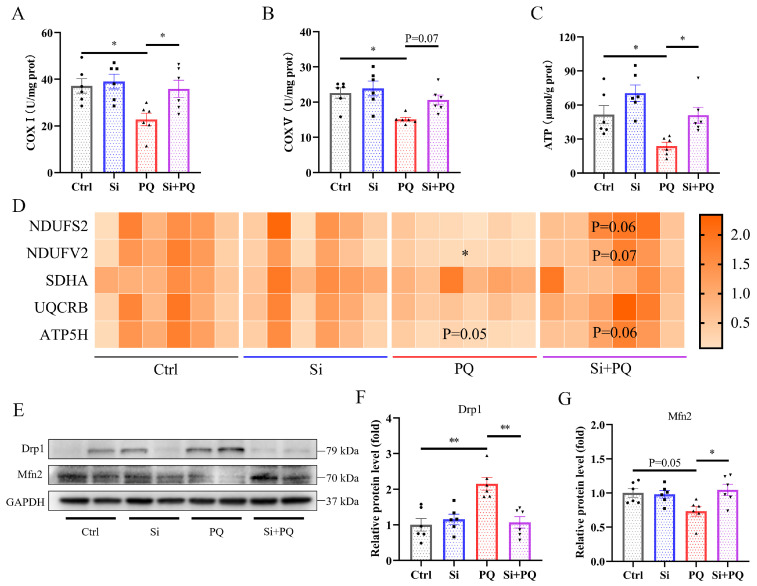
Silybin (Si) is the main element of silymarin isolated from the seeds of L. Gaernt., which has superior antioxidant properties. However, the protective role of Si in maintaining liver health under oxidative stress remains ambiguous. This study aimed to investigate the underlying mechanism of the beneficial effect of dietary Si against hepatic oxidative injury induced by paraquat (PQ) in weaned piglets. A total of 24 piglets were randomly allocated to four treatments with six replicates per treatment and 1 piglet per replicate: the control group; Si group; PQ group; and Si + PQ group. Piglets in the control group and PQ group were given a basal diet, while piglets in the Si and Si + PQ groups were given a Si-supplemented diet. On the 18th day, the pigs in the PQ treatment group received an intraperitoneal injection of PQ, and the others were intraperitoneally injected with the same volume of saline. All piglets were sacrificed on day 21 for plasma and liver sample collection. The results showed that dietary Si supplementation mitigated PQ-induced liver damage, as proven by the reduction in liver pathological changes and plasma activity of alanine transaminase and aspartate transaminase. Si also improved superoxide dismutase and glutathione peroxidase activities and total antioxidant capacity, as well as decreased malondialdehyde and hydrogen peroxide concentration in the liver, which were closely related to the activation of the nuclear factor-erythroid 2-related factor 2 signaling pathway. Meanwhile, Si reduced tumor necrosis factor-α and interleukin-8 production and their transcript levels as well as abrogated the overactivation of nuclear factor-κB induced by PQ. Importantly, Si improved mitochondrial function by maintaining mitochondrial energetics and mitochondrial dynamics, which was indicated by the elevated activity of mitochondrial complexes I and V and adenosine triphosphate content, decreased expression of dynamin 1 protein, and increased expression of mitofusin 2 protein. Moreover, Si inhibited excessive hepatic apoptosis by regulating the B-cell lymphoma-2 (Bcl-2)/Bcl-2-associated-X-protein signaling pathway. Taken together, these results indicated that Si potentially mitigated PQ-induced hepatic oxidative insults by improving antioxidant capacity and mitochondrial function and inhibiting inflammation and cell apoptosis in weaned piglets.
水飞蓟宾(Si)是从水飞蓟种子中分离出的水飞蓟素的主要成分,具有卓越的抗氧化特性。然而,Si在氧化应激下维持肝脏健康方面的保护作用仍不明确。本研究旨在探究日粮中Si对断奶仔猪百草枯(PQ)诱导的肝脏氧化损伤有益作用的潜在机制。总共24头仔猪被随机分为4组,每组6个重复,每个重复1头仔猪:对照组;Si组;PQ组;以及Si + PQ组。对照组和PQ组的仔猪给予基础日粮,而Si组和Si + PQ组的仔猪给予添加Si的日粮。在第18天,PQ处理组的猪接受腹腔注射PQ,其他组则腹腔注射相同体积的生理盐水。所有仔猪在第21天处死,用于采集血浆和肝脏样本。结果表明,日粮中添加Si减轻了PQ诱导的肝脏损伤,肝脏病理变化以及血浆中丙氨酸转氨酶和天冬氨酸转氨酶活性的降低证明了这一点。Si还提高了超氧化物歧化酶和谷胱甘肽过氧化物酶活性以及总抗氧化能力,同时降低了肝脏中丙二醛和过氧化氢浓度,这与核因子红细胞2相关因子2信号通路的激活密切相关。同时,Si降低了肿瘤坏死因子-α和白细胞介素-8的产生及其转录水平,并消除了PQ诱导的核因子-κB的过度激活。重要的是,Si通过维持线粒体能量代谢和线粒体动力学改善了线粒体功能,这表现为线粒体复合物I和V的活性以及三磷酸腺苷含量升高、动力蛋白1蛋白表达降低和线粒体融合蛋白2蛋白表达增加。此外,Si通过调节B细胞淋巴瘤-2(Bcl-2)/Bcl-2相关X蛋白信号通路抑制了肝脏过度凋亡。综上所述,这些结果表明,Si可能通过提高抗氧化能力和线粒体功能以及抑制断奶仔猪的炎症和细胞凋亡来减轻PQ诱导的肝脏氧化损伤。